|
Read the Preservation Alliance of West Virginia's 2021 Annual Report. Check out the .pdf or scroll down to see the report in images. 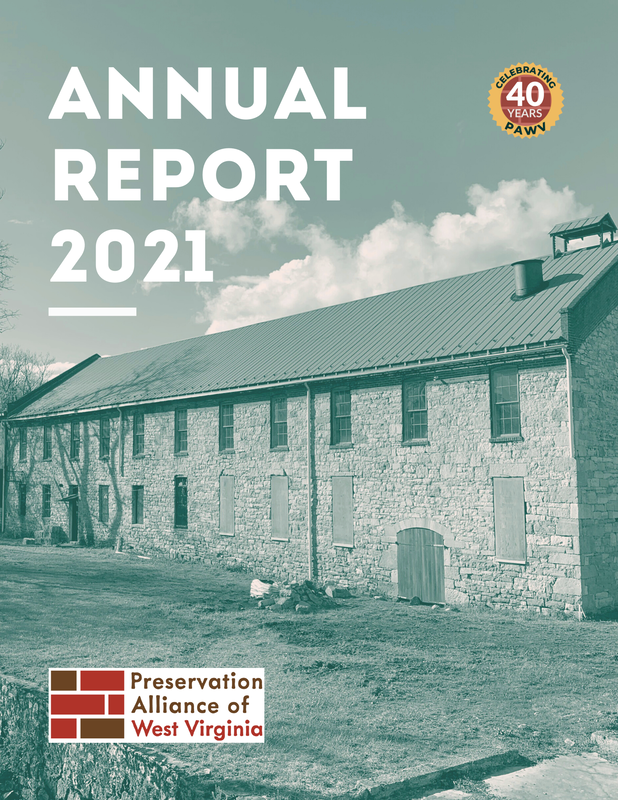 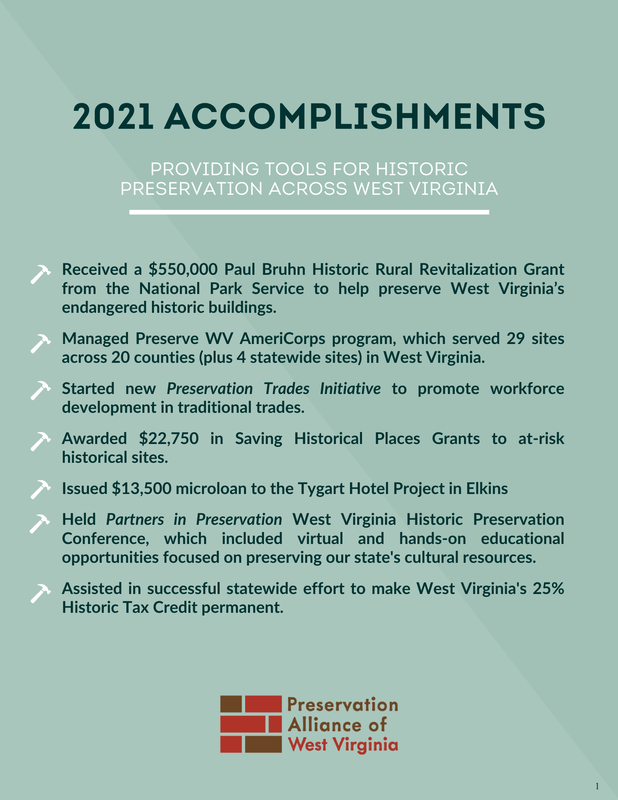 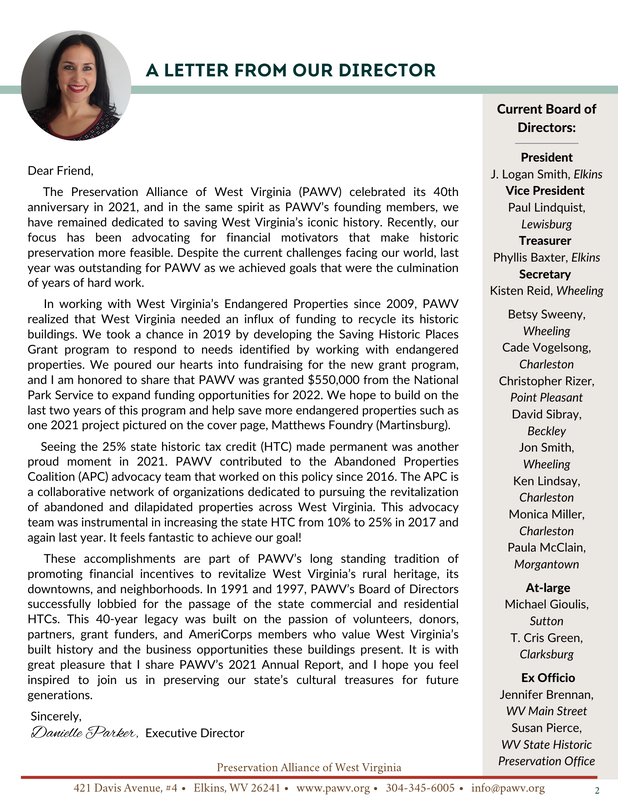 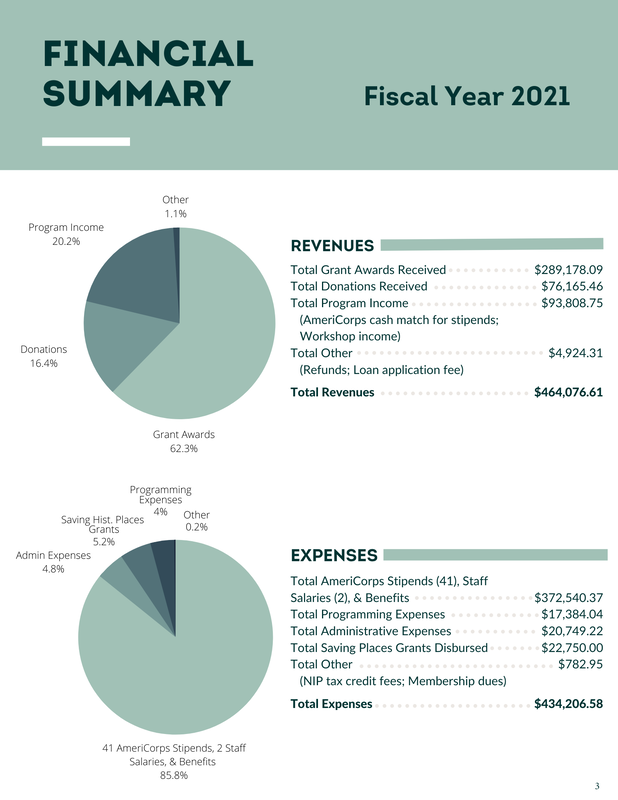 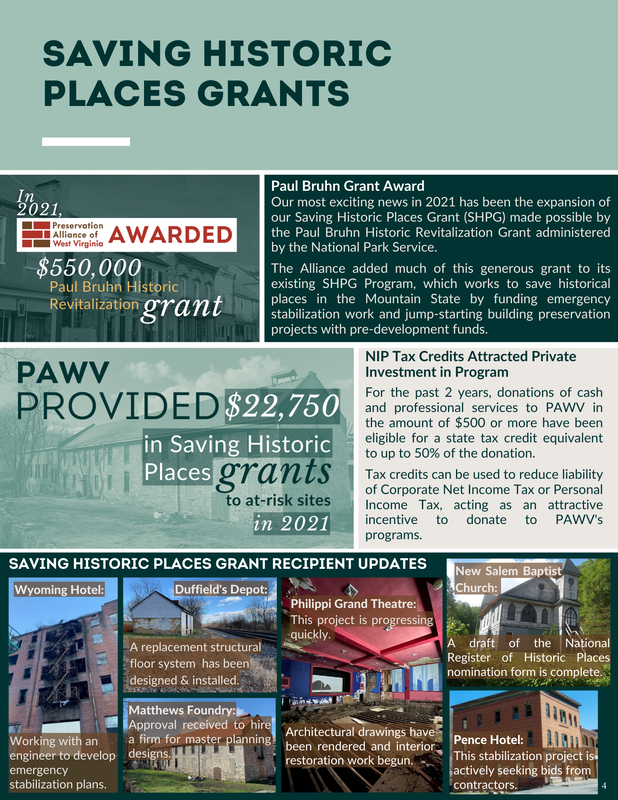 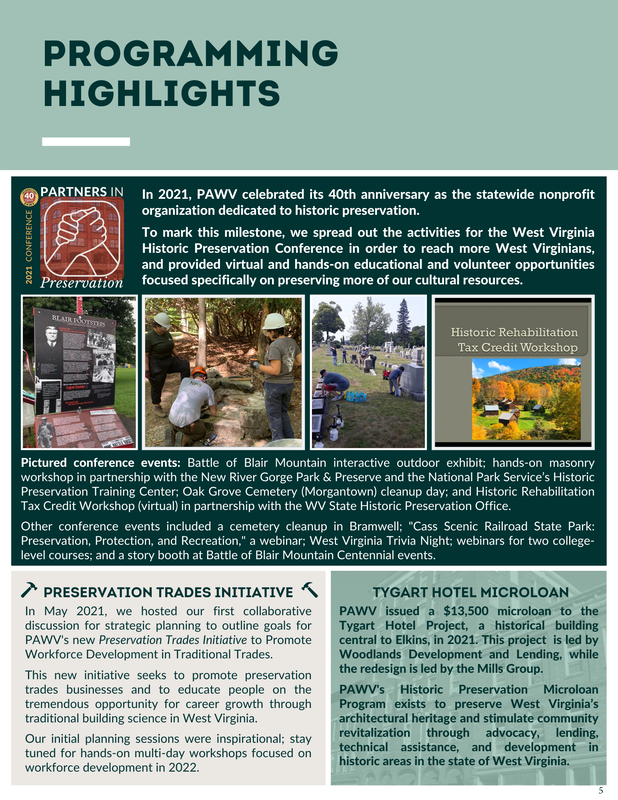 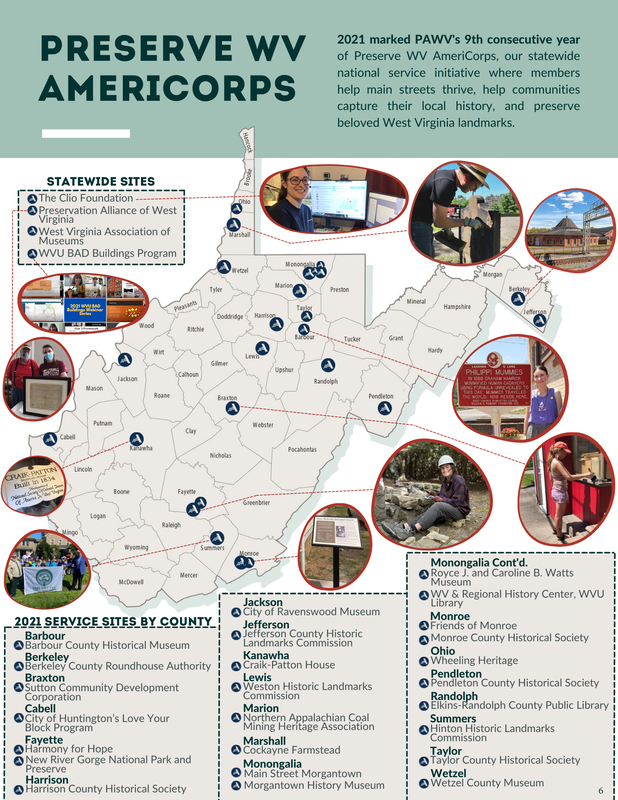
2 Comments
The BRAMWELL FOUNDATION, a nonprofit 501(c)(3) organization, is currently soliciting quotations for the completion of THE PENCE HOTEL STABILIZATION PROJECT grant funded by the PRESERVATION ALLIANCE OF WEST VIRGINIA. This is a historic building project that must follow the Secretary of Interior Standards for Rehabilitation. The Pence Hotel was built around 1911 and is located on Main Street, Bramwell, WV. 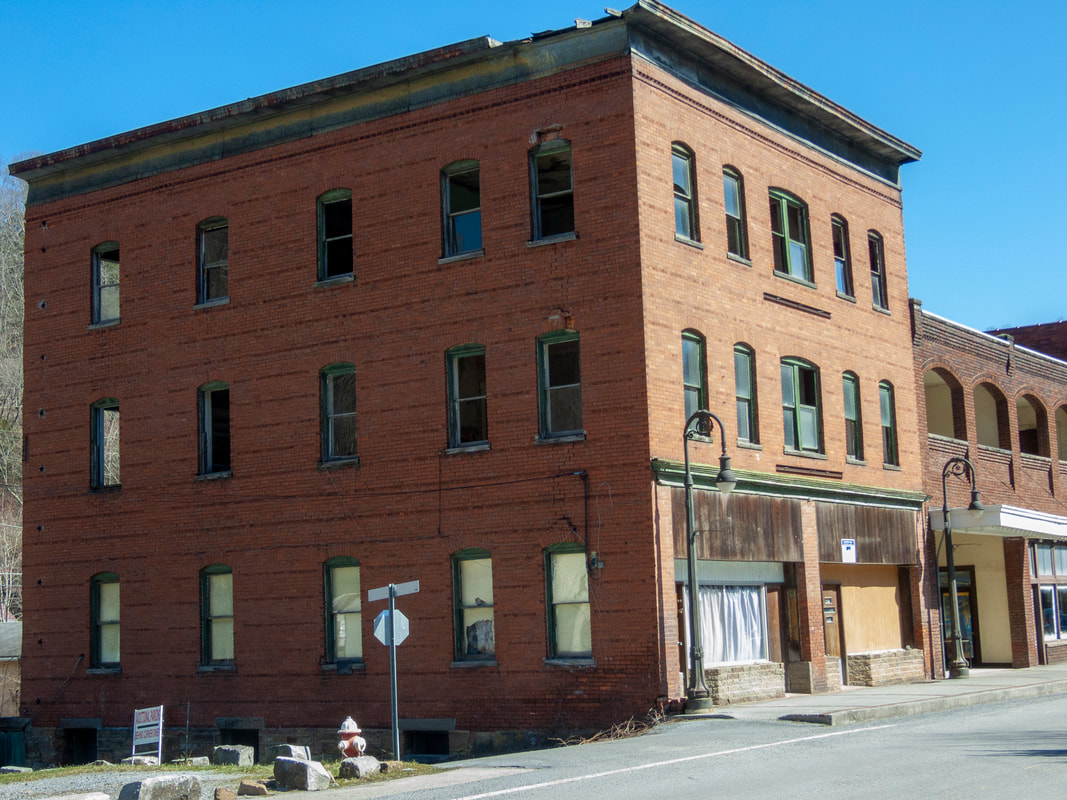 Current state of the Pence Hotel SCOPE OF WORK NEEDED
STAGE 1: WORK TO BE COMPLETED 1. Conduct a mortar test to determine the composition of the historic mortar and to ensure a close match. Submit a photograph of the sample and historic mortars to the grantor, the Preservation Alliance of West Virginia for approval. Do a test area to ensure the color matches once it dries. 2. Secure and relay loose bricks located above (4) brick arched windows. 3. On the west and south exterior walls, remove and replace all loose brick with brick matching the original as closely as possible 4. Hand rake the existing masonry joints to clean out the remaining mortar and any false work. Re-point all exterior masonry joins, replacing all loose or missing mortar with the approved mortar sample. STAGE 1: APPLICATION PROCESS 1. Secure the area to protect persons & property from any falling debris below the work area(s). Remove any loose brick. Prep work area. Relay of brick in arched pattern consistent with original building structure. Cleanup of areas relating to that project. 2. Either scaffolding or a custom-built workbox to be erected. STAGE 2: WORK TO BE COMPLETED 1. Secure all orifices exposed to outside elements (36 window openings/ 7 doors). 2. Cover window and door openings with appropriate heavy gage plastic to seal from weather. STAGE 2: APPLICATION PROCESSES 1. Attach plastic firmly to current window frames or install temporary framing where necessary. QUALIFICATIONS: The contractor hired must meet the following qualifications: 1. Have performed similar work in the past or be able to prove ability to do work that meets the Secretary of Interior Standards for Rehabilitation. 2. Submit 2 project summaries with references and contact information. 3. Proof of general liability insurance and contractor’s license. 4. Ability to complete PENCE HOTEL STABILIZATION PROJECT by DECEMBER 31, 2022. EXPRESSIONS OF INTEREST: Companies or individuals interested in submitting a bid or quote on the project should submit a detail of costs, project summaries, references, proof of general liability insurance, and a copy of their contractor’s license to the BRAMWELL FOUNDATION, PO BOX 193, BRAMWELL WV 24715. Bids/quotes are due by 12 pm on Saturday, Saturday March 5, 2022. SELECTION PROCESS: THE BRAMWELL FOUNDATION and the grantor, the Preservation Alliance of West Virginia, will review all proposals and select a contractor for the project based on: 1. Experience with similar types of projects, 2. Proven ability to complete a project in a timely manner, and 3. Competitive cost to complete the project. A selection will be made within two weeks and a contract will be worked out immediately with the company. PAYMENT PROCESS: One third (1/3) of the contract amount will be paid the day the work begins, and the remaining two thirds (2/3) will be paid upon satisfactory completion of the project. Further questions regarding the project or for an appointment to access the building contact John Houston 304-248-7382.
government agencies, and nonprofit organizations as well as community volunteers and preservation enthusiasts. At the end of the meeting, interested individuals signed up to be a part of a Preservation Trades Task Force that will use action items identified during the meeting to direct our next steps.
The first set of questions discussed were - What historic trade is most in demand? What historic resources are suffering/or are we losing because we don’t have workers? What trades are we losing? From our discussions, we identified five historic trades that are in high demand in West Virginia, but that West Virginia is startlingly lacking in institutional/practical knowledge. These are:
There were also several comments about how it was difficult to find roofing companies to work on slate roofs and that deferred maintenance of smaller problems at our older buildings have led to more expensive repairs, total replacement of historic elements, and unfortunately in many cases, demolition by neglect - meaning that the building has been allowed to deteriorate to the point that demolition becomes necessary or restoration becomes unreasonable. The second set of questions were divided into two separate points. The first being - what are the challenges facing West Virginia’s historic resources in particular? The second question being - what unique opportunities do West Virginia’s historic resources present? Overall, the groups agreed that West Virginia is rich in cultural heritage resources in need of rehabilitation and prime for redevelopment, but we also agreed that retaining and attracting people to West Virginia to live and work in these buildings is one of the biggest challenges our historical towns and cities are facing. Those challenges are further complicated by economic challenges to fund historic preservation projects. Often, the price-tag of a historic structure seems prohibitive compared to the price tag of an entirely new building, and this is compounded by negative attitudes towards historic preservation being costly and complicated in West Virginia. There are also misconceptions that historic buildings cannot be rehabilitated because of hazardous materials such as asbestos or lead-based paint contamination. However, West Virginia has multiple initiatives, including grant funding from the West Virginia Brownfields Assistance Center, to help property owners understand the challenges related to mitigating hazardous materials in their historic buildings. There are also existing regional development agencies that target historic buildings for community-based revitalization projects, and provide support for dealing with these challenges. There is currently an obvious lack of knowledge in the fields of historic preservation trades in much of West Virginia. There is no central trade school or historic preservation technical program in West Virginia to educate our population in these skills, nor is historic preservation being taught at any vocational high school programs. Belmont Technical College is located very close to the northern panhandle of West Virginia in St. Clairsville, OH, and it offers a Building Preservation/Restoration degree program. The groups believe that we can capitalize on this institutional opportunity by encouraging individuals to attend the Belmont Technical College program and using it as a model to develop other preservation training programs in West Virginia. There is also a lack of access to the correct materials needed to rehabilitate many historic buildings or a lack of understanding of how to source materials locally. This lack of access and understanding threatens our infrastructure because construction professionals are trying to repair buildings using incorrect materials that can further degrade the historic structure. The final set of questions revolved around the theme of what can we do to encourage education in historic preservation trades? There is already a respect and value placed on trades skills in West Virginia that works in our favor. Our groups compiled a list of suggestions on the point of how to develop opportunities for people to pursue a preservation trades career. The Preservation Trades Task Force is exploring these suggestions, which included:
The Preservation Trades Task Force is already working on some of these action items and will be meeting monthly to discuss our projects. If you are interested in joining the Preservation Trades Task Force or for more information, contact PAWV executive director, Danielle Parker at [email protected]. |
News and NotesCategories
All
Archives
May 2024
Subscribe to our mailing list to receive e-news updates on historic preservation news and events in West Virginia.
|

 RSS Feed
Get Involved |
Programs |
Contact UsPreservation Alliance of West Virginia
421 Davis Avenue, #4 | Elkins, WV 26241 Email: [email protected] Phone: 304-345-6005 |
Organizational Partners:

|

|

|
|
© COPYRIGHT 2022 - PRESERVATION ALLIANCE OF WEST VIRGINIA. ALL RIGHTS RESERVED.