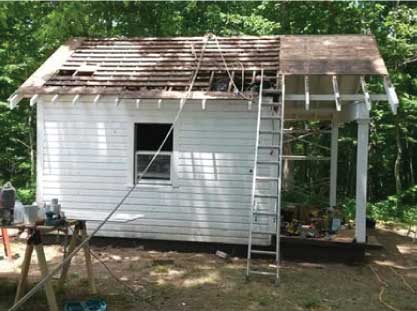
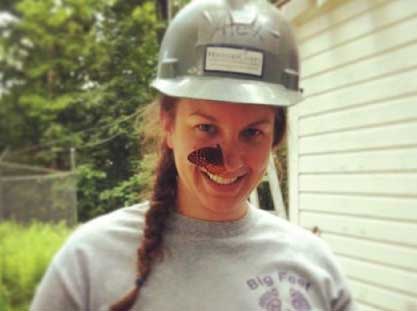
HistoriCorps is a national initiative engaging volunteer workforces in historic preservation projects on public and publicly accessible lands. HistoriCorps is based in the Rocky Mountain region and from there is able to coordinate and instruct projects throughout the United States. Volunteers and students work with trades specialists including logworkers, masons, window restorers, roofers, and solar energy technicians to preserve historic resources on and near public lands. We optimize teaching and learning opportunities for volunteer work crews. Over the course of a weekend, week or summer volunteers have the opportunity to gain many valuable trades skills that they can apply to their personal and professional lives.
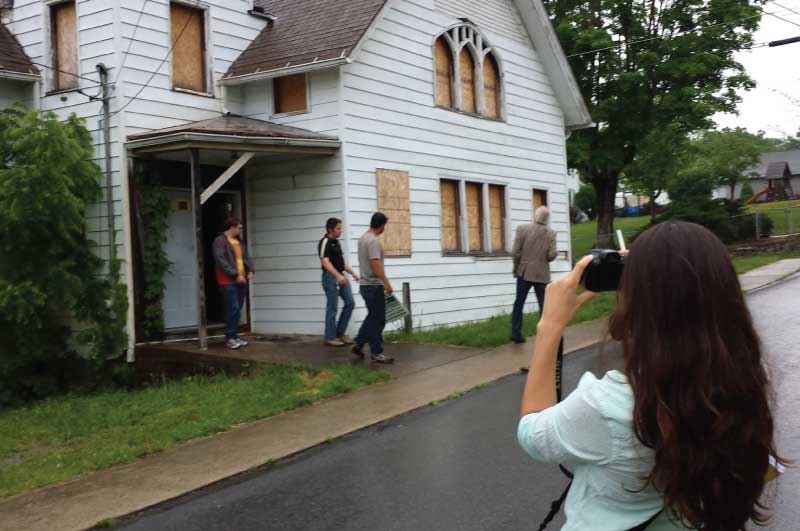
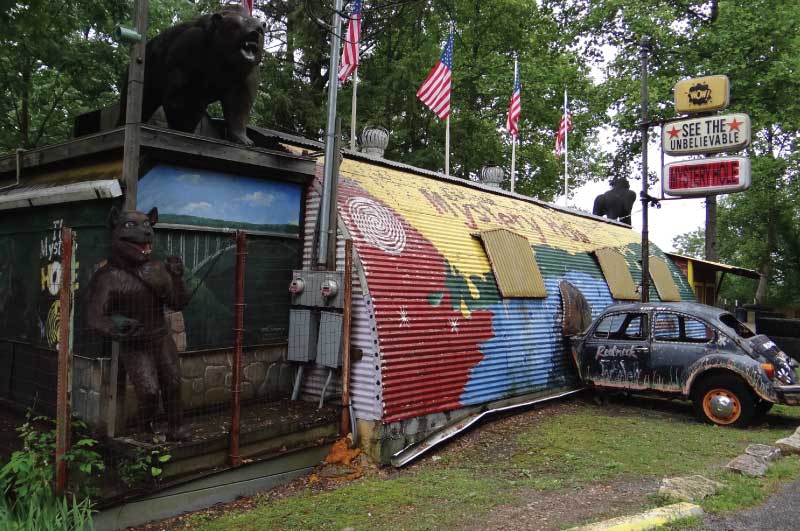
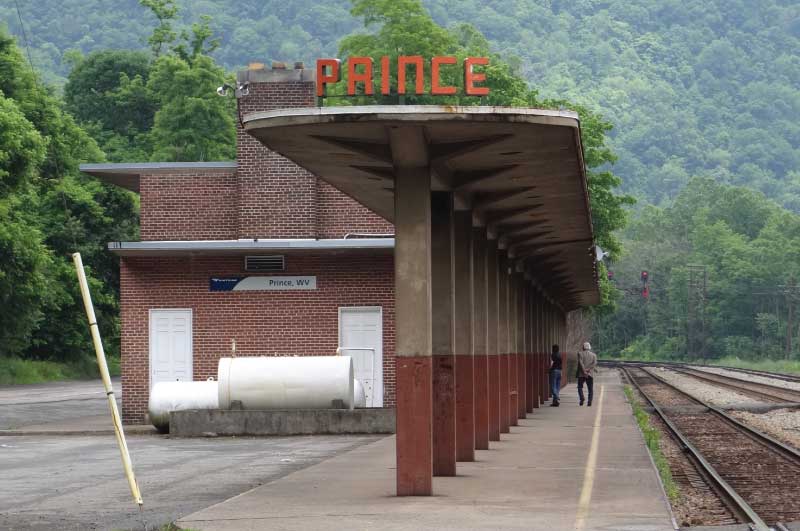
There is no fee to participate in a HistoriCorps project. However, travel to a project is the responsibility of the volunteer. PAWV sponsored all the travel for the 3 AmeriCorps participants. We rely on memberships and donations to pay for these travel costs. If you are interested in donating to PAWV, you can do so HERE through our PayPal page. By Danielle, Executive Director PAWV recently had a delightful day spent touring sites along Rt. 19 and the Midland Trail in Fayetteville (Fayette County). The Midland Trail is a National Scenic Byway of 180-miles cutting through the midsection of West Virginia. There is so much to see in Fayetteville. Between the historical and natural sites, there is no way we could fit everything into one day. So for our trip, we visited with a few local folks working on preservation projects, and our tour guide, Adam Hodges of the New River Gorge Redevelopment Authority, picked some of the must-see historical, re-development spots for us to visit. The focus of these tours is to meet with local residents and discuss potential or current historic preservation projects. On our first stop we met with a local deconstruction contractor. We discussed the possibilities of architectural salvage at demolition sites. The contractor explained that some of his work projects include historic building demolitions. Rather than let the historic building materials go to the landfill, the contractor often works to find homes for the really great stuff, like hardwood floors, glass, and window frames. With the growing demand of historic buildings materials all over the country, we created a Facebook group, SAVE (Salvage Architectural Vestiges Exchange) with the goal of opening a dialogue about exchanging, buying, selling, and donating historic building materials. This initiative is in its infancy, but we welcome all to join the group and post about building materials they have saved from the landfill. Also post if you’re willing to donate, sell, or looking for something for your own building project. Hawk’s Nest Golf Course was a short stop on our trip, but it proved to be fruitful for informational purposes. We could only see the golf course from the side of the road because it is closed. As far as we know, there are no plans for re-using the golf course site as it’s difficult to develop the area because Hawk’s Nest Tunnel is under the golf course. The tunnel diverts water from the New River for hydroelectric power. It was built to generate power for Union Carbide’s Alloy plant. It is not only important for generating power, but it is also the location of a major disaster where workers developed silicosis on a large scale. Workers built the tunnel through silica, which is highly toxic when breathed. Hundreds of workers died as a result of working without masks – it is unknown how many workers actually died. While looking out over the golf course, we talked about what could be done with the site. Some saw it as a great spot for an archaeological field school. Others thought an ATV track would be appropriate. Maybe even another golf course could re-open. What do you think? Moving along the Midland Trail, we came across a tie-dyed quonset known only as the Mystery Hole – very mysterious indeed! It is closed on Tuesdays and Wednesdays, and we unfortunately couldn’t tour it. I plan to return, and think it would make for a fun Excuse for an Excursion. We all thought it would be a unique addition to the National Register of Historic Places too. Have you ever been there? Is it as mysterious as they say? It was not the last stop on our journey, but the Prince Depot was one of the more notable spots. The Amtrak station still functions as a passenger rail stop a few days a week. From Prince, you can go to New York or Chicago three days a week. A one-way ticket to Chicago is $113, and the trip takes about 17 hours. The station’s streamline architecture dates back to the Art Deco era. I really loved seeing it as I have been hearing a lot about it! It is unique to West Virginia, and one of our Preserve WV AmeriCorps members is working on a National Register Nomination for the site. The hopes are to apply for grants specifically for listed properties with the goal of restoring the historic station. We had a delightful time touring Fayetteville, and I can’t wait to return! I have a running list of all the things I want to do there, including a Jet Boat ride on the New River. This tour was part of a new historic preservation initiative and partnership between PAWV and the New River Gorge Regional Development Authority. From April – August 2014, Preservation Alliance of West Virginia is participating in the New River Gorge Regional Development Authority’s Bridges to the Past Historic Preservation Initiative. As part of the initiative, PAWV gives monthly presentations and its traveling exhibit, Preserving West Virginia: Saving Communities, will be displayed in five different locations in the New River Gorge Region. Currently it’s on view at the Fayette County Court House. The exhibit is unveiled in each location during a special presentation, and PAWV staff take a tour of the locale’s historic assets the following day. Each tour is arranged by New River Gorge Regional Development Authority staff. The initiative is made possible through grant funding from the National Coal Heritage Area.
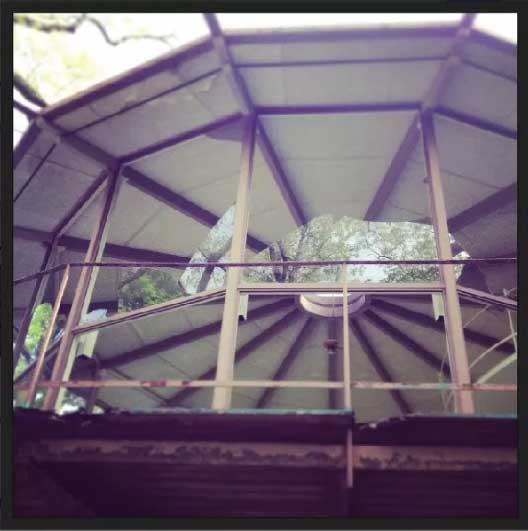
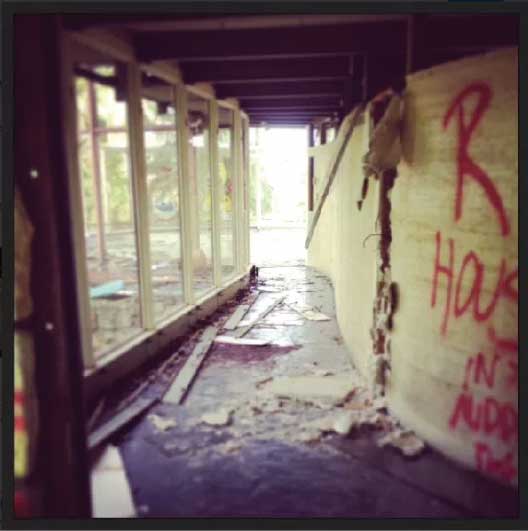
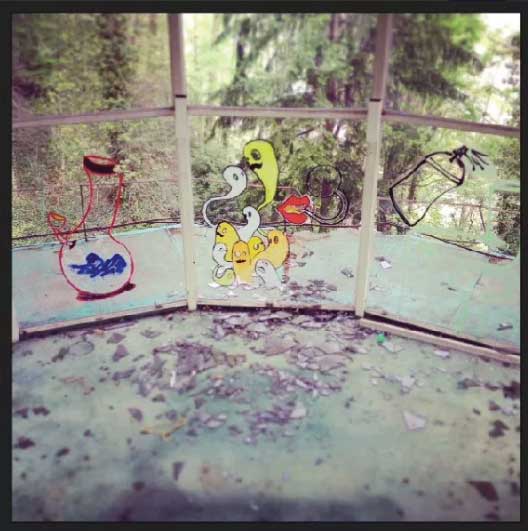
To describe how it felt to witness this destruction in person is impossible. It was AWFUL. I cried. Ninety-one pictures later and I was ready to show the city of Charleston the wretched state of this “beloved”and “iconic”structure.
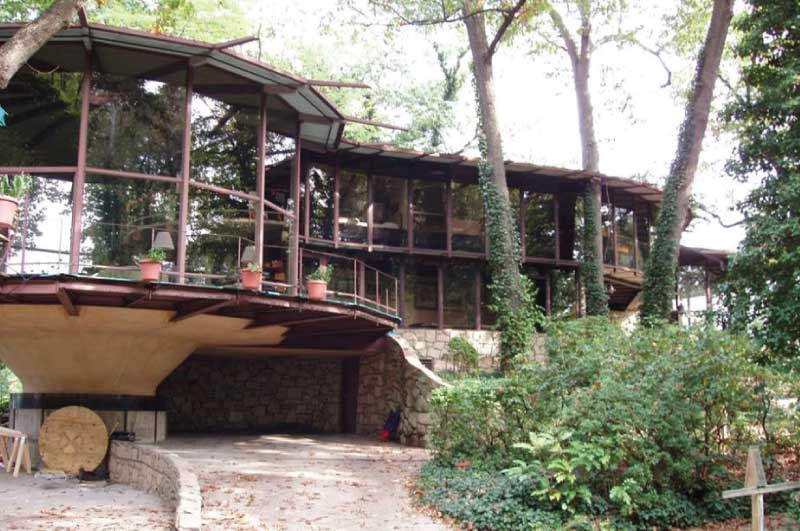
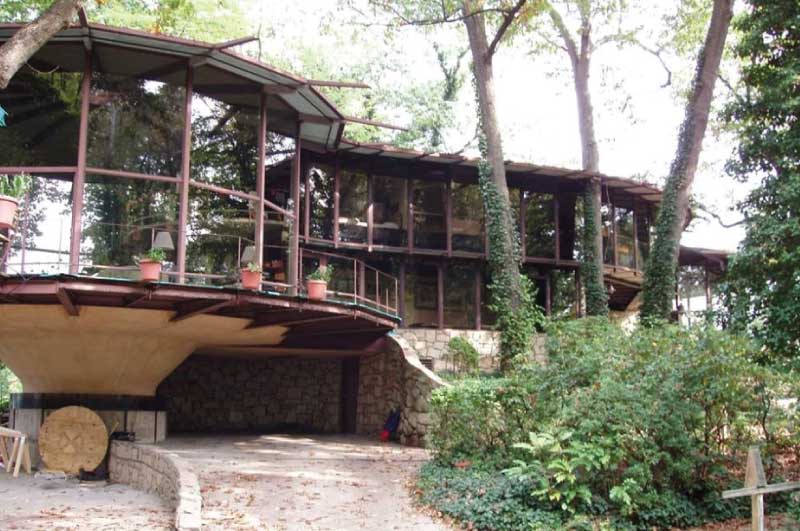
Constructed in 1968 by local architect and engineer Henry Elden, Top-O-Rock is a magnificent 10,000 square foot structure of steel and glass that functioned as both working and living environment under the same roof. An unconventional combination of industrial and organic principles, it was designed to incorporate the natural beauty of the surrounding landscape. Elden referred to it as “A glass jeweled box set in a hillside without disturbing the beauty of the natural terrain”. This terrain being a steep twenty-seven foot sandstone cliff with panoramic vies of the city. It consisted of 8500 square feet of solar plated tinted glass that was held together by an intricate framework of 90 tons of steel and 880,000 pounds of concrete that engaged the heavily wooded landscape that surrounded it. The structure itself was adapted into its’natural surroundings. Charleston residents had never seen anything like Top-O-Rock. It was considered Elden’s architectural masterpiece. And he joyfully shared this with the community, opening the doors to anyone that wanted to see its grandeur in person. He hosted a variety of galas, parties and other functions. It became known as one of Charleston’s most iconic houses and remained that way until Mr. Elden’s death in 2009. It remained vacant until it was purchased in 2011. An advocate is defined as a person who publicly supports or recommends a particular cause or policy and offers support to the interest of another. In a nutshell, an advocate becomes the voice for an entity that is unable to speak for itself. To say that I was upset was an understatement. I was sad. And I was VERY angry. The house had been abandoned and neglected and left alone to defend itself against the elements of nature as well as vandals and thieves. How could this have happened? How did the condition get the this point? Who was responsible? And what could be done? I wanted answers. AND I wanted everyone in Charleston to see what collective ignorance had done to a once magnificent place. Naturally, sharing the pictures on Facebook was the quickest way to reach a large audience. Combined with numerous emails to the local media, word spread quickly that Top-O-Rock was in dire need of help. I posted on Sunday evening. The response was overwhelming. By Monday morning, requests to the City of Charleston were made and the necessary steps to determine what was needed to secure the structure began. A violation order was issued to the owners with 21 days to meet the requirements. A collective sigh of relief was felt in the community. Until a local contracting firm said it had been approached to possibly demolish the house. That single word: DEMOLISH was completely unacceptable to me. I knew at that moment, I was going to do anything and everything to save Top-O-Rock. On Tuesday morning, I started a Facebook group and page called “Save Top-O-Rock”and shared it with my friends. Within 30 minutes I had 150 members. By the end of the day, I had 500 members. It was amazing. Membership requests along with offers of assistance, advice, financial donations, resources to utilize and volunteers was OVERWHELMING. I was relieved that there were so many other people out there willing to lend a voice and become an advocate. Today, we are 1400 members strong. TOGETHER we continue to fight for our beloved Top-O-Rock. It has been an emotional and tough few weeks but to date, the owners have secured the house and are working with the community to save it. For now, demolition is off the table. And we ARE continuing to make, albeit slow, progress. So the next time you find yourself driving down MacCorkle Avenue, remember to take a look up at the glass jeweled box on the hillside peeking out the trees, where it sits patiently waiting for another chance to speak for ITSELF.
Top O Rock is a distinctive house sitting atop a rocky outcrop which provides 360° view of Charleston and the Kanawha River. The building was designed by Henry Elden, an industrious and award winning architect whose works are known throughout the area. Due to recent vandalism and deferred maintenance, the Charleston Building Commission last week sent the current owners a notice to submit a development or demolition plan within three weeks or face possible fines.
The current owner purchased the house in 2011. Since the transaction, the house has remained vacant. Due to the ongoing vandalism, the property owners have hired a security guard. On May 7th, the WV MetroNews reported Rodney Loftis and Sons Contractor, “has a contract to tear down the house and is going through the normal process of asbestos assessment and other pre-demolition requirements. He said the demolition could start in three to four weeks.” It is not clear if the contract has been signed and the contractor is not speaking publicly on the subject. If you are interested in keeping up with any developments or voicing your concern, click on the Save Top O Rock Facebook group page and ask to join. https://www.facebook.com/groups/834673546561386/
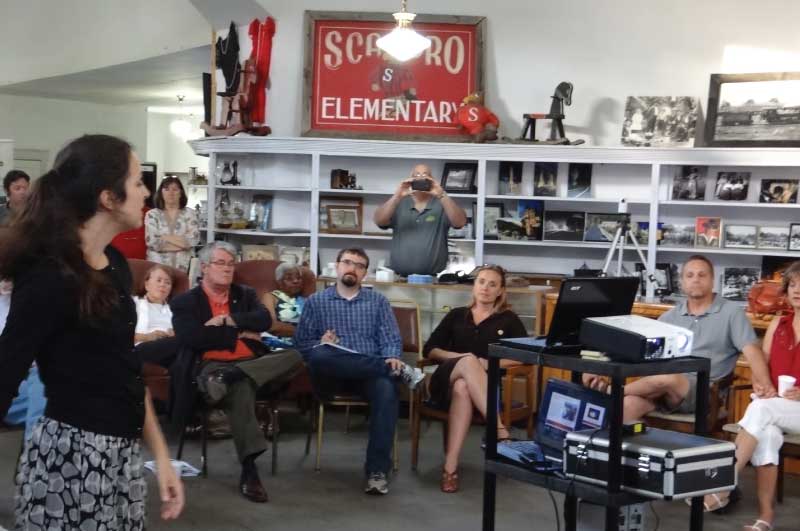
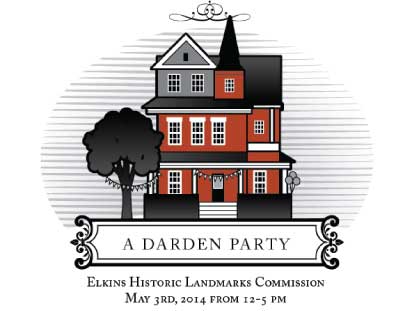
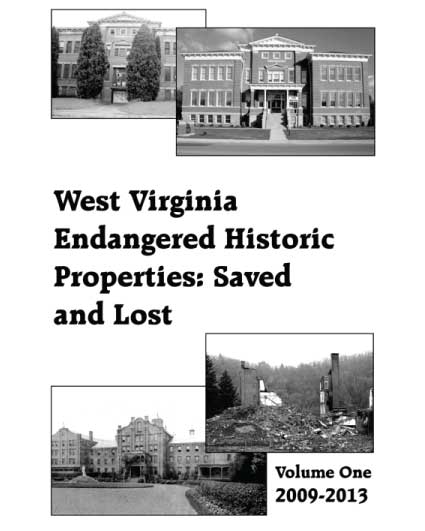
Meet PAWV’s new VISTA, staff, Preserve WV AmeriCorps, and PAWV Board of Directors and ask them historic preservation questions. Bring photos of specific historic buildings if you have questions related to their preservation. Have a question about historic windows, ask Lynn! PAWV’s very own Lynn Stasick will be giving a historic windows demonstration using windows from the Darden House. You will also be able to purchase a copy of PAWV’s new booklet: West Virginia Endangered Properties: Saved & Lost, 2009-2013 at a special discounted rate of $5!
Fun for the whole family! For questions, contact info@pawv.org.
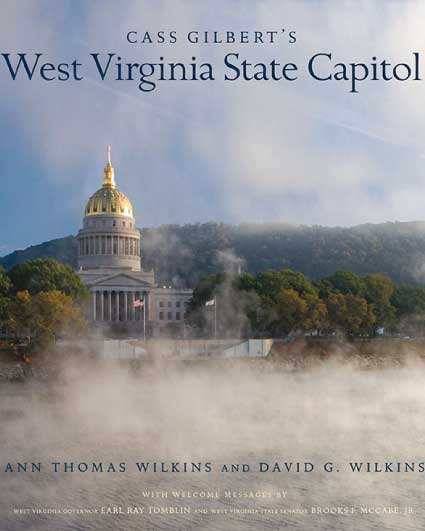
Cass Gilbert’s West Virginia State Capitol narrates the intricate story behind this architectural feat. Its close examination of the design, construction, and execution of this commission not only reveals the social, political, and financial climate of West Virginia during this period but also provides insight into the cultural importance of this public building. As Cass Gilbert’s design process is traced through unpublished documentation, drawings, and letters from several archives, the over one hundred accompanying photographs—many historical and others newly commissioned for this book—divulge the subtle beauty of the Capitol complex. At the same time, an extensive analysis of historical and contemporary illustrations and primary sources further elucidates the architectural value of this structure.
With welcoming remarks by West Virginia Governor Earl Ray Tomblin and State Senator Brooks F. McCabe, Jr., a prologue by art historians Bernard Schultz and Mary L. Soldo Schultz, and an epilogue by Chad Proudfoot, this revealing and comprehensive study examines the importance of this often overlooked architectural accomplishment, solidifying its significance as a socio-political symbol as well as its place within the history of American public architecture. To order this title, visit http://www.wvupress.com, phone (800) 621-2736, or visit a local bookstore. Cass Gilbert’s West Virginia State Capitol March 2014 / 368pp / 114 photographs / HCJ 978-1-938228-46-9 / $44.99 By Danielle, Executive Director
Abandoned and dilapidated properties are a problem for almost every community in West Virginia. Statistics compiled by the Coalfield Development Corporation last year reveal there are over 500 derelict buildings in McDowell County, 180 discarded residences in Beckley, and in the last ten years, over 400 neglected structures have been demolished in Clarksburg alone. These numbers are astonishing! Most communities realize the abandoned and dilapidated properties cause a slippery slope to reduced property values and tax base, increased crime and drug activity, significant environmental, health, and safety hazards, and more. Towns and cities all over West Virginia are feeling the effects of a dwindling population and do not know how to handle it. Last year, a group of nonprofit organizations – WV Community Development Hub, WV Brownfields Assistance Center, Coalfield Development Corporation, the Municipal League, and multiple individual communities – joined together as partners to form the Abandoned Properties Coalition (APC). The APC’s goal is to address this pervasive problem plaguing much of West Virginia on a statewide basis rather than on a case-by-case one. The APC is working with state legislators to pass specific legislation to address this problem and working together to remove arbitrary hurdles that make counteracting the epidemic abandoned properties more difficult. The goals of this initiative are to pull together stakeholders wanting to offset the negative effects of abandoned properties and be a unified voice (support organizations plus local municipalities) offering solutions that will have on-the-ground impacts in these communities. This can be achieved by dispersing information and educating communities with abandoned properties, and collaborating with legislators focused on improving policy. These partners realize that communities and legislators need many tools to effectively manage the situation. These tools should not be limited to demolition, the go-to for many town leaders, but also preservation, deconstruction, and adaptive re-use. PAWV joined the APC to bring our expertise in preservation and adaptive re-use of discarded historic properties. This partnership can build upon PAWV’s own statewide initiative, the West Virginia Endangered Properties Program, which works with communities to build support for and brings new life to neglected historic properties. Moreover, PAWV plans to advocate against any impending demolitions of National Register properties by reaching out to the WV State Historic Preservation Office, Certified Local Governments, and Landmarks Commissions. It is our belief that the preservation and re-use of our historic built environment are essential tools to prevent the perpetuating problems initiated by decaying structures and derelict properties. Preservation can reinvigorate a sense of community, and it is proven to increase property values and the tax base. As your statewide advocate for historic preservation, PAWV, in partnership with the APC, promises to continue our efforts to preserve and protect West Virginia’s heritage. Purchase one for yourself, and send one as a gift! The cost of the booklet is $10 plus $2.50 for shipping and handling. There are two ways to purchase the booklet:
October 3, 2013 · by preservationallliancewv · in Historic Architecture, Miscellaneous. ·Citizens and merchants of Historic Harpers Ferry, whose national park lays claim to historic 18th and 19th century events, including John Brown’s raids, are working together to keep the park open.
According to Gary DuBrueler, President of the Harpers Ferry Merchant Association, merchants and other locals are coalescing so visitors can have the memorable experience they expect and deserve. “They will also give information normally provided by Park Service employees,” DuBrueler says.“Our merchants will inform visitors of historic sites, walks for families, and places to eat…If they don’t have answers to visitors’ questions, they’ll leverage their networks and try to find someone who does.” In addition, locals have solutions to the following challenges: Closed: Federal parking lots and shuttle buses parking lots closed due to the shutdown, identifying and negotiating for spaces within walking distance of the historic district. Open: Parking is still available at lots in Historic Harpers Ferry and West Virginia’s nearby visitor center as well as additional spaces locals have identified or negotiated to use – the majority within walking distance from the historic section of town. Closed: Federally funded trails. Open: Yes, trails large and small are open! Locals will gladly point them out, including those on the Appalachian trail and C&O path. Further, according to Executive Director/CEO Ron Tipton, the Appalachian Trail Conservancy Visitor Center in Harpers Ferry remains open and will give visitors advice as to the many trails available to hikers. “Much of the Appalachian trail is state funded,” he says, “and open.” Closed: Public bathrooms. Open: Portable toilets will be available to visitors thanks to a collaborative effort on the part of the Town of Harpers Ferry, the Harpers Ferry Merchants Association, and the Harpers Ferry Historical Town Foundation. Closed: Museum exhibits. Open: Since many of the sites are outdoors, visitors can still explore them and the West Virginia visitors’ center is open with maps and advice. To complete the experience, merchants offer the chance for visitors to experience a wax museum depicting John Brown’s raid, ghost and historic foot tours from a local historian, a hands-on art center where visitors can create take-home memories, a Steampunk art gallery, and the nation’s only historic confectionary shop, carrying 18th and 19th century products, with free talks about each one. To make the trip additionally memorable, some merchants are offering discounts and special deals on products, food and activities, many with local or historic themes. Harpers Ferry lies on the confluence of the Shenandoah and Potomac Rivers and one of the stops along the Appalachian Trail. Known for its beauty and historic relevance, it was visited by Thomas Jefferson, was the site of John Brown’s raid, and played a pronounced part in the Civil War. A short drive from Baltimore, D.C. and other hubs, it welcomes visitors from all over the world. |
News and NotesCategories
All
Archives
January 2024
Subscribe to our mailing list to receive e-news updates on historic preservation news and events in West Virginia.
|

 RSS Feed
Get Involved |
Programs |
Contact UsPreservation Alliance of West Virginia
421 Davis Avenue, #4 | Elkins, WV 26241 Email: info@pawv.org Phone: 304-345-6005 |
Organizational Partners:

|

|

|
|
© COPYRIGHT 2022 - PRESERVATION ALLIANCE OF WEST VIRGINIA. ALL RIGHTS RESERVED.