PAWV
  • About
  • News
  • Programs & Initiatives
    • Annual Awards
    • Conference >
      • Lodging for PAWV Conference
      • Conference Sponsorship
    • Historic Rehabilitation Tax Credits
    • Most Endangered Properties
    • Preserve WV AmeriCorps >
      • Join Preserve WV AmeriCorps
      • Preserve WV Stories
      • Sponsor an AmeriCorps Member
    • Webinar Archive
    • WV Historic Theatre Trail
    • WV New/CCC Deal Trail
  • Resources
    • Funding >
      • Historic Preservation Loan Fund
      • Saving Historic Places Grant
    • Historic Preservation Professionals Directory
    • Preservation Techniques >
      • Historic Building Assessment
      • How to Recycle Asbestos
      • Mothballing Property
      • Window Rehabilitation
    • A Field Guide to West Virginia New Deal Stone Masonry
  • Contact & Get Involved
    • Contact
    • Ways to Give to PAWV
    • Volunteer
    • Year-end Donations

CHARETTING THE JENKINS HOUSE WITH ROBERT

10/5/2014

 
By Robert

My name is Robert Wolfe and I am currently finishing my MA in public history from West Virginia University. Starting in December I will begin serving at Main Street Fairmont in Fairmont, West Virginia. Given my educational background in historic preservation and public interpretation, along with my interest in adaptive land reuse, a Main Street program is an ideal place for me to undertake a service position. Throughout my education I have had the privilege of working for a number of institutions including; George Washington’s Mount Vernon, the Pendleton Historic Foundation, and the Heritage Trail Conservancy of Madison Indiana. I know my time at Main Street Fairmont will be equally as rewarding.

Since finishing my Undergraduate Degree I have been fascinated with discovering new ways to utilize our heritage. Like many people in the field of public history, I believe there is an excess of historic house museums. Too many stories competing for a limited audience is creating a strain on budgets. While it would be nice if house museums could sustain themselves on admissions alone, it simply is not feasible in the 21st century. Historic houses need to gather new audiences so that we all may retain our cultural heritage. Just because a building is old, doesn’t mean it must be a museum!
Picture
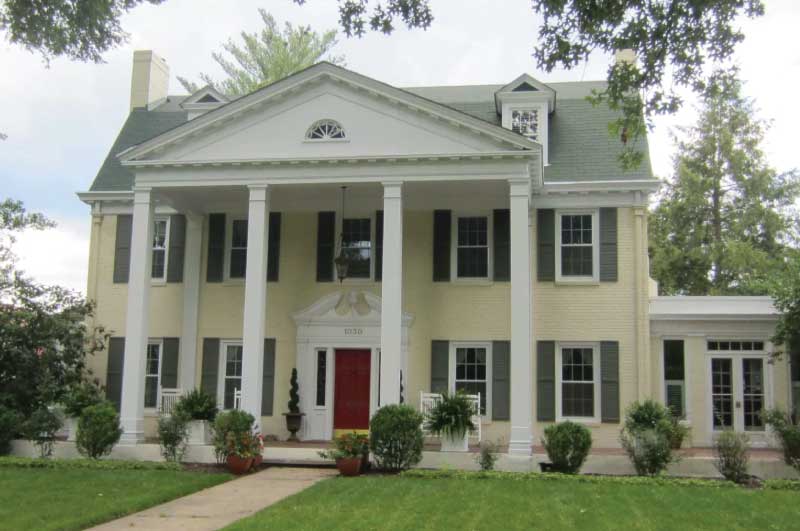
The Jenkins House in its current restored condition. Photo credit Robert Wolfe
Picture
The view from the field adjacent to the Jenkins House. Perfect for large gatherings and special events. Photo credit Robert Wolfe.
The workshop “Charetting the Jenkins House” at the Preservation Alliance of West Virginia 2014 Conference, was a natural workshop to attend. The Jenkins House (Green Bottom) is an 1825 plantation house on the Ohio River. The home, currently owned and mothballed by the U.S. Army Corps of Engineers, has been meticulously restored to its appearance in 1825. The Jenkins House operated as a house museum for a time. During this period the house would host Civil War encampments and special holiday events. The Jenkins House currently awaits a new use.

The charette was a refreshing change in house museum narratives. Local historical societies typically receive the unfair stereotype of being inflexible in their beliefs. The stakeholders of the Jenkins House were interested in restoring the old museum events but also interested in expanding the scope of activities at the site. The site has an excellent view of natural wetlands and ample space for people. The natural beauty lends itself to its use as an event space. Other options discussed include a community garden, a historic gardening site, or community space for local events. As a government property, the Corps of Engineers is responsible for upkeep and bills for the Jenkins House. The Jenkins House is in an advantageous position to experiment with new uses. This gives the property an advantage, allowing the stakeholders to put more resources into developing alternative uses for the property.

Charettes are just one example of how historic preservationists can interact with the local community to preserve local heritage. The PAWV Conference allowed me to get hands on experience on the benefits and uses of charettes. Classroom experience can never equal field experience.

AT RITTER PARK WITH CHELSEA

10/1/2014

 
By Chelsea, Preserve WV AmeriCorps at Morgantown History Museum

My name is Chelsea Elliott and I am an undergraduate student at West Virginia University. I will be graduating in May 2015 with BA in History and two minors in anthropology and English. As an AmeriCorps member, I serve at The Morgantown History Museum located at 715 Kirk Street in Morgantown. The museum serves to, “to preserve and promote local and regional history and to make it accessible to the citizens of Morgantown and visitors to the region.”

My first month of service with the AmeriCorps included various training sessions and activities. However, my favorite event occurred at the PAWV conference in Huntington, WV. One activity that was available at the conference was a walking tour of the historic Ritter Park.
Picture
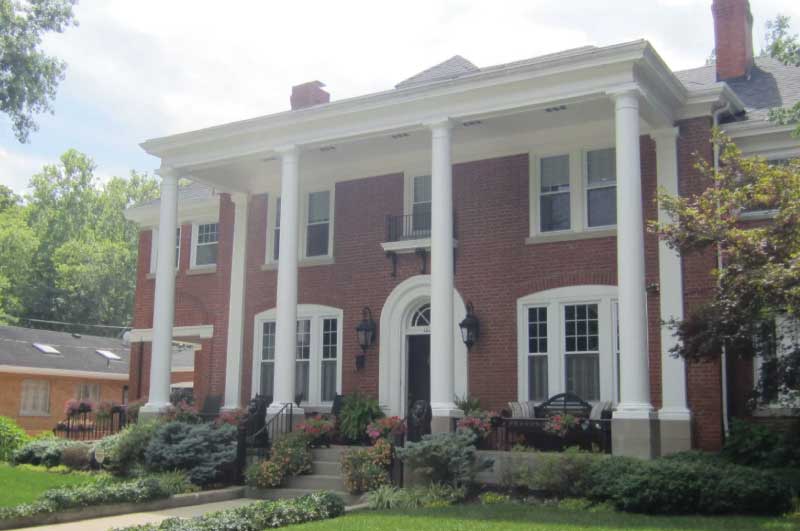
Cammack-Agee House on 13th Ave. Photo credit: Chelsea Elliott
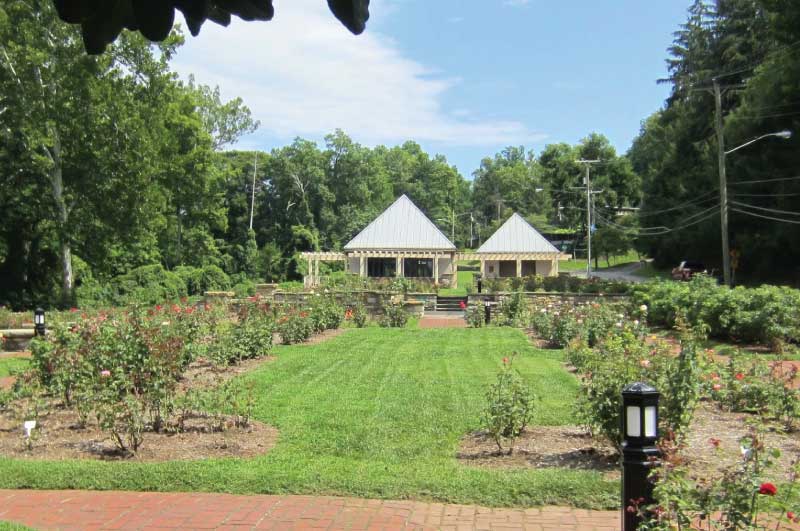
Ritter Park is located in the historic district of Huntington. Surrounding the park are gorgeous historic homes, each different and unique. This conference activity began in a small building named “A Room with a View,” and it overlooks the rose garden located in the park. Our walking tour began here with a brief introduction to the creation of the park and how it got to be where it is today. Jim St. Clair, a prominent member in the Huntington community, provided an introduction to the park.

From here we were able to walk around the park, absorb its beauty and history, and enjoy a warm fall day. It was a relaxing activity, and as a tourist in the city of Huntington it was easy to appreciate the wonderful park and history. Located throughout the park were plaques commemorating the past, and dedications to future hopes in the park. We were able to see areas where growth was still occurring, and where the past was being preserved.
​
As a whole, beginning the PAWV conference with a scenic walking tour was a wonderful beginning to the upcoming days. We were able to appreciate the past while still seeing how the park was functioning in the present day.
Picture
In the Rose Garden. Photo credit: Chelsea Elliott

THANK YOU FROM THE GROUND UP CONFERENCE SPONSORS!

9/30/2014

 
Picture

RITTER PARK WALKING TOUR – CONFERENCE INSIDER LOOK

8/29/2014

 
Ritter Park Walking Tour
Thursday, September 25
11:30 am – 2:30 pm


This year’s PAWV conference will feature a walking house and park tour. Huntington is known for having a great sampling of historic houses including Craftsman Bungalow, Early Classic Revival, Italian Renaissance, and many more. The tour will take the group around the neighborhood surrounding the famous Ritter Park, explaining the background on select houses that exhibit unique architectural features.

Ritter Park is a fine example of the City Beautiful Movement in West Virginia.  “The City Beautiful advocates sought to improve their city through beautification, which would have a number of effects: 1) social ills would be swept away, as the beauty of the city would inspire civic loyalty and moral rectitude in the impoverished; 2) American cities would be brought to cultural parity with their European competitors through the use of the European Beaux-Arts idiom; and 3) a more inviting city center still would not bring the upper classes back to live, but certainly to work and spend money in the urban areas. The premise of the movement was the idea that beauty could be an effective social control device”. (Citation HERE)

Enjoy the view of homes and the award-winning Ritter Park – which were influenced by this nation-wide movement.  Other examples of City Beautiful neighborhoods include Schenley Farms district of Oakland in Pittsburgh and Coral Gables in Florida.

The walking tour will include stops on Eighth Street and Thirteenth Avenue. Enjoy the view of Marshall University’s President’s House and the Wright House. There will also be a tour of Switzer Wallace Plaza and the award-winning Rose Garden in Ritter Park.

After the walking tour, participants are invited to join PAWV at a private residence near the park.  It is not within walking distance so we will need to drive there.

Total walking distance will be about 1.5 miles total. Wear comfortable shoes and bring an umbrella.  “A Room with a View” in Ritter Park is the location for tour registration and the end point of the tour. Refreshments will also be available. Parking available in Amphitheatre Parking Lot. Address for A Room with a View is 1310 8th Avenue, Huntington.

The 2014 PAWV statewide conference will be held in Huntington, WV from September 25 – 27, 2014.  You can register for the conference and learn more about it by visiting our EventBrite page.
​
The conference has been financed in part with Federal funds from the National Park Service, Department of the Interior and the WV Division of Culture & History, State Historic Preservation Office.

Regulations of the U.S. Department of the Interior strictly prohibit unlawful discrimination in departmental Federally Assisted Programs on the basis of race, color, national origin, age or handicap. Any person who believes he or she has been discriminated against in any program, activity, or facility operated by a recipient of Federal assistance should write to: Office of Equal Opportunity, National Park Service, 1849 C Street, NW, Washington, DC 20240

REQUEST FOR PROPOSALS FOR STATEWIDE HISTORIC PRESERVATION CONFERENCE

1/12/2014

 
Preservation Alliance of West Virginia is currently accepting proposals for its statewide historic preservation conference scheduled for 25-27 September 2014 in Huntington, WV.  This year’s conference theme is “From the Ground Up: Archaeology, Brownfield Re-use, & Historic Preservation”.  Conference proposals should relate to the theme of archaeology with an additional focus on how archaeology has been used in brownfield re-use and historic preservation projects.  Proposals will also be accepted for conference tracks: preservation policy, heritage development, and preservation skills.

In order to have a successful conference we would like to ask those in the preservation field and the general public to propose speakers, facilitators, educators, and more for this year’s event.  The conference tracks include: Preservation planning and policy; heritage development and tourism; and Preservation trade skills and methodology. We are looking for knowledgeable professionals willing to lead one or more of the following:
  • Plenary speaker
  • Panel presentations
  • Half- and full-day workshops
  • Educational walking or driving tours
  • Short educational sessions
  • Student poster sessions
  • Round-table discussions 

For more information on each of these positions, necessary qualifications, and applications, please see the guidelines below. PAWV will begin reviewing applications on 28 March 2014 and will continue to accept application until all conference programming has been selected.

Submit proposals, preferably via email, to info@pawv.org and/or 3 hard copies to:
PAWV
Darden House
421 Davis Avenue
Office #3
Elkins, WV 26241

For more information, please contact PAWV at info@pawv.org or 304-345-6005.

This RFP does not indicate any promise to follow through and implement any proposals.  We reserve the right to select different trainers for different workshops.  PAWV staff will organize and direct the workshops and will have final approval of content.

Volunteer presenters are encouraged. Honorarium may be available for some presentations and will be negotiated on a case-by-case basis.  Conference fees at a discounted volunteer rate apply to speakers and trainers wishing to participate in special activities, including the historic preservation awards banquet and luncheon.

Proposal Application Requirements: 
Preservation professionals interested in providing preservation training for any of the above formats — speakers, workshops, educational sessions, roundtables, panel discussions, and/or educational tours should submit a proposal including:
  • Qualifications, credentials, and experience:
  • Skill(s) that you are qualified to teach
  • Teaching or training experience
  • A short one-paragraph bio suitable for use in conference handouts
  • Organizational affiliation, if any
  • Description of proposed presentation, no more than one page
  • Short abstract, no more than 150 words, for use in conference handouts
  • Tools or equipment, if applicable, you can provide for the class and student use
  • Materials and site requirements you would expect to be provided
  • Availability 
Volunteer presenters are encouraged. Honorarium may be available for some presentations and will be negotiated on a case-by-case basis.  Conference fees at a discounted volunteer ate apply to speakers and trainers wishing to participate in special activities, including the historic preservation awards banquet and luncheon. 

Positions Available: 
  • Plenary speakers
    We are seeking three plenary speakers for a 15-30 minute speech on local history for an opening plenary session on Friday, 26 September; a 30-45 minute keynote speech about the conference theme for the awards banquet on Friday, 26 September; and a 30-45 minute speech about the conference theme on Saturday afternoon, 27 September.
  • Workshop leader
    ​Trades workshops are best held at a historic property, with hands-on work performed on the property as part of the workshop.  Some workshops include a classroom component or may be intensive training on a focused topic. Occasionally other formats, such as a longer training period, or combining multiple skills in one workshop, may be offered. These workshops can be either a half or a full day. Trainers should have extensive experience in the specific skill, thorough familiarity with historic preservation issues regarding that skill, and experience in teaching the skill. Trainers are encouraged to bring additional hand tools for students’ use for hands-on practice.
  • Educational speakers
    Educational speakers will lead a 75-minute session. Each session will most likely be held at an educational breakout room assigned at a specific site.  Conference participants will have the option of attending various sessions throughout the three-day period.  Speakers should have extensive experience in the specific topic, thorough familiarity with historic preservation issues regarding that skill, and/or experience in teaching the skill.
  • Round-table leaders
    The round-table discussions will be 75-minutes long and will be located at a specific educational breakout room.  Leaders of round-table discussions must have widespread knowledge and experience working with a specific topic.  Leaders will be available to discuss and answer questions asked by conference participants regarding the discussion topic, and to encourage constructive input and sharing of experiences from the participants.
  • Panel presenters and moderators
    Leaders/moderators of panel presentations will assemble 2 or 3 panel presenters to each give a short presentation related to the same theme, followed by discussion led by the moderator. Names and qualifications of each panel participant should be included in the proposal. Panel sessions last 75-minutes and will be held at a specific educational breakout room. 
  • Tour guides
    Walking tours generally run from 1 ½ to 3 hours. Driving tours may be a half-day or longer.  Guides must have pervasive knowledge of the historic structures and properties described on the tour.  It is requested that tour guides are not only knowledgeable in the historic uses of the buildings but also the preservation methods and/or technologies used during the preservation of the structures/sites. While a primary focus or theme of the tour will be an aspect of local history, we encourage tours to also have an educational component related to the conference theme and/or one of the conference tracks. 

Three Conference Tracks:
Conference attendees can choose to attend workshops and educational sessions related to three conference tracks, which focus on specific themes common in historic preservation projects and development.  By featuring three different tracks, conference attendees can choose the topic that best reflects their interests and gain the most from their experience.  Attendees will have the choice of Thursday workshops/tours reflective of track themes, as well as Friday and Saturday concurrent educational sessions.  Proposals should be related to one of the following tracks.
  • Preservation planning and policy: This track aims to educate about best planning practices, capacity building, and incentives for archaeology and historic preservation projects at the local, state, and federal level by working with/as government entities and non-profit organizations.  Proposals about overcoming obstacles in preservation planning are highly sought.  However, proposals discussing state and federal legislation and preservation will also be considered.
  • Heritage development and tourism: Emphasizing economic development through archaeology, brownfield re-use, and historic preservation, this track’s themes include heritage and cultural tourism and the process of developing an economically beneficial basis for such.  Proposals discussing interpretation of sites and landscapes will also be considered.
  • Preservation trade skills and methodology: Focused on the reasons for proceeding with archaeology, brownfield re-use, and historic preservation, as well as the tools/skills needed to do so, this track will emphasize the best steps in initiating, performing, and completing archaeology and historic preservation projects, which also includes brownfields and landscapes.  Hands-on workshops and how-to sessions will be considered for this track.  

CHANGE OF PRESENTER FOR SEPTEMBER CONFERENCE: LEARN MORE

8/23/2012

 
For the Preservation Alliance of WV conference, Sept. 27-29, in Jefferson County, there has been a change of Plenary Speaker on Friday afternoon.

Instead of Dr. Vishakha Maskey presenting, we will be having Dr. Peter Schaeffer from West Virginia University’s Division of Resource Management.

Here’s a sneak peek into Peter’s talk.  Sounds intriguing!

On the Logic and Limitation of Economic Approaches in Historic Preservation

Since the 1980s, economic market solutions to public policy problems have gained acceptance in such areas as environmental protection and historic preservation. This pre­sen­tation explains the logic and philosophy behind such economic approaches. In so doing, the presentation indicates limitations of an economic approach, particularly when economic values conflict with non-economic values, such as those labeled sentiment and symbolism by the Walter Firey, a pioneer in the field of urban ecology.

You can register for the conference at http://www.pawv.org/conferences/conf12.htm.
Forward>>

    News and Notes

    Newsletter Archive

    Categories

    All
    About
    Advocacy
    Awards
    Conferences
    Endangered Properties
    Excuse For An Excursion
    Federal Historic Tax Credit
    For Sale
    Funding
    Heritage Areas
    Heritage Tourism
    Historic Architecture
    Historic Preservation Funding
    Historic Preservation Programs
    Miscellaneous
    Newsletter
    Preservation Legislation
    Preserve WV AmeriCorps
    State Historic Tax Credit
    Trades
    Training
    WV Preservation Spotlight

    Archives

    January 2026
    November 2025
    October 2025
    July 2025
    June 2025
    May 2025
    April 2025
    March 2025
    January 2025
    December 2024
    October 2024
    August 2024
    May 2024
    January 2024
    November 2023
    July 2023
    May 2023
    February 2023
    December 2022
    August 2022
    March 2022
    February 2022
    January 2022
    December 2021
    November 2021
    September 2021
    June 2021
    May 2021
    April 2021
    March 2021
    February 2021
    January 2021
    May 2020
    December 2019
    November 2019
    September 2019
    July 2019
    March 2019
    February 2019
    August 2018
    July 2018
    June 2018
    May 2018
    April 2018
    March 2018
    February 2018
    January 2018
    December 2017
    November 2017
    October 2017
    September 2017
    August 2017
    July 2017
    June 2017
    May 2017
    April 2017
    March 2017
    February 2017
    January 2017
    December 2016
    November 2016
    October 2016
    September 2016
    August 2016
    July 2016
    June 2016
    May 2016
    April 2016
    March 2016
    February 2016
    December 2015
    November 2015
    October 2015
    September 2015
    August 2015
    July 2015
    June 2015
    May 2015
    April 2015
    March 2015
    February 2015
    January 2015
    December 2014
    November 2014
    October 2014
    September 2014
    August 2014
    July 2014
    June 2014
    May 2014
    April 2014
    March 2014
    February 2014
    January 2014
    December 2013
    November 2013
    October 2013
    September 2013
    August 2013
    July 2013
    June 2013
    May 2013
    April 2013
    March 2013
    February 2013
    December 2012
    November 2012
    October 2012
    September 2012
    August 2012
    July 2012


    Subscribe to our mailing list to receive e-news updates on historic preservation news and events in West Virginia.
    Subscribe

Get Involved

  • Give Online
  • ​Volunteer​​​
  • Contact Us

Programs

  • Annual Awards
  • Conferences
  • Endangered Properties List
  • Preservation Professionals Directory​
  • Preserve WV AmeriCorps​​​​


Contact Us

Preservation Alliance of West Virginia
​421 Davis Avenue, #4  |  Elkins, WV 26241
​Email: [email protected]
Phone: 304-345-6005
Donate to PAWV
© COPYRIGHT 2025 - PRESERVATION ALLIANCE OF WEST VIRGINIA. ALL RIGHTS RESERVED.
  • About
  • News
  • Programs & Initiatives
    • Annual Awards
    • Conference >
      • Lodging for PAWV Conference
      • Conference Sponsorship
    • Historic Rehabilitation Tax Credits
    • Most Endangered Properties
    • Preserve WV AmeriCorps >
      • Join Preserve WV AmeriCorps
      • Preserve WV Stories
      • Sponsor an AmeriCorps Member
    • Webinar Archive
    • WV Historic Theatre Trail
    • WV New/CCC Deal Trail
  • Resources
    • Funding >
      • Historic Preservation Loan Fund
      • Saving Historic Places Grant
    • Historic Preservation Professionals Directory
    • Preservation Techniques >
      • Historic Building Assessment
      • How to Recycle Asbestos
      • Mothballing Property
      • Window Rehabilitation
    • A Field Guide to West Virginia New Deal Stone Masonry
  • Contact & Get Involved
    • Contact
    • Ways to Give to PAWV
    • Volunteer
    • Year-end Donations