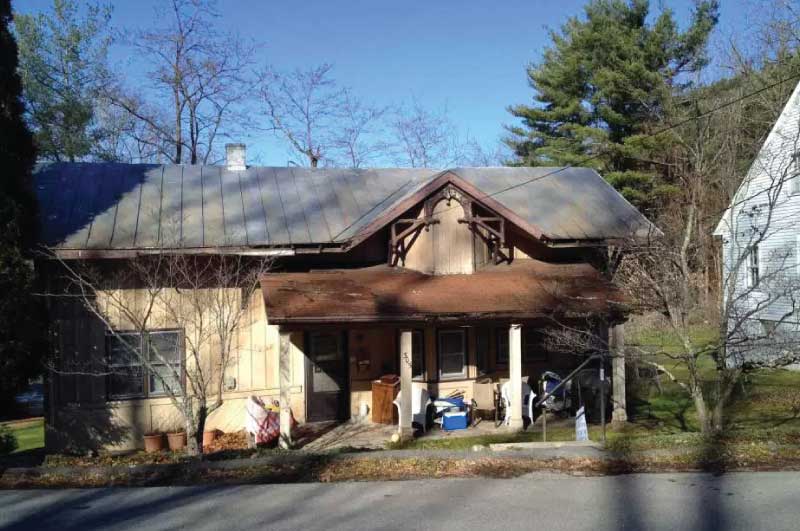
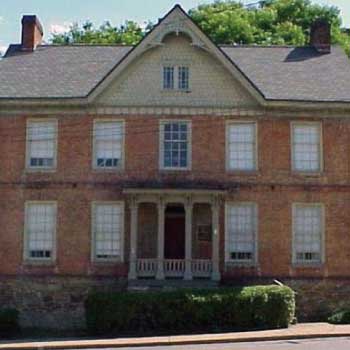
Built about 1910, the 18 ft. x 40 ft. structure served as the first Lewisburg passenger and freight depot for the L&R. It has been a private residence for more than 50 years and is one of the last remaining pieces of the L&R history. When the L&R designed the depot, it appears that the it acquired plans from the C&O for its Standard Combination Station No. 1 which had become a C&O standard station about 1892. Characteristic of this design are the gingerbread decorations in the gables at each end. The L&R station is believed to have had waiting rooms on each side of an office with an extension to handle mail, express, and baggage. This style became one of the most iconic station designs on the C&O, and a hallmark of its presence in Virginia, West Virginia, and later in Kentucky.
According to Tom Dixon, a foremost railroad authority and president of the C&O Historical Society, the L&R depot is the only surviving example of what appears to be a nearly exact C&O Standard No. 1 station. Dixon writes, “It deserves to be preserved as an important artifact of the American railway experience, and a reminder of how Lewisburg attempted to compensate for its not being located on a major railway.” For a very nominal price, the new depot owner may be entitled to some financial assistance, state tax credits, and possible nomination to the National Register of Historic Places. For additional information, interested parties may contact Commissioner Skip Deegans at 304-646-8475. By Rachael, AmeriCorps VISTA
The Feast of the Seven Fishes Festival in downtown Fairmont is held the second Saturday in December each year to celebrate the Italian Christmas Eve tradition. Located on Monroe Street in historic downtown Fairmont, the popular street fair dedicated to preserving Italian-American culinary and cultural traditions will be open from 11 am to 6 pm. Traditional Italian foods, live music, a cooking school, a street market, and plenty of warm, dry seating are all awaiting attendees. The festival, organized by Main Street Fairmont, continues to grow each year – but the Italian authenticity and sense of community remains. This one-day event is a lovely way to get ready for the holidays – featuring authentic Italian cuisine, shopping, music, cooking demos, and a street market. A unique feature of the festival is the live cooking demo presented each year by the Festival Cucina cooking school. The cooking school teaches participants step-by-step to prepare a variety of old and new recipes they can serve at home on Christmas Eve. The recipes change each year so that participants can enjoy a new tradition to take home. Local bands, dancers, and singers will perform a unique combination of Italian and Christmas music. Local crafters will showcase the best of their Italian roots and Appalachian heritage. Seating and tables will be located in the former firehouse on Monroe Street and in various locations under shelter to keep visitors warm. After the festival, head over to Morris Park and check out Festival of the Lights. This annual holiday event costs $10 per car and offers 1.3 miles of animated Christmas displays. The Marion County community invites people to share its Italian heritage at the Feast of the Seven Fishes Festival on Dec. 12. For more information, visit the Main Street Fairmont webpage at http://mainstreetfairmont.org/ and at http://threecitieswv.com/2015/10/30/feast-of-the-seven-fishes-festival/. The Preservation Alliance of West Virginia is pleased to announce that it is now accepting applications for new sites to be added to the West Virginia Historic Theatre Trail. Theater owners, interested community organizations, and others can apply to add a theater to the Trail by submitting an application form to info@pawv.org by November 15, 2015, at 5:00pm. Download the application form here: WV Historic Theatre Trail Application.
The West Virginia Historic Theatre Trail is a statewide thematic tour of historic theaters, encompassing both cinemas and live performance venues. All of the Trail’s theaters are listed in, or have been officially determined eligible for, the National Register of Historic Places – the official list of the nation’s historic places deemed worthy of preservation by the National Park Service. Currently encompassing 24 theaters across 17 of West Virginia’s 55 counties, the Trail promotes the rehabilitation and sustainable operation of our state’s historic theaters for the enjoyment of the public. The Trail was born in 2010 following a 2007 Preserve America grant award to the West Virginia Division of Culture and History’s State Historic Preservation Office (SHPO), in partnership with PAWV, to develop statewide thematic tours to encourage heritage tourism in communities throughout the state. The American Battlefield Protection Program (ABPP) of the National Park Service in Washington, DC, has opened its 2016 grants competition. The ABPP awards grants for preservation projects that lead to the permanent protection of endangered battlefield lands. Projects that involve multiple stakeholders are given preference.
Who May Apply? Non-profit groups, academic institutions, and local, regional, state, and tribal governments Target Resources Project areas must be on American soil and/or within U.S. territorial waters. 1 ) Battlefields – occurred between two opposing military organizations or forces recognized as such by their respective cultures (not civil unrest). 2) Associated Sites – Sites occupied before, during, or after a battle at which events occurred that had a direct influence on the tactical development of the battle or the outcome of the battle. A site must be associated with a battle in order to be considered an Associated Site. Eligible Project Types Eligible project types include, but are not limited to, the following. Site Identification and Documentation Projects – Historical research – Archeological surveys and cultural landscape inventories – Nominations to the National Register of Historic Places – GIS/GPS mapping Planning and Consensus Building Projects – Acquisition, strategic, and preservation plans – Studies of land related to, or adjacent to, publicly owned and protected battlefield lands – Management, landscape, and stabilization plans – Interpretation plans – Preservation advocacy and consensus building within a community Interpretation or Education Projects – Brochures stressing preservation – Interpretive programs stressing preservation techniques – Sign development and design All project applications must clearly demonstrate that the proposed activity will contribute directly to the preservation of battlefield land or an associated site. Grant funds may be used to procure professional services, equipment, and supplies necessary to conduct the proposed project. Matching Funds None required, although applications that include matching funds and in-kind donations will be given preference. Award Amounts No minimum or maximum. The average award amount is $32,300, although the ABPP has awarded grants beyond $100,000. Application Deadline January 14, 2016 by 4 pm, EST. For paper submissions, applications must be hand stamped in by 4 pm (post marks and delivery receipts not accepted after deadline). For Grants.gov submissions, applications must be uploaded and submitted by 4 pm, EST. The 2016 guidelines and application form are available online at www.Grants.gov (click on the “Search Grants Tab” along the top. Then search by our CDFA # 15.926 on the left) and www.nps.gov/abpp/grants/planninggrants.htm. For more information about ABPP grants, or to receive paper copies of the guidelines and application, please contact Kristen McMasters, ABPP Grants Manager, at 202-354-2037 or Kristen_McMasters@nps.gov. $3 Million in Short-Term Planning Assistance Available to Coal-impacted Communities under the Partnerships for Opportunity and Workforce and Economic Revitalization (POWER) InitiativeThe U.S. Economic Development Administration (EDA) recently announced the availability of $3 million in planning assistance to communities impacted, or which may be impacted, by contractions in the coal economy. These funds are made available as part of the Partnerships for Opportunity and Workforce and Economic Revitalization (POWER) Initiative, a new interagency effort to assist communities negatively impacted by changes in the coal industry and power sector.
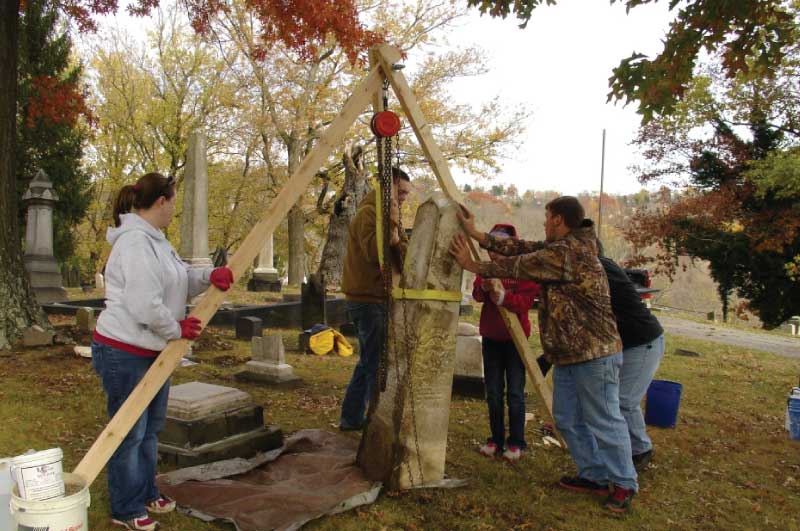
Economic changes often result in job loss and other concrete negative impacts, but can also generate mounting concerns about perceptions of uncertainty and risk in the regional economy. One of the first critical steps that communities need to take is to build a cohesive strategy for how they will adapt to these changes. Effective planning creates a road map which practitioners, policymakers and other stakeholders can use to identify and take the actionable steps necessary to realize their desired economic vision. These new planning funds will support the bottom-up strategies developed by the local communities. Successful applications will enable affected communities to develop detailed strategies to: diversify their economies, create jobs in new or existing industries, attract new sources of job-creating investment, and/or how to provide a range of workforce services that result in industry-recognized credentials for high-quality, in-demand jobs. Successful applications may also include projects that explore the feasibility of specific economic development diversification projects, entrepreneurship promotion, or assessments to provide community stakeholders key asset and impact information from which to conduct future strategic planning. Funding will be available until expended or until September 30, 2015. To apply for this funding, please follow instructions included within the Planning and Local Technical Assistance FFO and the addendum. <http://eda.us1.list-manage.com/track/click?u=e01f5dccdcdbbf9c1b38379f5&id=ddf23b93ac&e=2c8901673e> For additional information, please contact your EDA state representative. <http://eda.us1.list-manage1.com/track/click?u=e01f5dccdcdbbf9c1b38379f5&id=261892cbd3&e=2c8901673e> The Mt. Wood Cemetery Restoration Project is participating in the Amazing Raise Ohio Valley, a 24-hour online giving challenge sponsored by the Community Foundation for the Ohio Valley. This giving day will take place TODAY, Tuesday, May 5, and we really hope you will participate! The minimum gift is only $10!! The money you donate goes to supporting this important project – like hiring monument companies to reset the large obelisks that have fallen, buying supplies for our monthly volunteer workdays, and going forward, restoring the 10 mausoleums that are found within the cemetery. You can make your donation here: https://www.giveov.org//#npo/wheeling-national-heritage-area This past year has been a great one for this old cemetery located off National Road and overlooking the city of Wheeling. It is the City’s oldest cemetery and has been a victim to its topography (gravity) and heavily vandalized in years past. We have had a very successful past two years working in the cemetery — resetting 11 large obelisks, leveling and resetting over 100 smaller monuments and gravestones and cleaning hundreds more! But, we still need your help! There are still hundreds of gravestones that need our attention! This work can only continue through the generosity of donors like you!!!
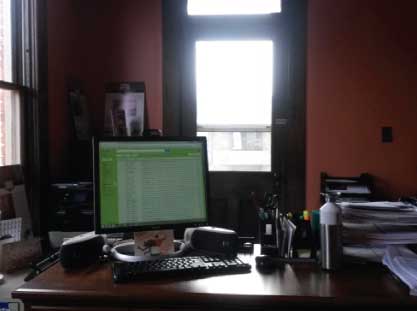
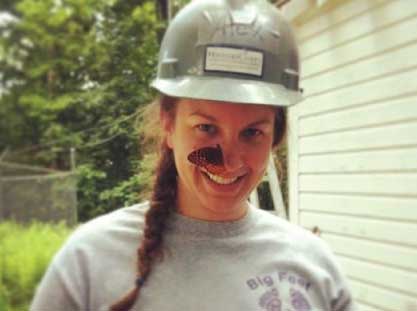
By Alex, PAWV VISTA As my one year VISTA term comes to an end this week, this will be my last blog post for PAWV. What a year it has been! I joined PAWV in April 2014. We were off to a running start with conference planning for our 2014 Conference in Huntington, WV. I helped set up our small, #3 office to a functional work space as I learned the ropes and started traveling to some of PAWV’s sites. Our AmeriCorps member, Rodney, moved on in August and 2014-2015’s AmeriCorps member, Nicole joined our little team. Nicole’s first term started in September. After the conference we focused on fundraising and I helped start the “On the Road” photo campaign and implemented the miles fundraiser for the end of the year. I also completed my research on the Historic Preservation Development Grants and wrote a full report on its funding. Hopefully, that will be used for future historic preservation advocacy. The new year brought more things to do. We started the process of choosing a location for the 2015 awards banquet and my hometown of Grafton, WV won in the the online vote. This year’s awards banquet will be held September 19, 2015 at the historic B & O Train Depot in downtown Grafton. I look forward to attending. Once we had our small #3 Darden office set up and running, we realized that we needed more space! So in March, we packed up our stuff and moved down the hall into office #4, with more space for our files and second desk for our other staff members. With the growing need for advocacy and attention on West Virginia’s historic buildings, we started the Buildings At Risk Register (B.A.R.R.). We have already begun listing buildings on it and I’m excited to see it take off. It’s great to see Preservation Alliance of West Virginia growing even in the one year I have been here and I hope to see it continue to thrive as I participate as a member. I will always have a special place in my heart for the Darden House at 421 Davis Avenue.
“We began applying and you know reaching out for the community to get some recommendations to support us,” said Sherri Heavner, Treasurer of the Harrison County Historical Society.
They received the West Virginia Development Grant, through the State Historic Preservation office to start work where it’s most needed, the exterior of the house. http://www.harrisoncowvhistoricalsociety.org/stealey-goff-vance-house.html “And they’re going to put in bracers and spacers and they’re gonna gradually over the course of several months come in here and gradually raise up this portion of the building so that it’s level with the bricks,” said Crystal Wimer the Preserve West Virginia AmeriCorps Member for the Harrison County Historical Society The next step in the renovation process is to get bids for all of the work that needs to be done. The Harrison County historical society hopes that that work will begin sometime this summer. Appalachian Forest Heritage Area is seeking site sponsors for Hands On Team projects for the 2015-2016 year! The AmeriCorps year runs from September, 2015 to August of 2016, with a crew of up to 4 members. The HOT serves on multiple projects, on a project-to-project basis. AFHA is accepting applications for projects relating to hands-on historic preservation, including projects like repointing, in-place window restoration, plaster or siding repair, and painting. Interior projects are highly sought for the winter months. The team can also help with outdoor conservation, recreation, trails, beautification, and landscaping projects. Projects must comply with the Secretary of Interior standards.
The Hands On Team is not a fully qualified construction crew and each project will need a knowledgeable supervisor or contractor. Sites must have cash match, direct supervision, and provide materials and some tools. If further afield, sites may need to include a travel budget, as most of the AmeriCorps members are in Elkins, and lodging. Applications are due April 20th, 2015. Please email Alison Thornton at thorntonalison12@gmail.com for more information and a Hands On Team application. Every hand helps. This Saturday, March 28th, 2015, lend us your hand in preserving our nation’s hallowed ground.Rich Mountain Battlefield Foundation, in coordination with the Civil War Trust, will be leading a community-wide cleanup of the Rich Mountain Battlefield. Tools and water will be provided. Meet on the mountain at 10 am.
We hope to see you there! For more information on Park Day nationwide: http://www.civilwar.org/aboutus/news/news-releases/2015-news/national-park-day-event-2015.html |
News and NotesCategories
All
Archives
May 2024
Subscribe to our mailing list to receive e-news updates on historic preservation news and events in West Virginia.
|



 RSS Feed
Get Involved |
Programs |
Contact UsPreservation Alliance of West Virginia
421 Davis Avenue, #4 | Elkins, WV 26241 Email: info@pawv.org Phone: 304-345-6005 |
Organizational Partners:

|

|

|
|
© COPYRIGHT 2022 - PRESERVATION ALLIANCE OF WEST VIRGINIA. ALL RIGHTS RESERVED.