|
What is mothballing? Why should you do it? What are the benefits? Learn all this by watching this short video produced by WBOY Channel 12.
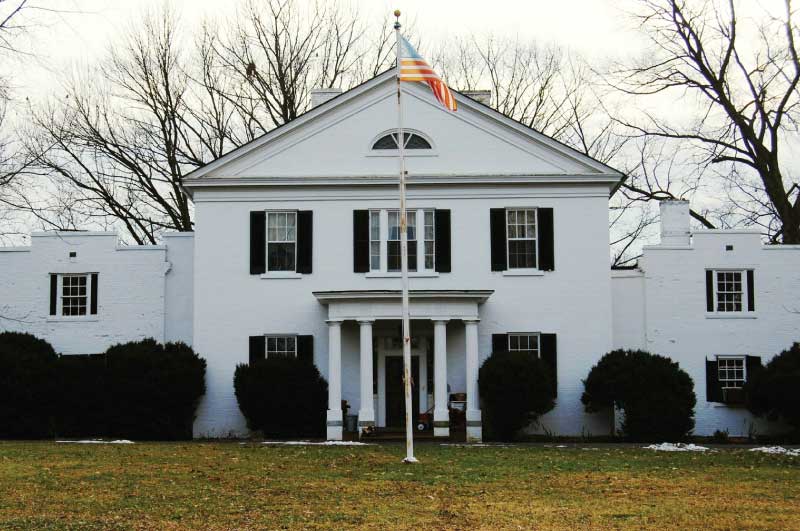
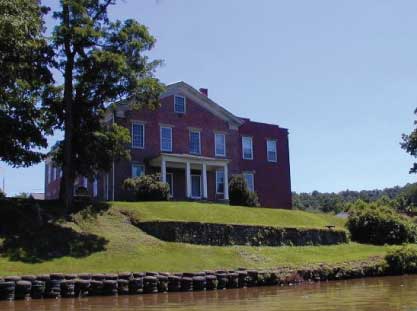
Friends of Happy Retreat announced recently that it has received a major gift to fund the purchase of Happy Retreat, the historic home of Charles Washington, younger brother of George Washington and founder of Charles Town. The donation comes from Dr. Taylor Fithian and his wife Margie. Dr. Fithian, spent his boyhood in Charles Town. His parents were Taylor and Avis Funkhouser Fithian. His grandfather was R.J. Funkhouser, who in the 1940s bought and restored Happy Retreat and three other Washington family homes in Jefferson County. Dr. Fithian and his wife live in Monterey, California, but recently bought and restored Cedar Lawn, another Washington family home near Charles Town, where they now spend much of their time. The Fithian’s gift, made in honor of the entire Fithian family, R.J. Funkhouser and the legacy of the Washington family in Jefferson County, showcases another generation of leadership that follows in the footsteps of the Washingtons and R. J. Funkhouser.
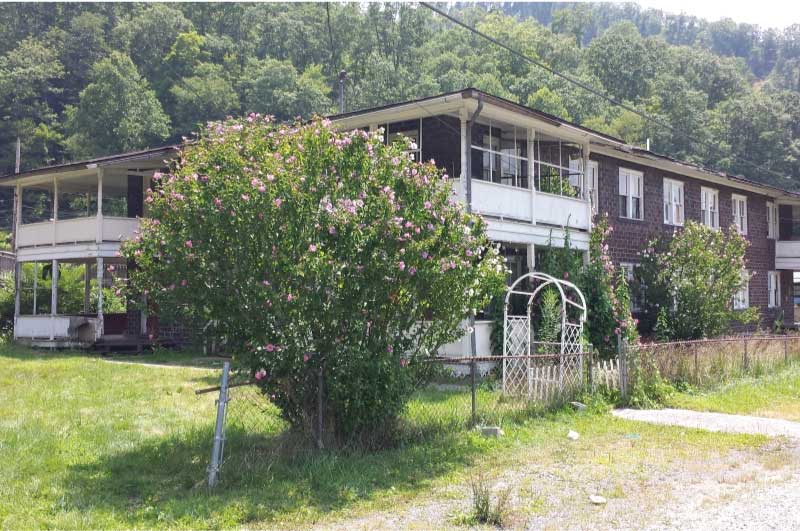
Friends of Happy Retreat was established in 2006 for the purpose of acquiring and restoring Happy Retreat as a center for culture and history for Charles Town, Jefferson County, and beyond. In December, 2014, the City of Charles Town and the non-profit Friends of Happy Retreat agreed to work together to purchase the 12 acre Happy Retreat property, owned by the Gavin family, who have been stewards of the estate for a generation. The City agreed to purchase 10 acres of land which it will include in a planned linear park along Evitts Run in Charles Town’s West End. Friends of Happy Retreat agreed to purchase the house, historic outbuildings, and the two acres of remaining land. With this major milestone of acquisition reached, the Friends of Happy Retreat can progress into the effort to restore the Happy Retreat estate as a center for community events, heritage tourism, arts and culture, and scholarship. The Happy Retreat grounds will also connect to existing City of Charles Town park and recreational lands, as part of an overall Charles Town initiative to revitalize the community’s west end. Friends of Happy Retreat launched a fundraising campaign in January co-chaired by Dr. Wallace Boston, CEO of American Public University System, and by Dr. Taylor Fithian. American Public University led the effort with a lead gift of $150,000. The campaign has now succeeded in raising over $725,000 in pledged contributions from individuals, families and supportive organizations, which will be used for the acquisition, restoration and operation of Happy Retreat. Fundraising will continue with the goal to raise an additional $1.3 million for full restoration and $150,000 for the ongoing operation and maintenance of the property. Walter Washington, president of Friends of Happy Retreat, said he is overwhelmed by the Fithians’ generosity. “We are profoundly grateful to Dr. and Mrs. Fithian for making the acquisition of Happy Retreat possible. Their extraordinary gift will allow us to go forward with our plans to make Happy Retreat a center of cultural life for Charles Town and a showpiece of our town’s important history.” He also thanked Charles Town Mayor Peggy Smith and the City Council, and Dr. Boston and American Public University for helping to make the purchase possible. “The City’s decision to take part in this project, with Mayor Smith’s leadership, was a game changer. It would not have worked without the City’s participation,” Washington said. “Dr. Wally Boston has stepped forward many times over the years to help our community move forward. American Public University’s lead gift of $150,000 was a crucial vote of confidence to get our fundraising campaign underway, which has resulted in other valued supporters and organizations making their own contributions. We are very grateful for all that Dr. Fithian and Dr. Boston have done for us in leading this exciting Happy Retreat campaign.” Washington also thanked the National Trust for Historic Preservation which has worked closely with Friends of Happy Retreat since it began in 2006. “The Trust has provided us invaluable advice and support over the years, and especially during our current fundraising campaign to save this American treasure,” he said. “I also want to give special thanks and recognition to the Gavin family who have been so wonderful to work with over the years,” Washington said. “Without the enthusiasm and patience of Bill and Mary Gavin and their family, this could never have happened.” “Finally, on behalf of the Board of Friends of Happy Retreat, I want to thank all of the wonderful friends and supporters here in the community and beyond who have had faith in us,” Washington said. “Without their support over the last 9 years, we could not have gotten to where we are today. For more information about historic Happy Retreat and the effort underway to restore it as a community center, see http://happyretreat.org/donate.html, or contact Walter Washington at 304.725.8832. A documentary “The Preservation and Restoration of Helen Apartments,” directed and produced by Tyler Carden and Brian Jarrell (students in the Fine Arts Department at Liberty High School in Raleigh County, WV), is now available for viewing. Video footage was collected April 10-11, 2015 during the clean-up and mothballing activities of the historic Helen Apartment Building organized with WeGROW: Winding Gulf Restoration Organization. The students completed the film in three weeks. The documentary debuted May 13th during a commission meeting of Volunteer West Virginia: The State Commission on Community and National Service. Our thanks are extended to Jeremy Rodriquez, chairman, and the students of the Fine Arts Department at Liberty High School and the many volunteers and supporters of the cleanup and mothballing project. The video is available on the Preservation Alliance of West Virginia YouTube Channel. Unused B-Roll footage from the project may be used for additional productions in the future – stay tuned! PAWV LISTS HELEN APARTMENTS ON BUILDINGS AT RISK REGISTER, ADVISES ON MOTHBALLING BUILDING4/10/2015
The situation regarding the property first came to light during a historic resource survey undertaken in August as part of the Bridges to the Past educational outreach initiative – a partnership of the alliance and the New River Gorge Regional Development Authority. The Helen Apartments were one of the highlights during a tour of the Winding Gulf communities including Helen, Sophia, and Tams. The Winding Gulf Restoration Organization (WeGROw), a 501(c)3, took interest in saving the structure based on a structural narrative needs assessment developed by the alliance’s field services staff. This document details the current condition of structures, outlines building materials and their historic uses, and prioritizes steps needed to preserve and re-use structures. The former property owner agreed to let the building go to WeGRow, and the Raleigh County Commission was approached and agreed to grant WeGROw the funds to cover the costs associated with taking ownership.
Plans have been made to clean the apartment of all debris and mothball it. The purpose of mothballing the building is to secure it from weather and vandalism until it can be rehabilitated and put into a new use. The alliance led volunteers in fabricating plywood panels for the doors and windows. Volunteers will begin installing panels to secure the first floor. Additionally, they will clear the apartments and finish securing the entrances. The process for mothballing of the property is being documented on high definition video by the Fine Arts Department of Liberty High School, and still photography by Michael Burk, a former Preserve WV AmeriCorps member who is also a professional photographer. Various local and state organizations have gotten involved including The National Coal Heritage Area Authority, Raleigh County Commission, the Raleigh County Solid Waste Authority, The West Virginia Department of Environmental Protection, and The Raleigh County Office of West Virginia State University Extension Service. Lowe’s will be supplying the construction materials at cost. The Preservation Alliance of West Virginia is a statewide grassroots organization supporting historic preservation in the mountain state. Since 1982, the nonprofit PAWV has been working to preserve West Virginia’s precious historical resources for the benefit of present and future generations. The alliance announced the Buildings At Risk Register in February in an effort to bring attention to at-risk historical resources that may be lost and efforts to save these special places. “The purpose of the register is to demonstrate that these places matter to West Virginians and there is interest in saving them. It will also be an educational tool about the preservation of historic properties all over the state,” explained Danielle LaPresta, executive director for the alliance. The register will serve as a watch list for individuals wanting to know the status of historical resources in West Virginia. Submissions are accepted on a rolling basis and are reviewed once a month by a committee comprised of members of the alliance’s board of directors and staff. The alliance will maintain close contact with persons submitting at risk site applications for advocacy purposes. By Danielle
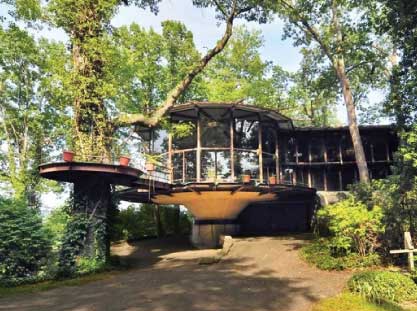
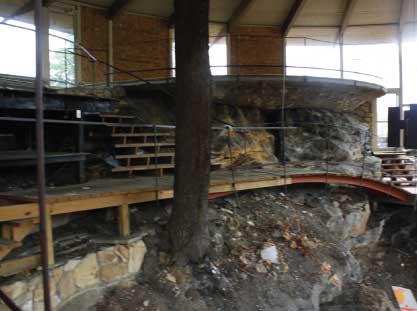
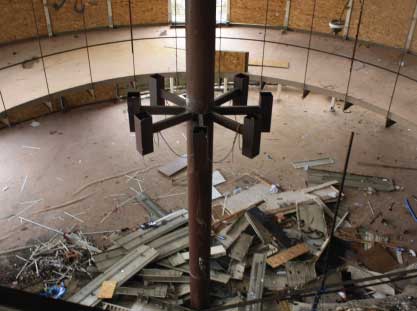
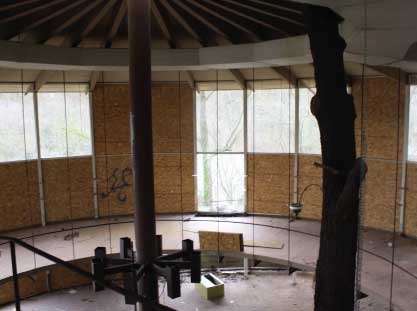
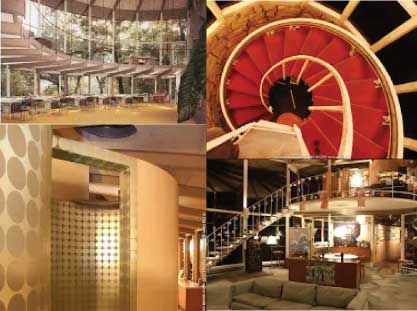
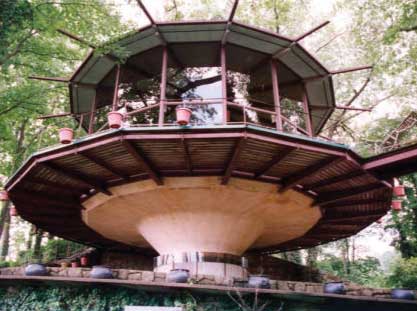
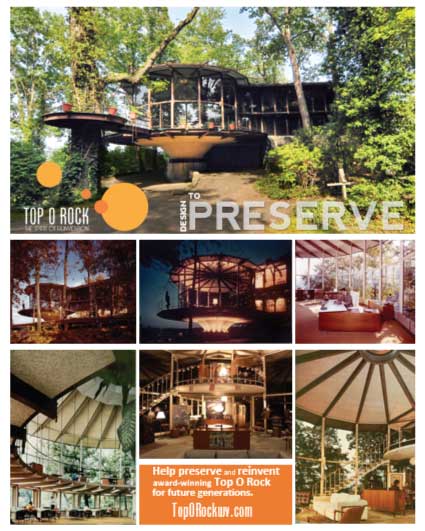
Yesterday, I participated in a discussion with five other panelists about saving Top O Rock – the iconic modernist structure overlooking Charleston. It was a pleasure to be welcomed into this property by the owners and Sarah Halstead – the dynamic woman spearheading the design competition and campaign to save Top O Rock. It may be demolished since the property has been broken into multiple time, severely vandalized, and stripped of its coppers piping. Sarah organized the panel to talk about what could be done to save Top O Rock with the theme being “what if money was no problem?”. Top O Rock is such a unique place. Built literally on top of a giant rock with trees growing majestically through holes in the roof, Henry Elden’s masterpiece home is not your usual downtown adaptive re-use topic. This dwelling is so complex and its interior is one of the main components that makes this place historically significant. The panel agreed it’s going to take a lot of creativity and modernist thinking to devise a plan to save this place. During our first meeting to discuss Top O Rock, the committee was a bit stumped. It was hard not to focus on the dollar signs looming over everyone’s heads. Dollar signs are certainly on the owners’ minds. How will the money be raised to rehabilitate the structure? And after that money is raised, how will it be maintained? Can West Virginia stand another house museum? Luckily it isn’t up to me or the other panelists to decide how to move forward with this project. There is an incredible design competition being sponsored by WVSU Extension’s Economic Development Center, Kanawha Valley Historical and Preservation Society, and CWest Properties, LLC. The competition encourages design teams to join together and reinvent Top O Rock. This competition requires innovative, viable restoration, adaptive reuse and sustainable property development plans for Henry Elden’s Top O Rock and the 13 acres of wooded land surrounding it. Since the design competition opened on March 1, Sarah reports that approximately ten teams have signed up from all over the region, including one led by a 13-year-old aspiring female architect. Other teams can still join. Actually, anyone can join! Submissions are due May 8, 2015 (one month from today!) Full competition guidelines and more information can be found at toporockwv.com Show your support for Top O Rock! Share your ideas for what can be done with this special place. The owners may take you up on your idea, but please keep in mind that the site is not open to the public. Since vandalism and security are serious problems, security cameras and fencing have been installed. Please respect the owners’ requests and stay off this property. You can take a virtual tour on livestream at https://livestream.com/accounts/10304715/events/3873379/videos/80475934/player?width=640&height=360&autoPlay=true&mute=true or submit a contact message through the Top O Rock website at http://www.toporockwv.com/#!contact/cbys asking to visit the site. Some think Top O Rock should remain a personal residence. Others think it could be a public green space. What if you could save Top O Rock? What would you turn it into? By Danielle Preservation Alliance of West has begun to implement a new program entitled the Buildings At Risk Register featuring historic buildings in West Virginia facing risk of being demolished from neglect, vandalism, owner seeking demolition, or environmental factors. The Creel (or Cain) House in St Marys, Pleasants County, and Top O Rock in Charleston, Kanawha County were approved for this listing in March 2015. The Creel House is being listed after the owner filed a demolition permit, and Top O Rock is listed to highlight an adaptive re-use design competition for the severely vandalized Modernist structure.
The new Buildings At Risk Register will be used to bring attention to at-risk historical resources that may be lost and efforts to save these special places. “The purpose of the register is to demonstrate that these places matter to West Virginians and there is interest in saving them. It will also be an educational tool about the preservation of historic properties all over the state,” explained Danielle LaPresta, executive director for the alliance. The alliance launched this program in February and has received multiple submissions in only a few weeks. The register will serve as a watch list for individuals wanting to know the status of historical resources in West Virginia. Submissions are accepted on a rolling basis and are reviewed once a month by a committee comprised of members of the alliance’s board of directors and staff. The alliance will maintain close contact with persons submitting at risk site applications for advocacy purposes. For a full list of sites on the register, visit https://preservationallliancewv.wordpress.com/b-a-r-r/sites-on-the-buildings-at-risk-register/. Learn more at http://www.pawv.org or by calling 304-345-6005.
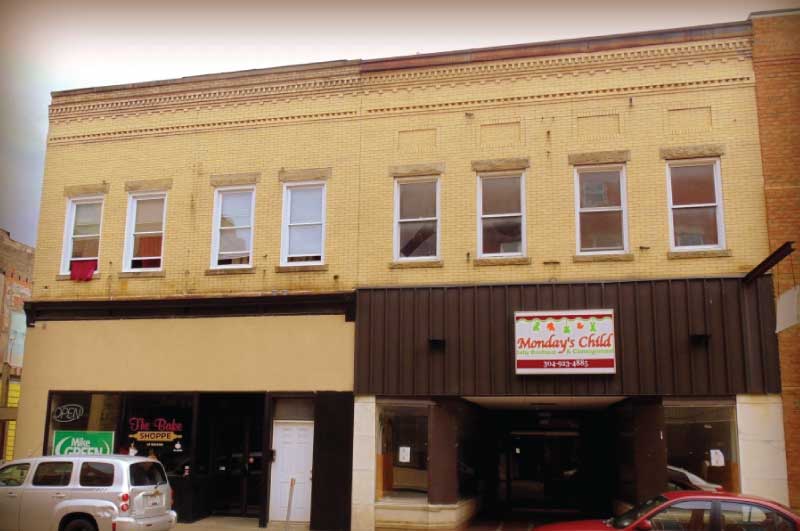
Plans call for returning the first floor storefront to its original design, which included large display windows and transom windows, Birchfield said, and approaching the treatment of a side wall left exposed after a fire destroyed a neighboring building in 2003.
“We’re really excited about how dramatic but affordable the restoration will be,” she said. “Grants and tax credits for historic properties offset the cost, but the cost of peeling off the later-built facade and fixing back the original isn’t exorbitant.” “We know from restoration work we’ve experienced in Lewisburg’s historic district that there’s a good reason to restore: it’s efficient and it’s beautiful.” Birchfield said she hopes to submit the plan to the Beckley Historic Landmarks Commission as soon as the state has approved funding. Owners of historic properties in national historic districts in West Virginia are eligible for grants and tax credits of up to 30 percent for the restoration of their buildings to U.S. Department of the Interior standards. A founding member of the Downtown Beckley Business Association, Birchfield said she encourages the city to continue to strengthen and enforce its architectural review process, which she says secures her investment in the national historic district. Birchfield is one of several property owners now pursuing grants and tax credits to support restoration in the district, according to Dave Sibray, a spokesmen for the business association. “We’re working with two other investors in the district who plan to invest in restoration this year,” Sibray said. The area of Blue Sulphur where the Blue Sulphur Spring Pavilion is located is also the birthplace of “Traveller” the famous war horse of General Robert E Lee. These days, Traveller would not be the only one kicking up his heels. The Friends of the Blue Committee of the Greenbrier Historical Society is pretty excited too.
The Kickstarter campaign to raise $25,000 is kicking up its heels. As of Monday, March 9, 2015, forty-eight individual backers, champions all, have pledged more than $6000 toward the effort. Chair of the Friends of the Blue Committee, Alex Mclaughlin said, “Folks, we are so gratified and appreciative of the overwhelming support for our Kickstarter campaign. With about 18 days left, we have raised over $6000 of the needed $25,000 and almost $10,000 in total contributions. Now, we need about 600 new ‘Champions for the Blue’ to donate at least $25 to meet our goal by March 28. Every donor of $25 or more gets a neat little pin and a really huge ‘thank you’ from all those generations to come that will be able to visit the Blue”. Everyone is encouraged to support the Blue by going to https://www.kickstarter.com/projects/693916700/restore-the-blue-sulphur-spring-pavilion and making a pledge using a credit card. Kickstarter is a crowdfunding mechanism which uses the reach of the internet to give donors a safe way to back a project. It is an all-or-nothing approach where the project receives no funds if the goal is not met. Donors “pledge” using their credit card and the amount is only deducted if the full amount of the goal is pledged. Because the Greenbrier Historical Society is a 501 c 3 organization, pledges are deductible from federal taxes in accordance with the law. McLaughlin said, “We are excited to have this little pin to give to our donors. This is the first known pin representation of the Blue and a great way to tell the world you were a part of the first official fundraising campaign for its restoration. Please contribute and spread the word. Together, we WILL Save the Blue.”
According to the competition website, the contest offers an opportunity for individuals, teams of design industry or non-industry professionals, emerging professionals, students, or community development nonprofits to explore plans that include historic preservation, adaptive and sustainable land reuse for public benefit, business or education innovation. The Top O Rock: Spirit of Reinvention design competition sponsors include WVSU Extension’s Economic Development Center, Kanawha Valley Historical and Preservation Society, and CWest Properties, LLC. Supporters include: City of Charleston, Historic Landmarks Commission, Preservation Alliance of WV, West Virginia Foundation for Architecture, US Green Building Council-WV, and Create West Virginia.
“Basically, we’re looking for bright ideas that are financially feasible,” says Sarah Halstead, the West Virginia State University sustainable economic and community development specialist who has spearheaded the drive to save the building. “Ever since Top O Rock became prominently visible in Charleston, in the late 1960s, it has been talked about, written about in national and international publications, visited, admired, and has often been at the center controversy because of Elden’s daring vision,” Halstead explains. The iconic residence and design studio was purchased several years ago by a private investor who has entertained several different business ideas for future use, however, like mid-century modernist structures around the world, much work is required to restore the building and bring it up to code. “Many modernist structures are facing the wrecking ball at this moment. We have a rare opportunity to work with the property owner to call for innovative ideas, including business models supporting the preservation of the building and the surrounding 13 acres of wooded land, just minutes from downtown. Yes, the building was vandalized, but the vandalism is not a deal breaker. Remember, this is a concrete, steel and glass structure. It’s tough. International experts agree that Top O Rock is a significant example of modernist architecture that should absolutely be restored,” Halstead says. With the permission and assistance of the property owner, she has marshaled the energies of architects, students, business people and historic preservationists to save the building. “It’s surprising to many that the building has come close to destruction, but it’s actually not an unusual situation. The public is only beginning to understand the importance of modernist architecture around the world. This is a great opportunity to raise local awareness of our own architectural and cultural treasures. They define us, and our places.” The design competition will close on May 8, 2015. Judges include Christine Madrid-French, expert member of the scientific committee on 20th Century Heritage for the International Council on Monuments and Sites (ICOMOS), and Peter Aeschbacher of Penn State Stuckeman School of Architecture. Peter is also the director of design at Penn State’s Hamer Center for Community Design. Local judges will be announced, along with additional events related to the competition. There is a series of short talks on related subjects scheduled for Tuesdays at noon throughout the months of March and April. An online fundraising campaign is underway, offering a variety of ways individuals and organizations can support this preservation and community design effort. A virtual tour of the property will live stream on Monday, March 9, 2015 and will be archived for viewing throughout the competition. Additional information will be added to both the TopORockwv.com website and Facebook.com/TopORockwv page on an ongoing basis. For complete information, visit the competition website, which includes a comprehensive calendar. BECKLEY, W.Va. — Engineer Chris Galitz will present a program on the maintenance of historic brick buildings at 5:15 p.m., March 12 at the Downtown Beckley Business Association’s bi-monthly meeting.
Most buildings in the city’s downtown historic district are of brick, so association members thought that engaging a masonry expert would be of particular benefit, David Sibray, an association spokesman, explained. “Property owners in downtown are concerned about the feasibility of maintaining their buildings, especially now that they know that state and federal financing is available,” Sibray said. A professor of engineering at Virginia Tech, Galitz has authored articles on the subject of brick maintenance and is a frequent expert witness on construction matters. All downtown property and business owners and tenants and members of the general public are invited to attend the program, which will be held at the Tickety-Boo Mercantile at 337 Neville St. Association. Members are asking that all who attend consider donating $10 to help cover the speaker’s fee and related costs. Sibray said upcoming programs will focus on the economics of national historic districts. For membership information or to make arrangements to attend, please contact Jim Chambers at 304-573-4332 or David Sibray at 304-575-7390. |
News and NotesCategories
All
Archives
January 2024
Subscribe to our mailing list to receive e-news updates on historic preservation news and events in West Virginia.
|



 RSS Feed
Get Involved |
Programs |
Contact UsPreservation Alliance of West Virginia
421 Davis Avenue, #4 | Elkins, WV 26241 Email: info@pawv.org Phone: 304-345-6005 |
Organizational Partners:

|

|

|
|
© COPYRIGHT 2022 - PRESERVATION ALLIANCE OF WEST VIRGINIA. ALL RIGHTS RESERVED.