A Summary of The Economic Impacts Of Historic Preservation in West Virginia (1997)
Executive Summary
Communities, towns, cities and organizations around the state have inventoried many of their assets including mansions, stores, civil war sites, archaeological sites, landmarks, or other fragments of history. While providing many communities with a sense of identity and place, historic preservation also contributes to West Virginia's economy.
Preservation Alliance of West Virginia and Main Street West Virginia have joined together in this study to provide estimates of the economic impacts of historic preservation programs in West Virginia. Preservation Alliance retained the West Virginia University Bureau of Business and Economic Research to conduct the study.
This study quantifies the direct and indirect economic impacts associated with historic preservation capital expenditures and heritage tourism. The study examined the impact of several programs including: Main Street, tax credits, preservation grants, and ISTEA on the West Virginia economy. Non-residential construction projects were analyzed for the calendar year 1996. Construction expenditures were then placed into the IMPLAN input-output modeling system developed by WVU and a total impact was calculated based upon multipliers for each input sector.
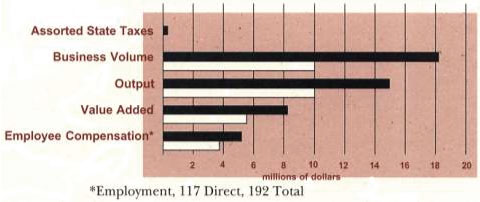
The Main Street West Virginia program in the West Virginia Development Office targets the revitalization of central business districts. In 1996, nine of the 17 active Main Street communities total economic impact resulted in 192 jobs created, $10 million worth of construction projects which fueled an additional $8 million in business volume; all leveraging more than $300,000 worth of assorted state taxes.
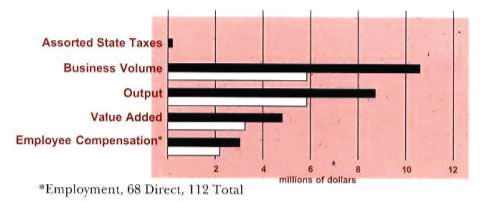
The West Virginia Division of Culture and History, Historic Preservation Office promotes historic preservation with the Historic Preservation Tax Credit Program and the Preservation Grant Program. Both of these programs, along with the ISTEA Program, have spurred nearly $6 million worth of construction and another $4.6 million in business volume, and created 112 job opportunities resulting in nearly $3 million worth of employee compensation provided by these construction projects.
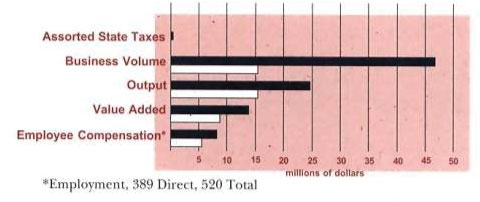
In addition to construction estimates, the study also analyzed the results of heritage tourism in West Virginia. This type of tourism focuses on the development, promotion and visitation of tourism sites that are historic in nature. Heritage tourist expenditures created 390 jobs in businesses directly serving the tourists and another 130 jobs indirectly for a total employment impact of 520. These 520 employees earned $8.2 million in compensation. Business did $15.4 million worth of sales with the tourists, and including the indirect and induced impacts, heritage tourism created an additional $46.7 million in business volume.
Nearly $1 million worth of state taxes have been realized through historic preservation. These taxes include increases in consumer sales tax, personal income tax, corporate net income, and business franchise tax.
In summary, 1996 figures indicate that historic preservation in West Virginia has created 824 jobs, $68 million in total business volume, and over $1 million in assorted taxes and revenues for state government.
Preservation Alliance of West Virginia and Main Street West Virginia have joined together in this study to provide estimates of the economic impacts of historic preservation programs in West Virginia. Preservation Alliance retained the West Virginia University Bureau of Business and Economic Research to conduct the study.
This study quantifies the direct and indirect economic impacts associated with historic preservation capital expenditures and heritage tourism. The study examined the impact of several programs including: Main Street, tax credits, preservation grants, and ISTEA on the West Virginia economy. Non-residential construction projects were analyzed for the calendar year 1996. Construction expenditures were then placed into the IMPLAN input-output modeling system developed by WVU and a total impact was calculated based upon multipliers for each input sector.
The Main Street West Virginia program in the West Virginia Development Office targets the revitalization of central business districts. In 1996, nine of the 17 active Main Street communities total economic impact resulted in 192 jobs created, $10 million worth of construction projects which fueled an additional $8 million in business volume; all leveraging more than $300,000 worth of assorted state taxes.
The West Virginia Division of Culture and History, Historic Preservation Office promotes historic preservation with the Historic Preservation Tax Credit Program and the Preservation Grant Program. Both of these programs, along with the ISTEA Program, have spurred nearly $6 million worth of construction and another $4.6 million in business volume, and created 112 job opportunities resulting in nearly $3 million worth of employee compensation provided by these construction projects.
In addition to construction estimates, the study also analyzed the results of heritage tourism in West Virginia. This type of tourism focuses on the development, promotion and visitation of tourism sites that are historic in nature. Heritage tourist expenditures created 390 jobs in businesses directly serving the tourists and another 130 jobs indirectly for a total employment impact of 520. These 520 employees earned $8.2 million in compensation. Business did $15.4 million worth of sales with the tourists, and including the indirect and induced impacts, heritage tourism created an additional $46.7 million in business volume.
Nearly $1 million worth of state taxes have been realized through historic preservation. These taxes include increases in consumer sales tax, personal income tax, corporate net income, and business franchise tax.
In summary, 1996 figures indicate that historic preservation in West Virginia has created 824 jobs, $68 million in total business volume, and over $1 million in assorted taxes and revenues for state government.
Main Street West Virginia Construction
Main Street West Virginia is a downtown revitalization program based on historic preservation. Data collected from the Main Street West Virginia office included statistics from 9 out of the 17 active Main Street communities within the state. Communities included in the study are: Beckley, Bluefield, Fairmont, Huntington, Kingwood, Morgantown, New Martinsville, Point Pleasant, and Weirton. The following list includes the value of construction and improvements using data consisting of total investment minus buildings sold. Included in this figure are facades, rehabilitation, new construction, and, public improvements. The total value of construction is estimated at just over $10 million. The following chart graphs the impact of the Main Street program statewide.
Main Street West Virginia is a downtown revitalization program based on historic preservation. Data collected from the Main Street West Virginia office included statistics from 9 out of the 17 active Main Street communities within the state. Communities included in the study are: Beckley, Bluefield, Fairmont, Huntington, Kingwood, Morgantown, New Martinsville, Point Pleasant, and Weirton. The following list includes the value of construction and improvements using data consisting of total investment minus buildings sold. Included in this figure are facades, rehabilitation, new construction, and, public improvements. The total value of construction is estimated at just over $10 million. The following chart graphs the impact of the Main Street program statewide.
West Virginia Historic Preservation Tax Credit Projects, Preservation Grant Projects, ISTEA Grant Projects
The table below is a cumulative summary of the W.Va. Historic Preservation Tax Credit Projects, Preservation Grant Projects and the ISTEA Program. The historic preservation tax credit program offers a 20 percent federal, and 10 percent state tax credit (not a deduction) to eligible owners. Owners of depreciable buildings listed on the National Register of Historic Places or eligible to be listed, individually or in a district, qualify for the tax credit ? if the work meets the Secretary of the Interior's standards for rehabilitation. The preservation grant projects encompass construction grants issued by the state Historic Preservation Office. These grants are in the form of matching grants for construction projects involving buildings listed on the National Register of Historic Places. The ISTEA Grants Program supports many types of projects, including historic preservation projects as well as rehabilitation and operation of historic transportation buildings and facilities. The total value of construction projects for 1996 for these three programs is $5.8 million. The following chart graphs the impact of these programs statewide.
The table below is a cumulative summary of the W.Va. Historic Preservation Tax Credit Projects, Preservation Grant Projects and the ISTEA Program. The historic preservation tax credit program offers a 20 percent federal, and 10 percent state tax credit (not a deduction) to eligible owners. Owners of depreciable buildings listed on the National Register of Historic Places or eligible to be listed, individually or in a district, qualify for the tax credit ? if the work meets the Secretary of the Interior's standards for rehabilitation. The preservation grant projects encompass construction grants issued by the state Historic Preservation Office. These grants are in the form of matching grants for construction projects involving buildings listed on the National Register of Historic Places. The ISTEA Grants Program supports many types of projects, including historic preservation projects as well as rehabilitation and operation of historic transportation buildings and facilities. The total value of construction projects for 1996 for these three programs is $5.8 million. The following chart graphs the impact of these programs statewide.
Heritage Tourism in West Virginia: 1996
Heritage tourism is recreational travel to sites or districts of historical significance. The role of historical sites' original features and state of repair in generating visits of heritage tourists creates a link between historic preservation activity and the level of heritage tourism. Examples of heritage destinations include historic railroads such as Cass; Civil War sites such as Harpers Ferry; features of the state's industrial history such as the Coal Heritage Trail; state parks featuring historic sites such as Grave Creek Mound, Blennerhassett Island, and Prickett's Fort; restored homes such as the Victorian Wheeling tours; and historic districts of several towns including Martinsburg, Hinton and Lewisburg, among others.
One example of how one historic site can impact a community is evidenced by the analysis of visitation at Prickett's Fort in Marion County. With an estimated 14,000 visitors (excluding school groups) in 1996, the Fort generated 11 new jobs and nearly $1 million in total business volume. The following chart graphs the impact of heritage tourism statewide.
Heritage tourism is recreational travel to sites or districts of historical significance. The role of historical sites' original features and state of repair in generating visits of heritage tourists creates a link between historic preservation activity and the level of heritage tourism. Examples of heritage destinations include historic railroads such as Cass; Civil War sites such as Harpers Ferry; features of the state's industrial history such as the Coal Heritage Trail; state parks featuring historic sites such as Grave Creek Mound, Blennerhassett Island, and Prickett's Fort; restored homes such as the Victorian Wheeling tours; and historic districts of several towns including Martinsburg, Hinton and Lewisburg, among others.
One example of how one historic site can impact a community is evidenced by the analysis of visitation at Prickett's Fort in Marion County. With an estimated 14,000 visitors (excluding school groups) in 1996, the Fort generated 11 new jobs and nearly $1 million in total business volume. The following chart graphs the impact of heritage tourism statewide.
Other Impacts Associated with Historic Preservation Programs
While enhancements to historic structures and heritage tourism are important contributions to local and regional 'economies, there are a number of other tangible benefits which accrue from historic preservation. These include:
Revitalization of Small Town Business Centers
The expansion of West Virginia's interstate highway system and the development of strip malls and discount retailers has put real pressures on traditional business districts. Historic preservation programs that emphasize the revitalization of central business districts minimize the amount of investment required by communities to extend infrastructure to new sprawling developments in fringe areas.
Enhanced Property Values and Property Tax Revenues.
In several other national studies, both residential and commercial property values increased within historic districts. Over a twenty year period in Fredericksburg, Va. residential property values increased almost 700% in historic districts as compared to a little over 400% in other areas of the community. Over a four year period in Athens, Ga. assessed values rose 65% in historic districts as compared to 60% in non-designated areas. Enhanced property values have the potential to increase property taxes accruing to local and regional governmental bodies.
Leadership Development In Small Towns.
The Main Street program's tangible results may lie in historic preservation and enhanced business activity. However, the program has also been a successful vehicle for developing leadership and organizational skills, which are both critical attributes for successful economic development.
Revitalization of Small Town Business Centers
The expansion of West Virginia's interstate highway system and the development of strip malls and discount retailers has put real pressures on traditional business districts. Historic preservation programs that emphasize the revitalization of central business districts minimize the amount of investment required by communities to extend infrastructure to new sprawling developments in fringe areas.
Enhanced Property Values and Property Tax Revenues.
In several other national studies, both residential and commercial property values increased within historic districts. Over a twenty year period in Fredericksburg, Va. residential property values increased almost 700% in historic districts as compared to a little over 400% in other areas of the community. Over a four year period in Athens, Ga. assessed values rose 65% in historic districts as compared to 60% in non-designated areas. Enhanced property values have the potential to increase property taxes accruing to local and regional governmental bodies.
Leadership Development In Small Towns.
The Main Street program's tangible results may lie in historic preservation and enhanced business activity. However, the program has also been a successful vehicle for developing leadership and organizational skills, which are both critical attributes for successful economic development.
Comments from Sponsors
Preservation Alliance of West Virginia
Few West Virginians will argue the fact that historic preservation is an aesthetically appealing alternative to modern construction. Unfortunately, even fewer of us are either willing or able to discuss and defend the economic impacts of historic preservation. This is not a conscious omission, but one resulting from a lack of tangible evidence to support the argument. I am happy to report that the times are changing! With this publication, we can now present hard facts and figures to back up our claim that preservation is an economically viable undertaking.
It is our sincere hope that policy makers, community leaders, and preservation advocates statewide read and distribute the enclosed information with the understanding that this just the beginning. We will continue to gather the facts in order, to make the most compelling and convincing argument on the economic benefit of historic preservation. Spread the word and remember the bottom line ?- historic preservation makes good dollars and sense for West Virginia!
- Billy Joe Peyton, Past PAWV President
Main Street West Virginia
Downtown symbolizes community economic health, quality of life, local pride and community history. The Main Street West Virginia program, a comprehensive approach to downtown revitalization, helps communities identify assets and utilize local resources to enhance, economies?through preserving unique qualities and cultures.
Information in this report should provide incentive for consideration when making plans for your future as you preserve your past.
- Monica Miller, Main Street West Virginia State Coordinator
Few West Virginians will argue the fact that historic preservation is an aesthetically appealing alternative to modern construction. Unfortunately, even fewer of us are either willing or able to discuss and defend the economic impacts of historic preservation. This is not a conscious omission, but one resulting from a lack of tangible evidence to support the argument. I am happy to report that the times are changing! With this publication, we can now present hard facts and figures to back up our claim that preservation is an economically viable undertaking.
It is our sincere hope that policy makers, community leaders, and preservation advocates statewide read and distribute the enclosed information with the understanding that this just the beginning. We will continue to gather the facts in order, to make the most compelling and convincing argument on the economic benefit of historic preservation. Spread the word and remember the bottom line ?- historic preservation makes good dollars and sense for West Virginia!
- Billy Joe Peyton, Past PAWV President
Main Street West Virginia
Downtown symbolizes community economic health, quality of life, local pride and community history. The Main Street West Virginia program, a comprehensive approach to downtown revitalization, helps communities identify assets and utilize local resources to enhance, economies?through preserving unique qualities and cultures.
Information in this report should provide incentive for consideration when making plans for your future as you preserve your past.
- Monica Miller, Main Street West Virginia State Coordinator
Acknowledgements
Preservation Alliance of West Virginia is a statewide nonprofit organization dedicated to the preservation and promotion of West Virginia's historic and cultural resources. We would like to acknowledge the following organizations for their assistance with this project:
Study Prepared by:
West Virginia University Bureau of Business and Economic Research
Funding Sources:
West Virginia University Institute of Technology, EDA Technical Assistance Center
Main Street West Virginia, West Virginia Development Office
Other Cooperating Partners:
West Virginia Division of Culture and History
West Virginia Division of Tourism
West Virginia Department of Transportation
Main Street Kingwood
Main Street Morgantown
Congressman Alan Mollohan's Office
Study Prepared by:
West Virginia University Bureau of Business and Economic Research
Funding Sources:
West Virginia University Institute of Technology, EDA Technical Assistance Center
Main Street West Virginia, West Virginia Development Office
Other Cooperating Partners:
West Virginia Division of Culture and History
West Virginia Division of Tourism
West Virginia Department of Transportation
Main Street Kingwood
Main Street Morgantown
Congressman Alan Mollohan's Office
To receive a full copy of this report , please contact:
PO Box 3371 Charleston, WV 25333 (304) 345-6005
PO Box 3371 Charleston, WV 25333 (304) 345-6005