2004 Conference
Preservation=Community Revitalization Tools for Effectiveness

Post-COnference Report
Braving the remnants of Hurricane Ivan, more than 60 Preservation Alliance members enjoyed the 2004 Annual Conference, Preservation = Community Revitalization: Tools for Effectiveness. While the wet weather diminished field trip attendance on Friday Sept 17, Parkersburg provided us with wonderful hospitality at the elegant historic Blennerhasset Hotel, with a bounteous evening reception at the Harnett House in the nicely preserved Julia-Ann Square historic district.
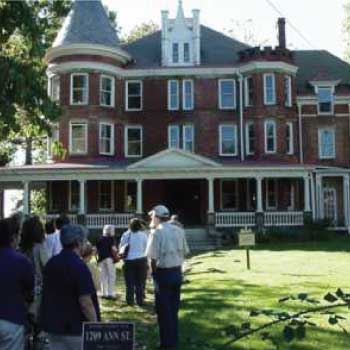
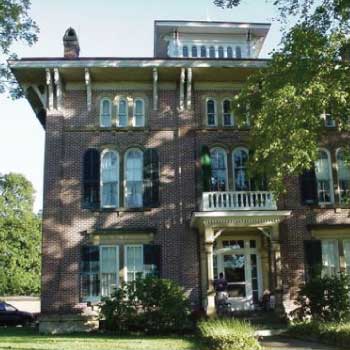
Saturday’s sunshine gave us the opportunity to visit several spectacular historic homes: the James McNeil Stephenson House – Oakland, still owned by the original family; the Van Winkle - Wix House undergoing rehabilitation; and the beautifully preserved Henderson Hall.
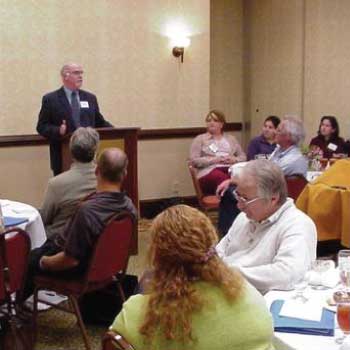
Dwight Young, Senior Communications Associate for the National Trust for Historic Preservation, gave a most inspirational keynote address at the Saturday luncheon / PAWV Annual Meeting. "Preservation, Economics, Common Sense and Pancakes" combined outstanding photographs of historic buildings across the country to remind us of why preservation is important.
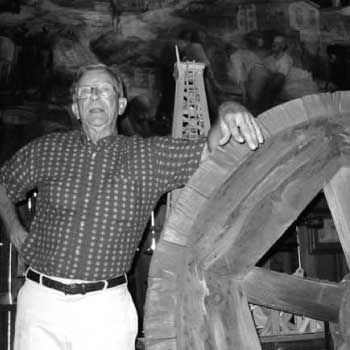
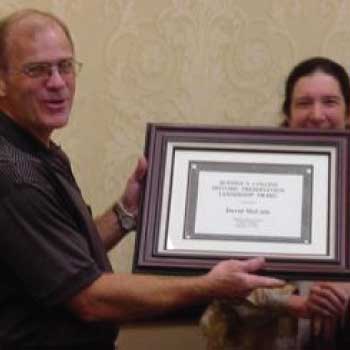
Also at the luncheon, PAWV presented the Rodney Collins Award for lifelong preservation achievement to David L. McKain of Parkersburg for his outstanding work in preserving and presenting the oil and gas heritage of the region.
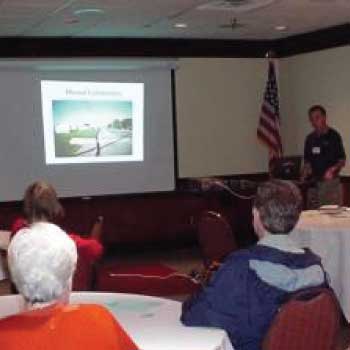
The educational sessions provided introductory and in-depth information for a variety of interests. Leading off on Friday were “Strengthening your non-profit organization” presented by Robert Nieweg of the National Trust, and “Observations on New Construction within a Historical Context” by James T. Kienle, FAIA, Institute for Preservation and Contemporary Design.Friday workshop sessions concentrated on Preservation Projects from Start to Finish, Certified Local Government training, and the West Virginia Byways program. Saturday offered three sessions each on Community Planning, Sustainable Communities, and Preservation Toolkit.
Highlighting the roster of distinguished presenters for Saturday’s sessions were Richard Ostergaard, Forest Landscape Architect - San Juan National Forest; Scott Gerloff, Potomac Heritage Partnership; Jim Wood -- Director of Planning for the City of Morgantown; Judy Reckart, Reckart & Associates; Mark Sadd, Lewis Glasser Casey & Rollins PLLC; and Ron Eck, Director of the West Virginia Transportation Technology Transfer Center.
The conference was co-sponsored by West Virginia Historic Preservation Office, West Virginia Byways and Backways Program, National Trust for Historic Preservation, & Wood County Historical and Preservation Society. Success was assured by the assistance of many additional sponsors, donors, and volunteers.
Saturday’s sunshine gave us the opportunity to visit several spectacular historic homes: the James McNeil Stephenson House – Oakland, still owned by the original family; the Van Winkle - Wix House undergoing rehabilitation; and the beautifully preserved Henderson Hall.
Dwight Young, Senior Communications Associate for the National Trust for Historic Preservation, gave a most inspirational keynote address at the Saturday luncheon / PAWV Annual Meeting. "Preservation, Economics, Common Sense and Pancakes" combined outstanding photographs of historic buildings across the country to remind us of why preservation is important.
Also at the luncheon, PAWV presented the Rodney Collins Award for lifelong preservation achievement to David L. McKain of Parkersburg for his outstanding work in preserving and presenting the oil and gas heritage of the region.
The educational sessions provided introductory and in-depth information for a variety of interests. Leading off on Friday were “Strengthening your non-profit organization” presented by Robert Nieweg of the National Trust, and “Observations on New Construction within a Historical Context” by James T. Kienle, FAIA, Institute for Preservation and Contemporary Design.Friday workshop sessions concentrated on Preservation Projects from Start to Finish, Certified Local Government training, and the West Virginia Byways program. Saturday offered three sessions each on Community Planning, Sustainable Communities, and Preservation Toolkit.
Highlighting the roster of distinguished presenters for Saturday’s sessions were Richard Ostergaard, Forest Landscape Architect - San Juan National Forest; Scott Gerloff, Potomac Heritage Partnership; Jim Wood -- Director of Planning for the City of Morgantown; Judy Reckart, Reckart & Associates; Mark Sadd, Lewis Glasser Casey & Rollins PLLC; and Ron Eck, Director of the West Virginia Transportation Technology Transfer Center.
The conference was co-sponsored by West Virginia Historic Preservation Office, West Virginia Byways and Backways Program, National Trust for Historic Preservation, & Wood County Historical and Preservation Society. Success was assured by the assistance of many additional sponsors, donors, and volunteers.
Conference Details
Parkersburg, West Virginia
September 17-18, 2004
Join us in Parkersburg for an enjoyable and enlightening two days on utilizing preservation to help improve our communities. Learn tools for working in your community or organization, and share your ideas and success stories. Our Keynote Speaker for the conference is Dwight Young from the National Trust for Historic Preservation.
Lodging at The Blennerhassett
A block of renovated rooms in the historic hotel have been reserved at a special conference rate of $85 / $95. Reservations MUST be made by Monday, August 30, mention PAWV when you make your reservation. 1-800-262-2536 www.theblennerhassett.com
There are still some spaces available on a first-come first-served basis. Call now to confirm your reservations. (And please let PAWV know you are planning to attend -- even a day or two's notice helps with event coordination.)
For other lodging and activities in or near Parkersburg contact the Parkersburg/Wood County CVB 350 7th Street, Parkersburg, WV 26101; 800-752-4982
Partners, Sponsors and Friends of the Conference
This conference of Preservation Alliance of West Virginia, is co-sponsored by the National Trust for Historic Preservation, Wood County Historical Society, WV Byways and Backways Program, and the WV State Historic Preservation Office (with partial funding by the WV Division of Culture and History and the National Park Service).
September 17-18, 2004
Join us in Parkersburg for an enjoyable and enlightening two days on utilizing preservation to help improve our communities. Learn tools for working in your community or organization, and share your ideas and success stories. Our Keynote Speaker for the conference is Dwight Young from the National Trust for Historic Preservation.
Lodging at The Blennerhassett
A block of renovated rooms in the historic hotel have been reserved at a special conference rate of $85 / $95. Reservations MUST be made by Monday, August 30, mention PAWV when you make your reservation. 1-800-262-2536 www.theblennerhassett.com
There are still some spaces available on a first-come first-served basis. Call now to confirm your reservations. (And please let PAWV know you are planning to attend -- even a day or two's notice helps with event coordination.)
For other lodging and activities in or near Parkersburg contact the Parkersburg/Wood County CVB 350 7th Street, Parkersburg, WV 26101; 800-752-4982
Partners, Sponsors and Friends of the Conference
This conference of Preservation Alliance of West Virginia, is co-sponsored by the National Trust for Historic Preservation, Wood County Historical Society, WV Byways and Backways Program, and the WV State Historic Preservation Office (with partial funding by the WV Division of Culture and History and the National Park Service).
Presenters
DWIGHT YOUNG, Keynote Speaker
Senior Communications Associate, National Trust for Historic Preservation
Dwight Young has been actively involved in historic preservation for more than 25 years.
A native of West Texas, Young worked as a college professor in Hong Kong, a personnel recruiter in Virginia and a hospital administrator in Tennessee before deciding to pursue a full-time career in historic preservation. After earning a Master’s degree in architectural history at the University of Virginia in 1976, he took his first preservation job as executive director of the Mobile (Alabama) Historic Development Commission.
He joined the staff of the National Trust in 1977 as the first director of the Southern Regional Office in Charleston, S.C., served briefly as interim director of the Western Regional Office in San Francisco, and eventually moved to Trust headquarters in Washington, where he assumed his current duties as senior communications associate in 1992. He is responsible for communicating the overall mission of the National Trust through speeches, newspaper and magazine articles and opinion pieces. His extensive knowledge of history and architecture, his experience in historic preservation, his skills as a lecturer and his enthusiasm for travel have made him a favorite Study Tour leader on many National Trust trips and a frequent speaker at conferences and workshops throughout the United States.
Young is the author of Alternatives to Sprawl, published in 1995 by the Lincoln Institute of Land Policy, and Saving America’s Treasures, published in 2001 by the National Trust and the National Geographic Society. He is perhaps best known as author of the regular “Back Page” feature in Preservation magazine. In 2003, the National Trust published a collection of these essays under the title Road Trips through History.
James T. Kienle, FAIA
Institute for Preservation and Contemporary Design
OBSERVATIONS ON NEW CONSTRUCTION WITHIN A HISTORICAL CONTEXT:
James T. Kienle, FAIA has spent the majority of his 36 year career in architecture specializing in bringing new life to historic structures and neighborhoods and assisting clients in finding new uses for old buildings. His projects have ranged from state capitals to covered bridges. He is the Founding Director of the Institute of Preservation and Contemporary Design, (IPCD), working with preservation design professionals across the country to define the best ways to implement new work so that it achieves design excellence while satisfying historic standard and regulatory guidelines. He serves as President of the Indianapolis Historic Preservation Commission, the city’s regulatory body for 14 historic districts, which provides him with an opportunity to deal with a wide range of preservation issues across different project types and urban design applications.
Karen Ebert Allen
has worked for the West Virginia Division of Highways for 10 years, starting out as a historian responsible for Section 106 review. Since then, she co-manages the West Virginia Byways and Backways Program. Ms. Allen completed a Bachelor of Arts degree from University of Mary Washington (formerly Mary Washington College) in 1994. She has been married for eight years and resides in Charleston with her husband and their five year old son.
Christy Bailey
Ms. Bailey is a graduate of Concord College and Marshall University and has worked in non-profit organizations throughout southern West Virginia for the past 20 year, with experience in job training programs, student community service programs, community development and national service programs. Ms. Bailey serves as the Executive Director of the Coal Heritage Highway Authority and the National Coal Heritage Area Authority. Bailey is a life long resident of southern West Virginia and resides in Pineville in a historic house that consumes all of her time and money.
Richard Hartman, West Virginia Byways and Backways Program
Mr. Hartman holds a Masters in Public Administration and is currently completing his Thesis for a Masters Degree in History. He is the former Director of the Administrative Law Division, Executive Assistant to the Commissioner of Tourism and Parks, Executive Assistant to the Secretary of Transportation, Director of the Transportation Enhancement Program and the Recreational Trails Program and a former member of the West Virginia Tourism Commission. He authored West Virginia's Rail-to-Tails law, served as staff to the House Judiciary Committee and is a former Adjunct Faculty member at Marshall University. He is currently co-authoring an Architectural Guide to Charleston and South Charleston, highlighting the rich architectural history in the Kanawha Valley. He will be retiring in two months and will begin looking for another job.
Michael J. Mills, AIA
Director of Historic Preservation - Vandalia Heritage Foundation
Director of Planning & Design – Vandalia Redevelopment Corporation
Before joining the Vandalia Heritage Foundation, Michael Mills previously led the preservation and restoration projects for the Washington office of HNTB, Architects, Engineers & Planners.
Mr. Mills’ nine years of experience includes work in historic preservation and architectural design and planning. His extensive work with historic structures has provided him with an in-depth knowledge of the Secretary of the Interior's Standards for Historic Preservation Projects. Mr. Mills received two degrees from Rensselaer Polytechnic Institute in Building Science and Bachelor of Architecture. A registered architect, he frequently leads the conceptualization and visualization aspects of Vandalia’s community and development planning efforts. As both Director of Historic Preservation for the Vandalia Heritage Foundation and Director of Planning and Design for the Vandalia Redevelopment Corporation, Mr. Mills brings vast experience in programming, building design and preservation to every project in the form of new buildings, sites under development, in-fill property and revitalization of existing structures in both rural and urban settings. Mr. Mills leads Vandalia’s application of a multi-discipline team approach to projects with the goal of innovative design solutions and sustainable economic development.
His project experience includes interior and exterior preservation, window restoration, and integration of MEP systems in historic structures such as the B&O Railroad Station in Grafton, West Virginia; the Macdonough Hall and Scott Natatorium at the United States Naval Academy; Building 42 Restoration and Interpretive Display at Fort Myer in Washington, DC; and the restoration of the Chief of Naval Operation's house at the Washington Navy Yard.
In addition to numerous project specific speaking roles, Mr. Mills has presented at two consecutive conferences sponsored by the National Trust for Historic Preservation’s National Main Street Center. The two presentations focused on aspects of using historic preservation and planning as a vehicle to promote economic revitalization and development. Additionally, he participated in a symposium at the National Building Museum in 1997 on the architectural achievements of Montgomery C. Meigs, which was co-sponsored by the U.S. Capitol Historical Society. Other aspects of his work include historic design guidelines and the issues related to the revitalization of main streets across the country.
Robert Lowe Nieweg
Rob, his wife Kelly Ferris, and their daughter Katie, live in Arlington County. Rob holds a BA from Vassar College, an MS in historic preservation from Columbia University, and a JD from the University at Buffalo. He has worked as a historic preservation advocate since 1989, when he served as executive director of Landmark West, a citizens group working to preserve the historic Upper West Side of Manhattan. Since joining the staff of the National Trust in 1995, Rob has worked to preserve unique and irreplaceable historic places and strengthen the grass-roots preservation movement in Virginia, Montana, South Dakota, Nebraska, West Virginia, Maryland, and the District of Columbia. Rob represented the National Trust as a member of the working committee that created the “partnership park” concept for the permanent protection of Cedar Creek and Belle Grove National Historical Park.
Susan Pierce is the West Virginia Deputy State Historic Preservation Officer. She has been with the Division of Culture and History for seventeen years. She has a master's degree in historic preservation from Columbia University and wrote "Women in the Southern West Virginia Coalfields" in Restoring Women's History through Historic Preservation published in 2003.
Marsha Geyer, Assistant State Coordinator, Main Street West Virginia
West Virginia Development Office
Marsha came to Main Street West Virginia as Assistant State Coordinator in March 2000. The responsibilities of this position require close partnership with the Main Street West Virginia Coordinator in assisting downtown development organizations across the state, providing communities with training and education regarding the resources available through their affiliation with the Main Street program. Prior to this position, Marsha served as the Executive Director for Main Street Ripley, where she led the development and implementation of the Main Street Four Point Approach. She was selected as the Main Street Program Manager of the year for 1998 and attended the National Main Street’s Certification Institute in Washington, D. C., where she complete her certification requirements in February 2001.Geyer manages her own business and markets her patented Denim Jumper at arts and crafts shows throughout the country. She is a featured West Virginia artisan at Tamarack, a unique showcase of West Virginia artisans located in Beckley, West Virginia.
Judith O. Reckart
Judy Reckart attended Wright State University in Fairborn, Ohio and was instrumental in establishing WWSU, Wright State’s student radio station. Transferring to West Virginia University in 1972, Reckart earned a Bachelor of Arts degree in English in 1974. Aside from a brief return to southwestern Ohio (1974-75) for a stint at radio station WSAI in Cincinnati (the prototype for the 1970s TV sitcom “WKRP in Cincinnati”), Reckart has been a Morgantown area resident since 1972. She has held positions in both print and broadcasting media in Monongalia and Preston Counties.
Reckart has been employed in writing, sales and marketing by the West Virginia Radio Corporation (WAJR/WVAQ), the award-winning Preston County News, and Monongalia Health System.
In 1998 Reckart founded Reckart & Associates, a sole proprietorship providing advocacy, feature and public relations writing services to businesses, organizations and publications. The firm’s diverse client list has included West Virginia Public Theatre, United Hospital Center, WVUH’s Center on Aging, the Morgantown Area Chamber of Commerce, the West Virginia Specialty Foods Cooperative, area realtors, the Monongalia County Board of Education, and The Dominion Post. Her work also has been published in the West Virginia High Tech Consortium Foundation magazine, The Journal of Innovation (Fall/Winter, 2003). Reckart published weekly cover features in The Dominion Post’s employment opportunities and real estate sections every Sunday for three years, frequently focusing on historic properties and architectural preservation topics in North Central West Virginia.
Reckart resides Morgantown with her husband Bob and daughter Jessie, a graduate student at WVU.
Jim Wood
Director of Planning and Community Development, Morgantown.
"An old way to grow - how changing our thinking about city design will ensure a bright future for historic preservation."
He is currently the Director of Planning for the City of Morgantown, a post he has held for 4 years. He was a 1982 graduate of Parkersburg High School, and holds a master's degree in public administration from the University of Charleston, South Carolina. He is also currently enrolled as a Ph.D. student in the geography program at WVU. In 2001 he taught a graduate level urban planning course in that program. A member of the American Institute of Certified Planners, he has a total of 18 years experience in city planning.
He was a charter-signing member of the Congress for the New Urbanism, an organization devoted to changing the way America grows. With this knowledge, he has lectured extensively across the state and the region about the need to grow smarter.
Richard F. Ostergaard – Landscape Architect
Forest Landscape Architect - San Juan National Forest.
Sign Sense-Principals of Planning, Designing, Fabrication, and Installation
Dick’s specialty is scenic byway planning and design and varied aspects of interpretive products development and design. He has been called a “Sign Guru” as per his research and depth of knowledge of effective sign design and selection of appropriate sign materials. He initiated the interpretive and development plan for the San Juan Skyway and obtained the first Colorado State/Forest Service Scenic Byway designation. Dick was also heavily involved in the development of the Skyway Corridor Management Plan and the subsequent submittal and designation of the Skyway as one of the original six All American Roads. He is a co-author of “Scenic Byways - A Design Guide for Roadside Improvements” (in printing) and working on another national guide for the Forest Service called “Sign Sense”.
He has formally presented to an National Association of Interpretation (NAI) Conference, National Scenic Byway Conference and number of National and Regional Forest Service Symposiums and Conferences and two universities on the subjects scenic byway planning, interpretive planning, and effective design and the choice of materials for interpretive signs. Dick was awarded the Gifford Pinchot Excellence in Interpretation Award for the Rocky Mountain Region in of the USDA Forest Service in 1994. He is a NAI Certified Interpretive Planner
Graduating in from Utah State University he has also completed a recreation course at Clemson University. He has served on seven National Forests in varied positions such as design and supervisory landscape architect, NEPA coordinator, Recreation Staff Officer, Snow Ranger, Wilderness Administrator, Interpretive Planner and Exhibit Designer, and Scenic Byway Coordinator. He lives in Durango, Colorado. His side interests are wildlife and rural farmscape art and writing.
Mark A. Sadd
Mark Sadd is a business and real property lawyer with the Charleston, West Virginia, law firm of Lewis Glasser Casey & Rollins PLLC. He obtained a B.A. degree from the University of Virginia and a J.D. degree from the West Virginia University College of Law. Mr. Sadd devotes his practice business transactions, including real estate development, landlord-tenant relationships, real estate title and associated areas such as land use, historic preservation and construction law. Mr. Sadd is one of West Virginia’s leading land use lawyers and regularly represents owners, developers, counties and cities in land use matters at both administrative and appellate forums. He frequently lectures on the topic.Mr. Sadd is a former chairman of the Charleston Human Rights Commission and a former or current director of the American Red Cross, Junior Achievement of West Virginia, Inc., the Private Industry Council of Kanawha County, the West Side Neighborhood Association and ABLE Families, a social outreach organization sponsored by the Sisters of St. Joseph of Wheeling. He is a founding member and director of the St. Thomas More Catholic Lawyers Society of Charleston, West Virginia. He is a Republican at large council member for the City of Charleston, West Virginia.
He is a former director of Preservation Alliance of West Virginia. During his tenure on the PAWV board, Mr. Sadd drafted and successfully lobbied for the adoption of legislation that created West Virginia’s first residential historic preservation tax credits. He also assisted in the organization’s obtaining a large Benedum Foundation grant to boost historic tourism in West Virginia.
Martha Ballman
Martha is the program coordinator for the WV Trails Coalition. This organization was formed in 1997 to create and implement a statewide plan for trail development, promotion and maintenance. As part of this effort Martha is working on the Greater Charleston Area Greenway steering committee and the Kanawha Trestle Rail Trail Project. Other projects undertaken this year include a conference featuring America's Walking host Mark Fenton for the WV Walkable Community Coalition and the third annual Trails to Wellness conference at the Capitol Complex in Feb. 2005. She is the secretary for the WV Rails-to-Trails Council and works as a grant writer for Friends of Blackwater.
Martha is a Parkersburg native. As you tour the city, notice the older curb caps and man-hole covers. Any bearing the name "Kootz Foundry" were made by her great grandfather, William Kootz. His foundry was in the area of the Oil & Gas Museum. An oil derrick bearing the logo still survives in the McDonough Wildlife Preserve in Vienna.
Ronald W. Eck, P.E., Ph.D.
"A Walkable Community is More Than Just Trails."
Ron is currently Professor of Civil Engineering at WVU. He also serves as Director of the West Virginia Transportation Technology Transfer Center. He has B.S.C.E. and Ph.D. degrees from Clemson University and is a registered professional engineer. Ron conducts workshops on pedestrian and bicycle transportation, and traffic calming for state and local highway agencies throughout the United States. He developed and teaches a 3-credit hour course on Pedestrian and Bicycle Transportation at WVU. He authored the chapter on Pedestrians in McGraw-Hill's Handbook of Transportation Engineering. Ron facilitates half-day Walkable Communities Workshops for West Virginia communities. He has served as a member or team leader on more than fifteen Community Design Team visits throughout West Virginia.
Phyllis Baxter holds a public history certificate from WVU, and has over thirteen years experience working with community organizations including Rich Mountain Battlefield Foundation, Historic Beverly Preservation, and Staunton-Parkersburg Turnpike Alliance. She is a co-coordinator for the Appalachian Forest Heritage Area project. A long-time PAWV board member, she is currently President of PAWV.
Scott Gerloff, CEO of Potomac Heritage Partnership, has extensive experience working with grassroots communities, in heritage tourism and in building organizations. During his long tenure with the National Trust for Historic Preservation, Scott was one of the founders and the Executive Director of the National Main Street Center, served as Executive Director of Corporate Fund Raising and Earned Income Strategies, and developed and ran the Historic Hotels of America program. As a consultant he was involved in the early stages of the PAWV heritage tourism project; and with PHP is now the coordinator of the West Virginia Cultural Heritage Tourism Program.
Debra Keddie - The Walkabout Company. Deb Keddie has served as production manager with Walkabout since 1992. During her time with the company, she has managed all productions for public television program, including two weekly series for middle school. Additionally, she oversees graphic design and multimedia projects. Currently, she is the project manager for a Covered Bridge CD, the Interpretive Master Plan for the Historic National Road in Illinois, and the development of interpretive signage, brochures and video for the Historic National Road in West Virginia.
Jeremy Morris is a graduate of WVU in Landscape Architecture. He is Project coordinator for the Community Design Team program, and is co-coordinator of the Forest Heritage Area project.
Senior Communications Associate, National Trust for Historic Preservation
Dwight Young has been actively involved in historic preservation for more than 25 years.
A native of West Texas, Young worked as a college professor in Hong Kong, a personnel recruiter in Virginia and a hospital administrator in Tennessee before deciding to pursue a full-time career in historic preservation. After earning a Master’s degree in architectural history at the University of Virginia in 1976, he took his first preservation job as executive director of the Mobile (Alabama) Historic Development Commission.
He joined the staff of the National Trust in 1977 as the first director of the Southern Regional Office in Charleston, S.C., served briefly as interim director of the Western Regional Office in San Francisco, and eventually moved to Trust headquarters in Washington, where he assumed his current duties as senior communications associate in 1992. He is responsible for communicating the overall mission of the National Trust through speeches, newspaper and magazine articles and opinion pieces. His extensive knowledge of history and architecture, his experience in historic preservation, his skills as a lecturer and his enthusiasm for travel have made him a favorite Study Tour leader on many National Trust trips and a frequent speaker at conferences and workshops throughout the United States.
Young is the author of Alternatives to Sprawl, published in 1995 by the Lincoln Institute of Land Policy, and Saving America’s Treasures, published in 2001 by the National Trust and the National Geographic Society. He is perhaps best known as author of the regular “Back Page” feature in Preservation magazine. In 2003, the National Trust published a collection of these essays under the title Road Trips through History.
James T. Kienle, FAIA
Institute for Preservation and Contemporary Design
OBSERVATIONS ON NEW CONSTRUCTION WITHIN A HISTORICAL CONTEXT:
James T. Kienle, FAIA has spent the majority of his 36 year career in architecture specializing in bringing new life to historic structures and neighborhoods and assisting clients in finding new uses for old buildings. His projects have ranged from state capitals to covered bridges. He is the Founding Director of the Institute of Preservation and Contemporary Design, (IPCD), working with preservation design professionals across the country to define the best ways to implement new work so that it achieves design excellence while satisfying historic standard and regulatory guidelines. He serves as President of the Indianapolis Historic Preservation Commission, the city’s regulatory body for 14 historic districts, which provides him with an opportunity to deal with a wide range of preservation issues across different project types and urban design applications.
Karen Ebert Allen
has worked for the West Virginia Division of Highways for 10 years, starting out as a historian responsible for Section 106 review. Since then, she co-manages the West Virginia Byways and Backways Program. Ms. Allen completed a Bachelor of Arts degree from University of Mary Washington (formerly Mary Washington College) in 1994. She has been married for eight years and resides in Charleston with her husband and their five year old son.
Christy Bailey
Ms. Bailey is a graduate of Concord College and Marshall University and has worked in non-profit organizations throughout southern West Virginia for the past 20 year, with experience in job training programs, student community service programs, community development and national service programs. Ms. Bailey serves as the Executive Director of the Coal Heritage Highway Authority and the National Coal Heritage Area Authority. Bailey is a life long resident of southern West Virginia and resides in Pineville in a historic house that consumes all of her time and money.
Richard Hartman, West Virginia Byways and Backways Program
Mr. Hartman holds a Masters in Public Administration and is currently completing his Thesis for a Masters Degree in History. He is the former Director of the Administrative Law Division, Executive Assistant to the Commissioner of Tourism and Parks, Executive Assistant to the Secretary of Transportation, Director of the Transportation Enhancement Program and the Recreational Trails Program and a former member of the West Virginia Tourism Commission. He authored West Virginia's Rail-to-Tails law, served as staff to the House Judiciary Committee and is a former Adjunct Faculty member at Marshall University. He is currently co-authoring an Architectural Guide to Charleston and South Charleston, highlighting the rich architectural history in the Kanawha Valley. He will be retiring in two months and will begin looking for another job.
Michael J. Mills, AIA
Director of Historic Preservation - Vandalia Heritage Foundation
Director of Planning & Design – Vandalia Redevelopment Corporation
Before joining the Vandalia Heritage Foundation, Michael Mills previously led the preservation and restoration projects for the Washington office of HNTB, Architects, Engineers & Planners.
Mr. Mills’ nine years of experience includes work in historic preservation and architectural design and planning. His extensive work with historic structures has provided him with an in-depth knowledge of the Secretary of the Interior's Standards for Historic Preservation Projects. Mr. Mills received two degrees from Rensselaer Polytechnic Institute in Building Science and Bachelor of Architecture. A registered architect, he frequently leads the conceptualization and visualization aspects of Vandalia’s community and development planning efforts. As both Director of Historic Preservation for the Vandalia Heritage Foundation and Director of Planning and Design for the Vandalia Redevelopment Corporation, Mr. Mills brings vast experience in programming, building design and preservation to every project in the form of new buildings, sites under development, in-fill property and revitalization of existing structures in both rural and urban settings. Mr. Mills leads Vandalia’s application of a multi-discipline team approach to projects with the goal of innovative design solutions and sustainable economic development.
His project experience includes interior and exterior preservation, window restoration, and integration of MEP systems in historic structures such as the B&O Railroad Station in Grafton, West Virginia; the Macdonough Hall and Scott Natatorium at the United States Naval Academy; Building 42 Restoration and Interpretive Display at Fort Myer in Washington, DC; and the restoration of the Chief of Naval Operation's house at the Washington Navy Yard.
In addition to numerous project specific speaking roles, Mr. Mills has presented at two consecutive conferences sponsored by the National Trust for Historic Preservation’s National Main Street Center. The two presentations focused on aspects of using historic preservation and planning as a vehicle to promote economic revitalization and development. Additionally, he participated in a symposium at the National Building Museum in 1997 on the architectural achievements of Montgomery C. Meigs, which was co-sponsored by the U.S. Capitol Historical Society. Other aspects of his work include historic design guidelines and the issues related to the revitalization of main streets across the country.
Robert Lowe Nieweg
Rob, his wife Kelly Ferris, and their daughter Katie, live in Arlington County. Rob holds a BA from Vassar College, an MS in historic preservation from Columbia University, and a JD from the University at Buffalo. He has worked as a historic preservation advocate since 1989, when he served as executive director of Landmark West, a citizens group working to preserve the historic Upper West Side of Manhattan. Since joining the staff of the National Trust in 1995, Rob has worked to preserve unique and irreplaceable historic places and strengthen the grass-roots preservation movement in Virginia, Montana, South Dakota, Nebraska, West Virginia, Maryland, and the District of Columbia. Rob represented the National Trust as a member of the working committee that created the “partnership park” concept for the permanent protection of Cedar Creek and Belle Grove National Historical Park.
Susan Pierce is the West Virginia Deputy State Historic Preservation Officer. She has been with the Division of Culture and History for seventeen years. She has a master's degree in historic preservation from Columbia University and wrote "Women in the Southern West Virginia Coalfields" in Restoring Women's History through Historic Preservation published in 2003.
Marsha Geyer, Assistant State Coordinator, Main Street West Virginia
West Virginia Development Office
Marsha came to Main Street West Virginia as Assistant State Coordinator in March 2000. The responsibilities of this position require close partnership with the Main Street West Virginia Coordinator in assisting downtown development organizations across the state, providing communities with training and education regarding the resources available through their affiliation with the Main Street program. Prior to this position, Marsha served as the Executive Director for Main Street Ripley, where she led the development and implementation of the Main Street Four Point Approach. She was selected as the Main Street Program Manager of the year for 1998 and attended the National Main Street’s Certification Institute in Washington, D. C., where she complete her certification requirements in February 2001.Geyer manages her own business and markets her patented Denim Jumper at arts and crafts shows throughout the country. She is a featured West Virginia artisan at Tamarack, a unique showcase of West Virginia artisans located in Beckley, West Virginia.
Judith O. Reckart
Judy Reckart attended Wright State University in Fairborn, Ohio and was instrumental in establishing WWSU, Wright State’s student radio station. Transferring to West Virginia University in 1972, Reckart earned a Bachelor of Arts degree in English in 1974. Aside from a brief return to southwestern Ohio (1974-75) for a stint at radio station WSAI in Cincinnati (the prototype for the 1970s TV sitcom “WKRP in Cincinnati”), Reckart has been a Morgantown area resident since 1972. She has held positions in both print and broadcasting media in Monongalia and Preston Counties.
Reckart has been employed in writing, sales and marketing by the West Virginia Radio Corporation (WAJR/WVAQ), the award-winning Preston County News, and Monongalia Health System.
In 1998 Reckart founded Reckart & Associates, a sole proprietorship providing advocacy, feature and public relations writing services to businesses, organizations and publications. The firm’s diverse client list has included West Virginia Public Theatre, United Hospital Center, WVUH’s Center on Aging, the Morgantown Area Chamber of Commerce, the West Virginia Specialty Foods Cooperative, area realtors, the Monongalia County Board of Education, and The Dominion Post. Her work also has been published in the West Virginia High Tech Consortium Foundation magazine, The Journal of Innovation (Fall/Winter, 2003). Reckart published weekly cover features in The Dominion Post’s employment opportunities and real estate sections every Sunday for three years, frequently focusing on historic properties and architectural preservation topics in North Central West Virginia.
Reckart resides Morgantown with her husband Bob and daughter Jessie, a graduate student at WVU.
Jim Wood
Director of Planning and Community Development, Morgantown.
"An old way to grow - how changing our thinking about city design will ensure a bright future for historic preservation."
He is currently the Director of Planning for the City of Morgantown, a post he has held for 4 years. He was a 1982 graduate of Parkersburg High School, and holds a master's degree in public administration from the University of Charleston, South Carolina. He is also currently enrolled as a Ph.D. student in the geography program at WVU. In 2001 he taught a graduate level urban planning course in that program. A member of the American Institute of Certified Planners, he has a total of 18 years experience in city planning.
He was a charter-signing member of the Congress for the New Urbanism, an organization devoted to changing the way America grows. With this knowledge, he has lectured extensively across the state and the region about the need to grow smarter.
Richard F. Ostergaard – Landscape Architect
Forest Landscape Architect - San Juan National Forest.
Sign Sense-Principals of Planning, Designing, Fabrication, and Installation
Dick’s specialty is scenic byway planning and design and varied aspects of interpretive products development and design. He has been called a “Sign Guru” as per his research and depth of knowledge of effective sign design and selection of appropriate sign materials. He initiated the interpretive and development plan for the San Juan Skyway and obtained the first Colorado State/Forest Service Scenic Byway designation. Dick was also heavily involved in the development of the Skyway Corridor Management Plan and the subsequent submittal and designation of the Skyway as one of the original six All American Roads. He is a co-author of “Scenic Byways - A Design Guide for Roadside Improvements” (in printing) and working on another national guide for the Forest Service called “Sign Sense”.
He has formally presented to an National Association of Interpretation (NAI) Conference, National Scenic Byway Conference and number of National and Regional Forest Service Symposiums and Conferences and two universities on the subjects scenic byway planning, interpretive planning, and effective design and the choice of materials for interpretive signs. Dick was awarded the Gifford Pinchot Excellence in Interpretation Award for the Rocky Mountain Region in of the USDA Forest Service in 1994. He is a NAI Certified Interpretive Planner
Graduating in from Utah State University he has also completed a recreation course at Clemson University. He has served on seven National Forests in varied positions such as design and supervisory landscape architect, NEPA coordinator, Recreation Staff Officer, Snow Ranger, Wilderness Administrator, Interpretive Planner and Exhibit Designer, and Scenic Byway Coordinator. He lives in Durango, Colorado. His side interests are wildlife and rural farmscape art and writing.
Mark A. Sadd
Mark Sadd is a business and real property lawyer with the Charleston, West Virginia, law firm of Lewis Glasser Casey & Rollins PLLC. He obtained a B.A. degree from the University of Virginia and a J.D. degree from the West Virginia University College of Law. Mr. Sadd devotes his practice business transactions, including real estate development, landlord-tenant relationships, real estate title and associated areas such as land use, historic preservation and construction law. Mr. Sadd is one of West Virginia’s leading land use lawyers and regularly represents owners, developers, counties and cities in land use matters at both administrative and appellate forums. He frequently lectures on the topic.Mr. Sadd is a former chairman of the Charleston Human Rights Commission and a former or current director of the American Red Cross, Junior Achievement of West Virginia, Inc., the Private Industry Council of Kanawha County, the West Side Neighborhood Association and ABLE Families, a social outreach organization sponsored by the Sisters of St. Joseph of Wheeling. He is a founding member and director of the St. Thomas More Catholic Lawyers Society of Charleston, West Virginia. He is a Republican at large council member for the City of Charleston, West Virginia.
He is a former director of Preservation Alliance of West Virginia. During his tenure on the PAWV board, Mr. Sadd drafted and successfully lobbied for the adoption of legislation that created West Virginia’s first residential historic preservation tax credits. He also assisted in the organization’s obtaining a large Benedum Foundation grant to boost historic tourism in West Virginia.
Martha Ballman
Martha is the program coordinator for the WV Trails Coalition. This organization was formed in 1997 to create and implement a statewide plan for trail development, promotion and maintenance. As part of this effort Martha is working on the Greater Charleston Area Greenway steering committee and the Kanawha Trestle Rail Trail Project. Other projects undertaken this year include a conference featuring America's Walking host Mark Fenton for the WV Walkable Community Coalition and the third annual Trails to Wellness conference at the Capitol Complex in Feb. 2005. She is the secretary for the WV Rails-to-Trails Council and works as a grant writer for Friends of Blackwater.
Martha is a Parkersburg native. As you tour the city, notice the older curb caps and man-hole covers. Any bearing the name "Kootz Foundry" were made by her great grandfather, William Kootz. His foundry was in the area of the Oil & Gas Museum. An oil derrick bearing the logo still survives in the McDonough Wildlife Preserve in Vienna.
Ronald W. Eck, P.E., Ph.D.
"A Walkable Community is More Than Just Trails."
Ron is currently Professor of Civil Engineering at WVU. He also serves as Director of the West Virginia Transportation Technology Transfer Center. He has B.S.C.E. and Ph.D. degrees from Clemson University and is a registered professional engineer. Ron conducts workshops on pedestrian and bicycle transportation, and traffic calming for state and local highway agencies throughout the United States. He developed and teaches a 3-credit hour course on Pedestrian and Bicycle Transportation at WVU. He authored the chapter on Pedestrians in McGraw-Hill's Handbook of Transportation Engineering. Ron facilitates half-day Walkable Communities Workshops for West Virginia communities. He has served as a member or team leader on more than fifteen Community Design Team visits throughout West Virginia.
Phyllis Baxter holds a public history certificate from WVU, and has over thirteen years experience working with community organizations including Rich Mountain Battlefield Foundation, Historic Beverly Preservation, and Staunton-Parkersburg Turnpike Alliance. She is a co-coordinator for the Appalachian Forest Heritage Area project. A long-time PAWV board member, she is currently President of PAWV.
Scott Gerloff, CEO of Potomac Heritage Partnership, has extensive experience working with grassroots communities, in heritage tourism and in building organizations. During his long tenure with the National Trust for Historic Preservation, Scott was one of the founders and the Executive Director of the National Main Street Center, served as Executive Director of Corporate Fund Raising and Earned Income Strategies, and developed and ran the Historic Hotels of America program. As a consultant he was involved in the early stages of the PAWV heritage tourism project; and with PHP is now the coordinator of the West Virginia Cultural Heritage Tourism Program.
Debra Keddie - The Walkabout Company. Deb Keddie has served as production manager with Walkabout since 1992. During her time with the company, she has managed all productions for public television program, including two weekly series for middle school. Additionally, she oversees graphic design and multimedia projects. Currently, she is the project manager for a Covered Bridge CD, the Interpretive Master Plan for the Historic National Road in Illinois, and the development of interpretive signage, brochures and video for the Historic National Road in West Virginia.
Jeremy Morris is a graduate of WVU in Landscape Architecture. He is Project coordinator for the Community Design Team program, and is co-coordinator of the Forest Heritage Area project.
Thank You
Preservation Alliance of West Virginia – the statewide grassroots organization dedicated to the support and promotion of historic preservation for West Virginia – is pleased to thank the following sponsors and contributors our 2004 annual conference:
West Virginia Historic Preservation Office
The West Virginia State Historic Preservation Office's mission is to encourage, inform, support, and participate in the efforts of the people of West Virginia to identify, recognize, preserve and protect West Virginia's prehistoric and historic structures, objects and sites. The National Register of Historic Places, Certified Local Government program, survey and planning grants, state development grants, Archaeology Month and Preservation Week posters and Details newsletter are just a few of our activities. Please contact our office for additional information regarding our program areas. www.wvculture.org 304-558-0220
Co-sponsors:
West Virginia Byways and Backways Program, Planning and Research Division, West Virginia Division of Highways. With funding from the US Department of Transportation.
National Trust for Historic Preservation
The National Trust for Historic Preservation is a privately funded non-profit organization that provides leadership, education and advocacy to save America's diverse historic places and revitalize our communities.
The Southern Field Office of the National Trust for Historic Preservation provides information, advice, and support in response to inquiries from our membership, preservation organizations, governmental agencies, and the public in Virginia, Maryland, West Virginia, and the District of Columbia.
Vandalia Heritage Foundation
Created in 1998, the Vandalia Heritage Foundation (VHF) works to promote historic preservation and redevelopment in West Virginia communities throughout northern West Virginia. Vandalia's mission of preserving the past to improve the future focuses on economic revitalization in the context of historic preservation. Vandalia's goal is carried out through redevelopment initiatives that restore and reuse these structures, ultimately creating sites for local business development and reuse of aging housing stock.
Wood County Historical and Preservation Society
Wood County Historic Landmark Commission
Walkabout Company
Environmental Design Group
Camden-Clark Hospital
And with assistance from:
West Virginia Historic Preservation Office
The West Virginia State Historic Preservation Office's mission is to encourage, inform, support, and participate in the efforts of the people of West Virginia to identify, recognize, preserve and protect West Virginia's prehistoric and historic structures, objects and sites. The National Register of Historic Places, Certified Local Government program, survey and planning grants, state development grants, Archaeology Month and Preservation Week posters and Details newsletter are just a few of our activities. Please contact our office for additional information regarding our program areas. www.wvculture.org 304-558-0220
Co-sponsors:
West Virginia Byways and Backways Program, Planning and Research Division, West Virginia Division of Highways. With funding from the US Department of Transportation.
National Trust for Historic Preservation
The National Trust for Historic Preservation is a privately funded non-profit organization that provides leadership, education and advocacy to save America's diverse historic places and revitalize our communities.
The Southern Field Office of the National Trust for Historic Preservation provides information, advice, and support in response to inquiries from our membership, preservation organizations, governmental agencies, and the public in Virginia, Maryland, West Virginia, and the District of Columbia.
Vandalia Heritage Foundation
Created in 1998, the Vandalia Heritage Foundation (VHF) works to promote historic preservation and redevelopment in West Virginia communities throughout northern West Virginia. Vandalia's mission of preserving the past to improve the future focuses on economic revitalization in the context of historic preservation. Vandalia's goal is carried out through redevelopment initiatives that restore and reuse these structures, ultimately creating sites for local business development and reuse of aging housing stock.
Wood County Historical and Preservation Society
Wood County Historic Landmark Commission
Walkabout Company
Environmental Design Group
Camden-Clark Hospital
And with assistance from:
- Elite Limo Service of Parkersburg
- The Greenbrier Resort
- West Virginia University
- Chris Harnett, The Harnett House
- Julia-Ann Square Association
- Victorian Society of the Mid-Ohio Valley
- the owners of the lovely historic homes that we enjoyed
- And all of our speakers, tour guides and volunteers!
Schedule
Friday – Morning Tours
Morning Museums Tour—Meet the tour guide at The Blennerhassett Hotel for a 9 am departure. The tour will visit The Blennerhassett Museum, the Oil and Gas Museum, and see sites in downtown Parkersburg. Feel free to join the tour late at the Museum if you arrive after the tour departure time. Museum admission is included with the tour if you arrive with the group.
Fort Boreman – A special opportunity to see Fort Boreman, the Civil War fortification overlooking Parkersburg, will leave at 9:30 am. Fort Boreman has recently been listed on the National Register of Historic Places, and is just beginning construction work for the Fort Boreman Historic Park. It is not yet open to the public.
Blennerhassett Island Historical State Park (on own). Buy tickets at The Blennerhassett Museum, 137 Juliana St.or at Point Park where the ferry departs. Tickets are $8 for the ferry and $2 for the mansion tour on the island. The ferry leaves at 11 am Friday (or at noon on Sunday) and the trip takes about 3 hours. 1-800-CALL WVA for more information.
Friday -- Workshop Sessions
1 to 2:15 pm
Charleston Ballroom 1
Observations on New Construction within a Historical Context
James T. Kienle, FAIA, Institute for Preservation and Contemporary Design
This presentation will discuss some of the architectural issues that should be considered when designing new buildings in a historic area. Mr. Kienle will address appropriate contextual response in terms of style, scale, rhythm, and façade proportion with examples that illustrates these areas well and some that don’t. He will also address the architectural treatment of openings, details, and ornamentation and well as appropriate finishes.
Charleston Ballroom 3
Strengthening Your Non-Profit Organization
Robert Nieweg, Director of the Southern Field Office, National Trust for Historic Preservation
How do you make your organization stronger and more effective? Rob will discuss issues of strategic planning, organizational development and tips for growing and sustaining a vital and successful organization.
2:30 – 5:00 pm
Preservation Projects- Charleston Ballroom 1
Preservation Projects from Start to Finish
Michael Mills, Director of Historic Preservation, Vandalia Heritage Foundation
Mike Gioulis, historic preservation consultant
In any project knowing where to start and having a clear understanding for the desired final product make for a successful project. There is no cook book for preservation project but Mike Gioulis and Michael Mills will share their professional experiences and approaches.
A Cinderella Story – the Smoot Theater
Felice Jorgenson
See a successful preservation project in downtown Parkersburg.
Historic Landmarks Commissions and CLGs - Charleston Ballroom 3
Historic Landmarks Commissions and Certified Local Governments: Powers and Duties
Chris Knorr, CLG Coordinator for SHPO
What does it mean to be on a Landmarks Commission? Learn about the powers and duties of the Commission, historic surveys and National Register, design review and guidelines, and other tools your Commission can use on behalf of preservation in your community.
West Virginia Byways - Wheeling Room
West Virginia Byways and Backways Program
Karen Ebert Allen, West Virginia Byways Co-coordinator
An overview of the state Byways and Backways program. What is it? What are the benefits? How to develop a Byway. How to apply. Grants.
Panel discussion -- Deb Keddie with WV National Road, Christy Bailey with Coal Heritage Highway, Alice Hypes with Midland Trail, Phyllis Baxter with Staunton-Parkersburg Turnpike Alliance, and Rich Hartman of the WV Byways office.
Joys, Challenges and Questions for some of those who are currently working with WV Byways:
State Byways meeting
Roundtable discussion to talk about current issues such as marketing the byways as a whole and other ideas
Friday evening Reception / tour
5:30 PM Reception starts at Harnett House, and will continue following the walking tour.
Walking Tour of Julia-Ann Square District will start approximately 6 pm
Reception sponsored by The Wood County Historic Landmark Commission and Chris Harnett of the Harnett House.
Caswell-Harnett House, Circa 1885
Constructed in 1885 for Capt. W.B. Caswell, the home was completed only two years before he died. The skilled craftsmanship that the home displays could only be achieved during the height of the industrial boom of Parkersburg.
John Martin will lead the Julia-Ann walking tour, courtesy of the Julia-Ann Square Association. The homes of Norm and Judy Smith, the Duranti's, and possibly the home of Dee Gainer will be toured. The Smiths' and Dee Gainer also have gardens that will be visited.
Saturday, Sept 18
8:15 Registration and Coffee
9:00 – 10:15
Community Planning - Charleston Ballroom 1
An old way to grow - Changing our thinking about city design
Jim Wood -- Director of Planning for the City of Morgantown
Unless we dramatically change our current growth and development patterns, historic preservation will cease to be relevant in the not-too-distant future. Jim is convinced that for the last 40 years, our nation has been developing a built-environment that will not be WORTH caring about when it reaches maturity. He challenges historic preservationists to pay attention to what is being built TODAY, in addition to caring about older buildings.
Preservation Toolkit - Charleston Ballroom 3
Working Effectively with the Media
Judy Reckart, Reckart & Associates
How to get the Media’s attention, and get them working with you for your cause. Will include how to write an effective press release and other tricks of the trade.
Sustainable Communities - Wheeling Room
Can We All Work Together? Building Coalitions
Martha Ballman, West Virginia Trails Coalition
Phyllis Baxter & Jeremy Morris, Appalachian Forest Heritage Area
Many preservation and community efforts take building coalitions – bringing people together to work for a common goal. Hear and discuss some of the techniques, and pitfalls, of building coaltions.
10:30 – 11:45
Community Planning - Charleston Ballroom 1
The New Land Use and Planning Act of 2004
Mark Sadd, Lewis Glasser Casey & Rollins PLLC
Learn about the new WV Land Use act from one of the foremost proponents of the legislation:
1. The Act’s New Emphasis on Preservation
2. The Act’s New Regulatory Powers
3. Implications for Historic Preservation in West Virginia
Preservation Toolkit - Charleston Ballroom 3
Sign Sense-Principals of Planning, Designing, Fabrication, and Installation.
Richard Ostergaard, Forest Landscape Architect - San Juan National Forest
Planning and developing Interpretive Signage and Waysides
Sustainable Communities - Wheeling Room
Using the Main Street Approach
Marsha Geyer, Assistant State Coordinator, Main Street West Virginia
Main Street offers a revitalization framework that is appropriate to communities of all types and sizes. This session will introduce you to the successful Main Street Approach and give you ideas for activities your community can do to improve your business district even if you are not a designated Main Street community.
Luncheon Noon to 1:30
Charleston Ballroom 1 & 2
Annual Meeting
Annual Report and Board Elections
Collins Award
Cultural Heritage Tourism Program Report – Scott Gerloff
Keynote – Dwight Young, National Trust for Historic Preservation
"Preservation, Economics, Common Sense and Pancakes."
1:45 to 3 pm
Community Planning - Charleston Ballroom 1
Heritage Tourism - Finding the Fit for your Community
Scott Gerloff, Potomac Heritage Partnership and WV Cultural Heritage Tourism Program
An in-depth examination of one of the key principles of heritage tourism.
Preservation Toolkit - Charleston Ballroom 3
Financial Incentives for Preservation
Susan Pierce, Deputy Director SHPO & Chris Knorr, CLG Coordinator
Learn about grants from SHPO, tax credits, and other sources of financial help for your preservation efforts.
Sustainable Communities - Wheeling Room
A Walkable Community is More Than Just Trails
Ron Eck, Director of the West Virginia Transportation Technology Transfer Center
3:30 Grand Homes Tour
Meet in Promenade for vans or carpool please.
Oakland (James McNeil Stephenson House)
This large antebellum mansion was the centerpiece of a 1,000 acre plantation, built circa 1830's by James McNeil Stephenson, Wood County public servant and businessman who was the primary driving force for completion of the Parkersburg-Staunton and the Northwestern Turnpikes. The house, with many of its furnishings still intact, is still occupied by descendants of J.M. Stephenson.
Van Winkle - Wix House
This rambling Gothic-type red brick structure, built before 1870 and nick-named "The Castle," was the home of Peter G. VanWinkle. VanWinkle, a prominent attorney, was treasurer and president of the Northwestern Virginia railroad Company, and West Virginia House of Delegates. He was one of WVa's first United States Senators (1863-1869) and while in that office he cast the deciding vote in President Andrew Johnson's 1868 impeachment trial. Craig and Bonnie Wix are currently restoring the house.
Henderson Hall
Henderson Hall is said to be Wood County's most historically-significant house. It is the centerpiece of a 65-acre district on the National Register of Historic Places. Built in 1836-1859 by one of the most prosperous and influential families in the country, it is an outstanding example of American Italianate Architectural style. Its rooms are furnished with original Henderson family furniture.
A reception hosted by the Victorian Society of the Mid-Ohio Valley with sponsorship from the Wood County Historical and Preservation Society will be held at Henderson Hall. Music for the reception will be provided by Rita Sharpes on the piano accompanied by one of her students on the harp.
Morning Museums Tour—Meet the tour guide at The Blennerhassett Hotel for a 9 am departure. The tour will visit The Blennerhassett Museum, the Oil and Gas Museum, and see sites in downtown Parkersburg. Feel free to join the tour late at the Museum if you arrive after the tour departure time. Museum admission is included with the tour if you arrive with the group.
Fort Boreman – A special opportunity to see Fort Boreman, the Civil War fortification overlooking Parkersburg, will leave at 9:30 am. Fort Boreman has recently been listed on the National Register of Historic Places, and is just beginning construction work for the Fort Boreman Historic Park. It is not yet open to the public.
Blennerhassett Island Historical State Park (on own). Buy tickets at The Blennerhassett Museum, 137 Juliana St.or at Point Park where the ferry departs. Tickets are $8 for the ferry and $2 for the mansion tour on the island. The ferry leaves at 11 am Friday (or at noon on Sunday) and the trip takes about 3 hours. 1-800-CALL WVA for more information.
Friday -- Workshop Sessions
1 to 2:15 pm
Charleston Ballroom 1
Observations on New Construction within a Historical Context
James T. Kienle, FAIA, Institute for Preservation and Contemporary Design
This presentation will discuss some of the architectural issues that should be considered when designing new buildings in a historic area. Mr. Kienle will address appropriate contextual response in terms of style, scale, rhythm, and façade proportion with examples that illustrates these areas well and some that don’t. He will also address the architectural treatment of openings, details, and ornamentation and well as appropriate finishes.
Charleston Ballroom 3
Strengthening Your Non-Profit Organization
Robert Nieweg, Director of the Southern Field Office, National Trust for Historic Preservation
How do you make your organization stronger and more effective? Rob will discuss issues of strategic planning, organizational development and tips for growing and sustaining a vital and successful organization.
2:30 – 5:00 pm
Preservation Projects- Charleston Ballroom 1
Preservation Projects from Start to Finish
Michael Mills, Director of Historic Preservation, Vandalia Heritage Foundation
Mike Gioulis, historic preservation consultant
In any project knowing where to start and having a clear understanding for the desired final product make for a successful project. There is no cook book for preservation project but Mike Gioulis and Michael Mills will share their professional experiences and approaches.
A Cinderella Story – the Smoot Theater
Felice Jorgenson
See a successful preservation project in downtown Parkersburg.
Historic Landmarks Commissions and CLGs - Charleston Ballroom 3
Historic Landmarks Commissions and Certified Local Governments: Powers and Duties
Chris Knorr, CLG Coordinator for SHPO
What does it mean to be on a Landmarks Commission? Learn about the powers and duties of the Commission, historic surveys and National Register, design review and guidelines, and other tools your Commission can use on behalf of preservation in your community.
West Virginia Byways - Wheeling Room
West Virginia Byways and Backways Program
Karen Ebert Allen, West Virginia Byways Co-coordinator
An overview of the state Byways and Backways program. What is it? What are the benefits? How to develop a Byway. How to apply. Grants.
Panel discussion -- Deb Keddie with WV National Road, Christy Bailey with Coal Heritage Highway, Alice Hypes with Midland Trail, Phyllis Baxter with Staunton-Parkersburg Turnpike Alliance, and Rich Hartman of the WV Byways office.
Joys, Challenges and Questions for some of those who are currently working with WV Byways:
State Byways meeting
Roundtable discussion to talk about current issues such as marketing the byways as a whole and other ideas
Friday evening Reception / tour
5:30 PM Reception starts at Harnett House, and will continue following the walking tour.
Walking Tour of Julia-Ann Square District will start approximately 6 pm
Reception sponsored by The Wood County Historic Landmark Commission and Chris Harnett of the Harnett House.
Caswell-Harnett House, Circa 1885
Constructed in 1885 for Capt. W.B. Caswell, the home was completed only two years before he died. The skilled craftsmanship that the home displays could only be achieved during the height of the industrial boom of Parkersburg.
John Martin will lead the Julia-Ann walking tour, courtesy of the Julia-Ann Square Association. The homes of Norm and Judy Smith, the Duranti's, and possibly the home of Dee Gainer will be toured. The Smiths' and Dee Gainer also have gardens that will be visited.
Saturday, Sept 18
8:15 Registration and Coffee
9:00 – 10:15
Community Planning - Charleston Ballroom 1
An old way to grow - Changing our thinking about city design
Jim Wood -- Director of Planning for the City of Morgantown
Unless we dramatically change our current growth and development patterns, historic preservation will cease to be relevant in the not-too-distant future. Jim is convinced that for the last 40 years, our nation has been developing a built-environment that will not be WORTH caring about when it reaches maturity. He challenges historic preservationists to pay attention to what is being built TODAY, in addition to caring about older buildings.
Preservation Toolkit - Charleston Ballroom 3
Working Effectively with the Media
Judy Reckart, Reckart & Associates
How to get the Media’s attention, and get them working with you for your cause. Will include how to write an effective press release and other tricks of the trade.
Sustainable Communities - Wheeling Room
Can We All Work Together? Building Coalitions
Martha Ballman, West Virginia Trails Coalition
Phyllis Baxter & Jeremy Morris, Appalachian Forest Heritage Area
Many preservation and community efforts take building coalitions – bringing people together to work for a common goal. Hear and discuss some of the techniques, and pitfalls, of building coaltions.
10:30 – 11:45
Community Planning - Charleston Ballroom 1
The New Land Use and Planning Act of 2004
Mark Sadd, Lewis Glasser Casey & Rollins PLLC
Learn about the new WV Land Use act from one of the foremost proponents of the legislation:
1. The Act’s New Emphasis on Preservation
2. The Act’s New Regulatory Powers
3. Implications for Historic Preservation in West Virginia
Preservation Toolkit - Charleston Ballroom 3
Sign Sense-Principals of Planning, Designing, Fabrication, and Installation.
Richard Ostergaard, Forest Landscape Architect - San Juan National Forest
Planning and developing Interpretive Signage and Waysides
Sustainable Communities - Wheeling Room
Using the Main Street Approach
Marsha Geyer, Assistant State Coordinator, Main Street West Virginia
Main Street offers a revitalization framework that is appropriate to communities of all types and sizes. This session will introduce you to the successful Main Street Approach and give you ideas for activities your community can do to improve your business district even if you are not a designated Main Street community.
Luncheon Noon to 1:30
Charleston Ballroom 1 & 2
Annual Meeting
Annual Report and Board Elections
Collins Award
Cultural Heritage Tourism Program Report – Scott Gerloff
Keynote – Dwight Young, National Trust for Historic Preservation
"Preservation, Economics, Common Sense and Pancakes."
1:45 to 3 pm
Community Planning - Charleston Ballroom 1
Heritage Tourism - Finding the Fit for your Community
Scott Gerloff, Potomac Heritage Partnership and WV Cultural Heritage Tourism Program
An in-depth examination of one of the key principles of heritage tourism.
Preservation Toolkit - Charleston Ballroom 3
Financial Incentives for Preservation
Susan Pierce, Deputy Director SHPO & Chris Knorr, CLG Coordinator
Learn about grants from SHPO, tax credits, and other sources of financial help for your preservation efforts.
Sustainable Communities - Wheeling Room
A Walkable Community is More Than Just Trails
Ron Eck, Director of the West Virginia Transportation Technology Transfer Center
3:30 Grand Homes Tour
Meet in Promenade for vans or carpool please.
Oakland (James McNeil Stephenson House)
This large antebellum mansion was the centerpiece of a 1,000 acre plantation, built circa 1830's by James McNeil Stephenson, Wood County public servant and businessman who was the primary driving force for completion of the Parkersburg-Staunton and the Northwestern Turnpikes. The house, with many of its furnishings still intact, is still occupied by descendants of J.M. Stephenson.
Van Winkle - Wix House
This rambling Gothic-type red brick structure, built before 1870 and nick-named "The Castle," was the home of Peter G. VanWinkle. VanWinkle, a prominent attorney, was treasurer and president of the Northwestern Virginia railroad Company, and West Virginia House of Delegates. He was one of WVa's first United States Senators (1863-1869) and while in that office he cast the deciding vote in President Andrew Johnson's 1868 impeachment trial. Craig and Bonnie Wix are currently restoring the house.
Henderson Hall
Henderson Hall is said to be Wood County's most historically-significant house. It is the centerpiece of a 65-acre district on the National Register of Historic Places. Built in 1836-1859 by one of the most prosperous and influential families in the country, it is an outstanding example of American Italianate Architectural style. Its rooms are furnished with original Henderson family furniture.
A reception hosted by the Victorian Society of the Mid-Ohio Valley with sponsorship from the Wood County Historical and Preservation Society will be held at Henderson Hall. Music for the reception will be provided by Rita Sharpes on the piano accompanied by one of her students on the harp.
The project that was the purpose of this activity has been financed in part with Federal funds from the National Park Service, Department of the Interior, and administered by the West Virginia Division of Culture and History. However, the contents and opinions do not necessarily reflect the views or policies of the Department of the Interior, nor does the mention of trade names or commercial products constitute endorsement or recommendations by the Department of the Interior. Regulations of the U.S. Department of the Interior strictly prohibit unlawful discrimination in departmental Federally Assisted Programs on the basis of race, color, national origin, age or handicap. Any person who believes he or she has been discriminated against in any program, activity, or facility operated by a recipient of Federal assistance should write to: Director, Equal Opportunity Program, U.S. Dept. Interior.