
2005 Conference
Heritage and Growth: Preserving Communities and Cultural Landscapes


Post-Conference Report
Written By David Vago - Photographs By Michael J. Mills
This year’s conference took place on September 9 and 10 in Shepherdstown at the former Entler Hotel. Entitled “Heritage and Growth: Preserving Communities and Cultural Landscapes”, the conference was a phenomenal success. Attendee reviews were unanimously positive in their comments to the conference staff. Many have felt that it was PAWV’s best conference yet, and a sign of even better things to come.
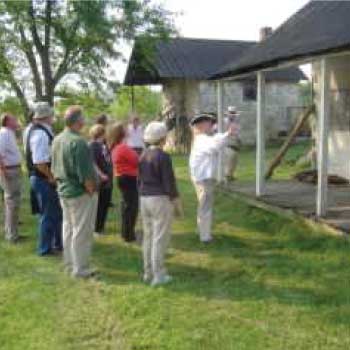
The conference organizers feel that the success was a result of the high quality of the presenters and their work. Local architect David Kemnitzer hosted a reception for early arrivals on Thursday evening. A walking tour of Charles Town on Friday morning preceded a rich program of presentations and discussions that allowed attendees to learn more about cultural landscape preservation issues around West Virginia and the Mid-Atlantic region.
The conference featured two main program tracks. One track dealt with the preservation of communities and landscapes in the face of rampant growth, tackling issues related to land use, sprawl, and protection. The other track focused on the past and future of cultural landscapes, featuring presentations and discussions on the definition, improvement, promotion, and interpretation of landscapes and other heritage resources.
On Friday, Chris Miller, of the Piedmont Environmental Council, delivered a presentation after lunch on growth issues in the Piedmont region. Liz Sargent of John Milner Associates and Troy Thompson of Lord Cultural Resources spoke on cultural resource management and interpretation of cultural resources, respectively.
Later on Friday afternoon, Lynda Frost of the Trust for Public Lands, George Siekkinen of the National Trust, and Grant Smith of the Land Trust of the Eastern Panhandle each delivered presentations that dealt with tools for preserving landscapes and other cultural resources, focusing on land trusts and easements.
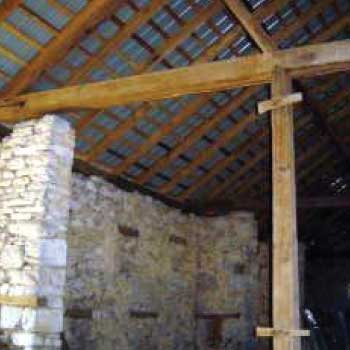
Saturday’s sessions began with breakout sessions featuring more strong presentations; all were well-attended. The early morning sessions included a presentation by Marjorie Williams, who offered creative solutions regarding the regulation of design standards outside of designated and protected historic districts, while Lee Blair and John Smith of Allegheny Restoration discussed triumphs, pitfalls, techniques, and pragmatic issues that they contended with in the restoration of several historic barns.
This year’s conference took place on September 9 and 10 in Shepherdstown at the former Entler Hotel. Entitled “Heritage and Growth: Preserving Communities and Cultural Landscapes”, the conference was a phenomenal success. Attendee reviews were unanimously positive in their comments to the conference staff. Many have felt that it was PAWV’s best conference yet, and a sign of even better things to come.
The conference organizers feel that the success was a result of the high quality of the presenters and their work. Local architect David Kemnitzer hosted a reception for early arrivals on Thursday evening. A walking tour of Charles Town on Friday morning preceded a rich program of presentations and discussions that allowed attendees to learn more about cultural landscape preservation issues around West Virginia and the Mid-Atlantic region.
The conference featured two main program tracks. One track dealt with the preservation of communities and landscapes in the face of rampant growth, tackling issues related to land use, sprawl, and protection. The other track focused on the past and future of cultural landscapes, featuring presentations and discussions on the definition, improvement, promotion, and interpretation of landscapes and other heritage resources.
On Friday, Chris Miller, of the Piedmont Environmental Council, delivered a presentation after lunch on growth issues in the Piedmont region. Liz Sargent of John Milner Associates and Troy Thompson of Lord Cultural Resources spoke on cultural resource management and interpretation of cultural resources, respectively.
Later on Friday afternoon, Lynda Frost of the Trust for Public Lands, George Siekkinen of the National Trust, and Grant Smith of the Land Trust of the Eastern Panhandle each delivered presentations that dealt with tools for preserving landscapes and other cultural resources, focusing on land trusts and easements.
Saturday’s sessions began with breakout sessions featuring more strong presentations; all were well-attended. The early morning sessions included a presentation by Marjorie Williams, who offered creative solutions regarding the regulation of design standards outside of designated and protected historic districts, while Lee Blair and John Smith of Allegheny Restoration discussed triumphs, pitfalls, techniques, and pragmatic issues that they contended with in the restoration of several historic barns.
The late-morning sessions on Saturday included featured Matt Ward, a Charles Town councilman, moderating a discussion on advocacy for local landscapes, and Gabe Hayes of Hayes Landscape Architecture Studio presenting his work and advice on retaining individual character in streetscapes and other urban landscapes.
Following lunch, Elizabeth Watson delivered her upbeat keynote address on her work as executive director of Stories of the Chesapeake Heritage Area on Maryland’s Eastern Shore. Ms. Watson provided anecdotes on her experience in becoming involved with Stories of the Chesapeake, and on ways in which she has overcome challenges in her work.
The keynote was followed a breakout session for each of the conference’s program tracks. Elizabeth Watson and Nell Ziehl of the National Trust moderated a session at the Opera House Theater on smart growth in the Eastern Panhandle. Participants included both conference attendees and interested local citizens who had signed up just for the afternoon. Local participants included a number of citizen activists, political figures, and developers. The session was intended to help promote dialogue on smart growth, and was successful in generating good conversation.
Those who remained at the Entler for the other afternoon session enjoyed the dynamic and informative presentations of three panelists who spoke on the promotion of heritage tourism. Scott Gerloff of the West Virginia Cultural Heritage Tourism Program, Scott Standish of the Lancaster County (PA) Heritage Area, Jeanne Mozier of Travel Berkeley Springs, and Christina Lundberg of the Eastern Panhandle Rural Tourism Alliance offered their experience as help in emphasizing the strengths that businesses and municipalities can take advantage of to meet the needs of contemporary heritage tourists.
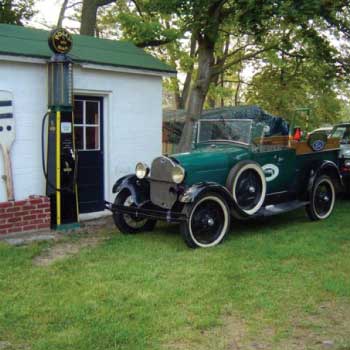
The conference dropped to a more relaxed pace Saturday evening with a driving tour to a number of historic homes and homesteads in the area, most connected to influential families of the eighteenth and nineteenth centuries. The driving tour ended at the White House Farm, whose owners graciously hosted a catered dinner with traditional music by the Martin Family Band. Dinner was held in the relaxing, well-treed yard, and tours of the house and grounds followed an excellent meal.
Thanks to our board president, Phyllis Baxter, and to our staff, Dave Vago, Ruth Sayre, and Mitzi Miller, for pulling the conference together and handling the many details that helped it to go smoothly. Thanks also to Ruth Brinker, Bob Conte, Bob Enoch, Mike Mills, Kip Stowell, Barb Rasmussen, Chelly Depp, Scott Gerloff, and Nell Ziehl for advance planning and on-the-spot technical assistance. And thanks especially to our hosts and our presenters, who really made the conference work. We are duly grateful.
Following lunch, Elizabeth Watson delivered her upbeat keynote address on her work as executive director of Stories of the Chesapeake Heritage Area on Maryland’s Eastern Shore. Ms. Watson provided anecdotes on her experience in becoming involved with Stories of the Chesapeake, and on ways in which she has overcome challenges in her work.
The keynote was followed a breakout session for each of the conference’s program tracks. Elizabeth Watson and Nell Ziehl of the National Trust moderated a session at the Opera House Theater on smart growth in the Eastern Panhandle. Participants included both conference attendees and interested local citizens who had signed up just for the afternoon. Local participants included a number of citizen activists, political figures, and developers. The session was intended to help promote dialogue on smart growth, and was successful in generating good conversation.
Those who remained at the Entler for the other afternoon session enjoyed the dynamic and informative presentations of three panelists who spoke on the promotion of heritage tourism. Scott Gerloff of the West Virginia Cultural Heritage Tourism Program, Scott Standish of the Lancaster County (PA) Heritage Area, Jeanne Mozier of Travel Berkeley Springs, and Christina Lundberg of the Eastern Panhandle Rural Tourism Alliance offered their experience as help in emphasizing the strengths that businesses and municipalities can take advantage of to meet the needs of contemporary heritage tourists.
The conference dropped to a more relaxed pace Saturday evening with a driving tour to a number of historic homes and homesteads in the area, most connected to influential families of the eighteenth and nineteenth centuries. The driving tour ended at the White House Farm, whose owners graciously hosted a catered dinner with traditional music by the Martin Family Band. Dinner was held in the relaxing, well-treed yard, and tours of the house and grounds followed an excellent meal.
Thanks to our board president, Phyllis Baxter, and to our staff, Dave Vago, Ruth Sayre, and Mitzi Miller, for pulling the conference together and handling the many details that helped it to go smoothly. Thanks also to Ruth Brinker, Bob Conte, Bob Enoch, Mike Mills, Kip Stowell, Barb Rasmussen, Chelly Depp, Scott Gerloff, and Nell Ziehl for advance planning and on-the-spot technical assistance. And thanks especially to our hosts and our presenters, who really made the conference work. We are duly grateful.
Schedule of Events
Whether you live in a high growth area like West Virginia’s eastern panhandle, along a rural scenic byway, or in a small town reaching out for tourist dollars, every community faces complex issues balancing economic benefits against loss of our heritage, landscapes, and community character.
This year’s conference will celebrate the cultural landscapes we live in, offering insightful discussion, useful tools, and shared inspiration as we work together in search of the best solutions for preservation and economic development in our home communities.Join us in Shepherdstown, West Virginia's oldest town and still one of our most charming historic communities, to enjoy targeted sessions, lively discussions, fascinating tours, shared inspiration, and lots of fun.
In 1783, Thomas Jefferson viewed the breathtaking vista high above the confluence of the Shenandoah and Potomac Rivers at Harpers Ferry and later wrote in his journal, "The passage of the Patowmac through the Blue Ridge is perhaps one of the most stupendous scenes in Nature…. This scene is worth a voyage across the Atlantic."
TWO SESSION TRACKS SERVE A VARIETY OF INTERESTS
Cultural Landscapes -- tentative sessions include West Virginia Cultural Landscapes; Preservation and Interpretation of Cultural Landscapes; Historic Streetscapes; and Making the Fit for Heritage Tourism.
Preserving Communities --in the face of rampant growth, this session will offer a variety of sessions on policy and educational tools, and a special forum to bring together partners discussing Smart Growth in the Eastern Panhandle.
Executive Director of Stories of the Chesapeake Heritage Area, Elizabeth Watson will be our keynote speaker. With more than 20 years experience as a professional planner specializing in historic preservation, land conservation, and community development, Elizabeth will share with us her experiences assessing cultural and scenic landscapes and developing strategies for protection on Maryland’s Eastern Shore.
This year’s conference will celebrate the cultural landscapes we live in, offering insightful discussion, useful tools, and shared inspiration as we work together in search of the best solutions for preservation and economic development in our home communities.Join us in Shepherdstown, West Virginia's oldest town and still one of our most charming historic communities, to enjoy targeted sessions, lively discussions, fascinating tours, shared inspiration, and lots of fun.
In 1783, Thomas Jefferson viewed the breathtaking vista high above the confluence of the Shenandoah and Potomac Rivers at Harpers Ferry and later wrote in his journal, "The passage of the Patowmac through the Blue Ridge is perhaps one of the most stupendous scenes in Nature…. This scene is worth a voyage across the Atlantic."
TWO SESSION TRACKS SERVE A VARIETY OF INTERESTS
Cultural Landscapes -- tentative sessions include West Virginia Cultural Landscapes; Preservation and Interpretation of Cultural Landscapes; Historic Streetscapes; and Making the Fit for Heritage Tourism.
Preserving Communities --in the face of rampant growth, this session will offer a variety of sessions on policy and educational tools, and a special forum to bring together partners discussing Smart Growth in the Eastern Panhandle.
Executive Director of Stories of the Chesapeake Heritage Area, Elizabeth Watson will be our keynote speaker. With more than 20 years experience as a professional planner specializing in historic preservation, land conservation, and community development, Elizabeth will share with us her experiences assessing cultural and scenic landscapes and developing strategies for protection on Maryland’s Eastern Shore.
Friday Morning Tour leaves from Charles Town Library (200 Washington Street - the main E-W road through Charles Town)Everything else is at the historic Entler Hotel building at the south end of downtown Shepherdstown.
Schedule
Thursday, September 8 (Evening)
5:00 - 7:00 Early registration -- Entler Hotel
Friday, September 9
8:30 - 5:00 Registration at the Entler Hotel
9:30 - 11:30 Tour of Charles Town
Lunch (On Your Own)
1:00 - 2:30 Breakout sessions*
2:45 - 4:00 Breakout sessions*
4:30 - Done Walking tour of Shepherdstown
5:30 - 7:00 Reception
Dinner (On Your Own)
Saturday, September 10
8:00 - 11:30 Registration at the Entler Hotel
9:00 - 10:15 Breakout sessions*
10:30 - 11:45 Breakout sessions*
12:00 - 12:30 Lunch (Included)
12:30 - 1:30 Keynote, Annual meeting
1:45 - 3:30 Breakout sessions* Including Special Session - "Smart Growth in the Eastern Panhandle"
3:45 - 6:30 Driving Tour - Peter Burr House and Washington Homes
6:30 - 8:30 Reception and Dinner at White House Farm
5:00 - 7:00 Early registration -- Entler Hotel
Friday, September 9
8:30 - 5:00 Registration at the Entler Hotel
9:30 - 11:30 Tour of Charles Town
Lunch (On Your Own)
1:00 - 2:30 Breakout sessions*
2:45 - 4:00 Breakout sessions*
4:30 - Done Walking tour of Shepherdstown
5:30 - 7:00 Reception
Dinner (On Your Own)
Saturday, September 10
8:00 - 11:30 Registration at the Entler Hotel
9:00 - 10:15 Breakout sessions*
10:30 - 11:45 Breakout sessions*
12:00 - 12:30 Lunch (Included)
12:30 - 1:30 Keynote, Annual meeting
1:45 - 3:30 Breakout sessions* Including Special Session - "Smart Growth in the Eastern Panhandle"
3:45 - 6:30 Driving Tour - Peter Burr House and Washington Homes
6:30 - 8:30 Reception and Dinner at White House Farm
Tours
Friday morning - Meet at old Charles Town Library in Charles Town for a guided walking tour of the Jefferson County seat, laid out in 1787 by Charles Washington, a brother of the first president. Many of the town's original structures remain, from its imposing residences to Courthouse Square, offering visitors perfect examples of early American architecture. Visit the courthouse where John Brown was tried and convicted for treason in 1859, which was also the site of the 1922 trial of coal miners accused of treason following the Battle of Blair Mountain. See the Jefferson County Jail, now famous among WV preservationists for the aggressive campaign to save the structure. The tour will conclude at the Jefferson County Museum.
Friday late afternoon - stretch your legs with a guided walking tour of historic Shepherdstown, our host community.
Saturday afternoon - Driving tour of Jefferson County countryside will start with the Peter Burr House, the oldest standing wood frame structure in West Virginia, now being restored as a living history farm. Continuing, we will view a number of homes associated with the Washington family, including a special stop at Harewood, built by George's brother Samuel Washington in 1770 and still occupied by a Washington family descendent.
Saturday evening - Dinner and reception will be at White House Farm. The "White House," so-named because of the lime white-wash which covered much of the home's stone walls, is surrounded by two acres of landscaped grass and woods and separated from the road by a long stone fence. The home is one of the oldest of several 18th century stone houses in Jefferson County, with the oldest standing barn in West Virginia, recently restored.
Friday late afternoon - stretch your legs with a guided walking tour of historic Shepherdstown, our host community.
Saturday afternoon - Driving tour of Jefferson County countryside will start with the Peter Burr House, the oldest standing wood frame structure in West Virginia, now being restored as a living history farm. Continuing, we will view a number of homes associated with the Washington family, including a special stop at Harewood, built by George's brother Samuel Washington in 1770 and still occupied by a Washington family descendent.
Saturday evening - Dinner and reception will be at White House Farm. The "White House," so-named because of the lime white-wash which covered much of the home's stone walls, is surrounded by two acres of landscaped grass and woods and separated from the road by a long stone fence. The home is one of the oldest of several 18th century stone houses in Jefferson County, with the oldest standing barn in West Virginia, recently restored.